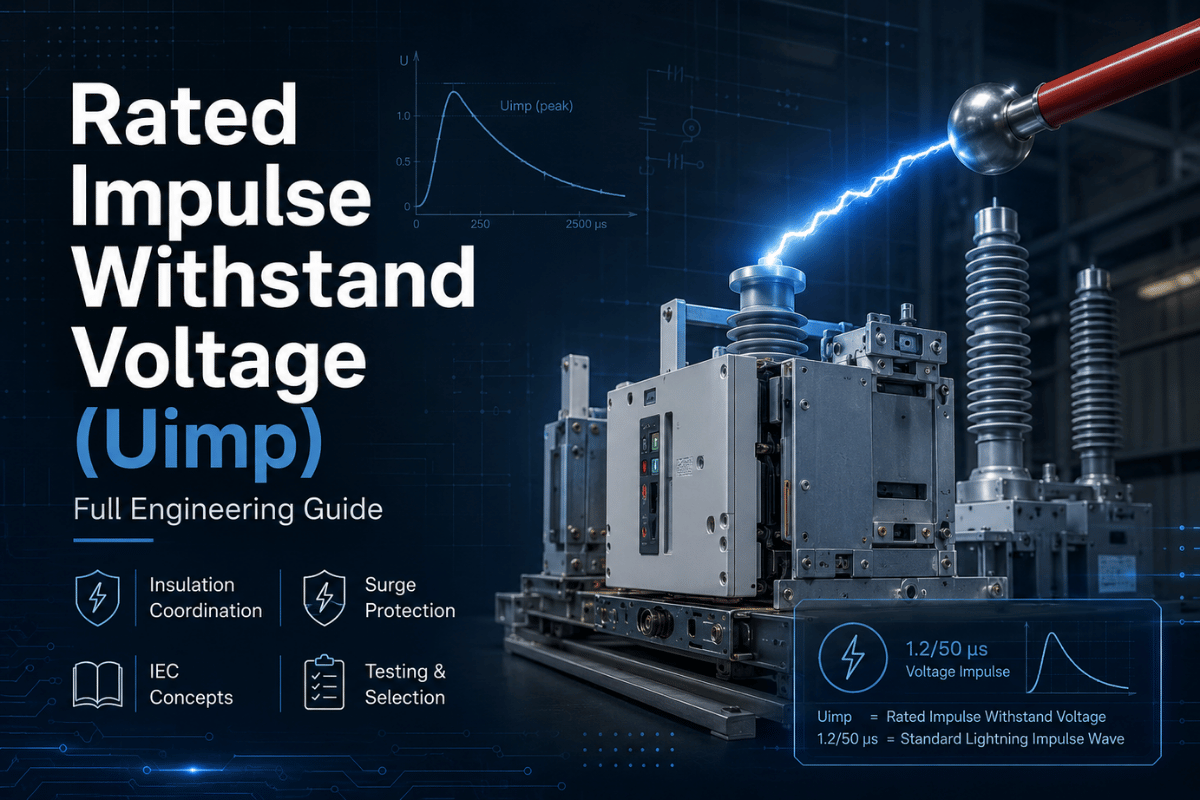
Electrical testing is the foundation of the contemporary industry that makes sure the power supply from semiconductor factories to renewable energy plants is reliable, safe, performing, and uninterrupted. The near future is characterized by the transformation of the quality control and compliance with advanced automation, digitalized testing services, and fully integrated test solutions. The technological review for the determination of the key players and the discussion of the role of the most active electric test functions such as high voltage validation, EMC test readiness, and spectrum analyzers in the field of quality control and testing is this topic. The major part of the biggest and most successful companies in the electronic test manufacturers sector is considered and the types of testing fields they operate in and the way they address that is assessed; for example, automotive, aerospace, power, and safety compliance are the current hot topics.
Introduction to Electrical Testing and Measurement Equipment

Importance of Electrical Testing in Various Industries
Correctly, electrical testing is a must when it comes to reliability and safety in that case the downtime is of the essence. In the case of automotive, test solutions that are rigorous validate EV power system components, high voltage battery management, and EMC compliance that lead to both the protection of passengers and the infrastructure. Aerospace programs have as their foundation very precise test equipment to verify avionics, communication links, and electronic test subsystems under any possible weather conditions. The semiconductor industry, however, makes extensive use of measurement systems to facilitate device characterization, yield optimization, as well as, tight process controls maintenance. The power companies or companies that use renewable energy for power generation have, as part of their systems, the test equipment that ensures the grid is stable and that the electrical safety is maintained. Manufacturers, on their side, embrace reversing technology for the control of quality and making sure compliant with the regulatory requirements. The use of standardized and automated methodologies gives a reduced level of risk, a faster speed in the certification process, and the prevention of the performance benchmarks from falling.
Overview of Test and Measurement Equipment
On one end of the scale, from the smallest measuring devices to the most sophisticatedly automated systems that are incorporated at different levels of production processes, are where the modern test and measurement equipment fall. Some of the key categories are the spectrum analyzers which have been designed for RF diagnostics, the power analyzers that are used for power system characterization and efficiency measurement, the oscilloscopes that are used for transient capture, and the EMC test instruments that are there for emissions and immunity verification. High voltage testers are used to ensure the integrity of the insulation, and alongside this parametric analyzers and curve tracers for the support of the semiconductor device profiling process. With the help of software-based technology, the platforms effectively handle the data and analytics, thus paving the way for continuous quality improvement and a decrease in the total cost of ownership. Equipment manufacturers are working hard to create the modular platforms that are adaptable to the R&D benches and the manufacturing floors, thereby reducing the total cost of ownership. On the other hand, the 2025 equipment solutions will give priority to the following features: remote operation, cybersecurity, interoperability, and hence, global test workflows will be harmonized.
Criteria for Selecting Equipment Manufacturers
It is highly recommended to make reliability, measurement accuracy, and long-term support the top priorities. Test range, which covers EMC, high voltage, RF, and power, is one of the major criteria. The product has to be scalable from benchtop to fully automated test systems, and a software infrastructure that would facilitate automation, analytics, and compliance reporting should be provided. The vendor’s history in the semiconductor, automotive, aerospace, and renewable energy sectors and the additional factors such as the availability of testing services, calibration networks, and global logistics should also be considered. Make sure to look at the potential of the product and vendor being involved in your application through open APIs, modern security features, and lifecycle guarantees up to 2025 and beyond. Large companies like Keysight Technologies and Teledyne Technologies are often the ones that come up with new and unique testing technologies, very good and detailed service contracts, and strong and reliable quality control systems for the very critical electrical testing applications.
Key Players in the Electrical Testing Equipment Market
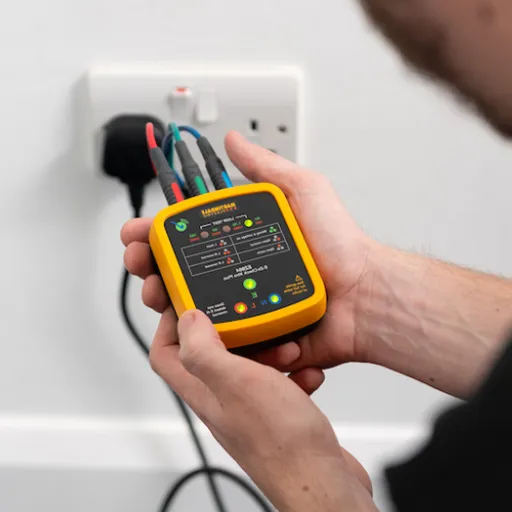
Overview of Manufacturers in 2025
By 2025, manufacturers will base their strategies on modularity, automation, and interoperability. This will make it particularly easy to launch testing systems from R&D benches to automated lines in a very smooth manner. Moreover, the test and measurement equipment suppliers have a growing tendency to use AI for diagnostics purposes and employ digital twins to enhance the overall reliability and to speed up the root-cause analysis process in the electronic test workflows. Product lines and features will eventually encompass EMC instruments, spectrum analyzers, power analyzers, oscilloscopes, and high voltage testers, in addition to the associated calibration and testing service centers. Inbuilt cybersecurity, remote control, and compliance update that follows the ever-changing standards are key selling arguments of the equipment manufacturing companies. It is the partnerships with semiconductor fabs, automotive OEMs, aerospace primes, and renewable energy operators, which are the gatekeepers for the roadmaps in test solutions verification of power system performance and EMC conformance. The battleground is determined through software orchestration, data governance, and the total cost of ownership of the systems with the final result being the continued value for power-equipment stakeholders.
Insights into Keysight Technologies
Keysight Technologies continues to be the leader by providing a complete range of RF, EMC, and power validation solutions. It is the spectrum analyzers, the high-performance oscilloscopes, and the EMC test platforms that serve the most difficult electronic test applications of the semiconductor characterization, the automotive EV powertrains, the aerospace communications, and the renewable energy inverters. The software for automation developed by Keysight connects test systems and is well-organized, making the data available in a traceable manner. In the year 2025, Keysight utilizes test and measurement technologies with the Internet of Things, AI, and a host of other technologies in order to cater to the needed changes and to be reliable and fast. The offered version includes the structure of the sentence but changes the words and applies synonyms to it. Testing, calibration, and other services of Keysight play a critical role in assisting manufacturers well before the electrical safety and regulatory mandates 2025. By combining high voltage testing with EMC compliance and implementing digital twin models, Keysight is able to provide a scalable and future-ready portfolio.
Exploring Teledyne Technologies
Teledyne Technologies offers a variety of testing and measuring solutions that are highly specialized and accurate with very powerful imaging and sensing capabilities. Its products are majorly used in semiconductor testing in the labs, aerospace and defense collaborations, and high-power electronics, where demands are high for product reliability, EMI shielding and spectrum analysis. Teledyne’s test solutions particularly to prove the data fidelity and reliability by connecting the hardware with the help of the software thus automatizing the process yet in a most reliable way. In 2025, Teledyne Technologies will be important for the whole industry by having a broad integration in different applications like the electrical RF-RF or the power system and doing the implementation of equipment verification which is the most critical and important need. Fast and reliable services offered by Teledyne along with support from its highly experienced staff will make it easy for the manufacturers to have their products in full compliance and to go through the certification process quickly. The quality test for the products and services will be done by world-class quality testing technology and the services will be scalable and compatible with the manufacturer’s requirements with Teledyne being the major force behind it in the year 2025.
Top 10 Electrical Testing Equipment Manufacturers
1
DEMIKS
Founded: 1995
Introduction: DEMIKS is a globally recognized leader in the electrical testing equipment industry, offering innovative and reliable solutions for diverse applications. With decades of expertise, they are committed to delivering cutting-edge products that enhance safety, precision, and efficiency.
Main Products: High-voltage testers, circuit breaker analyzers, transformer testing instruments, insulation resistance testers, and relay test equipment.
Key Advantages:
- Unmatched product quality and durability.
- Continuous innovation, incorporating the latest technological advancements.
- Excellent customer support and global availability.
Key Disadvantages:
- Higher price point compared to some competitors.
- Limited availability of certain specialized products in select regions.
Website:www.demiks.com
2
Fluke Corporation
Founded: 1948
Introduction: Based in the USA, Fluke Corporation is renowned for its advanced electronic test tools and software, catering to professionals in various industries, including electrical, HVAC, and industrial automation.
Main Products: Digital multimeters, insulation testers, clamp meters, thermal imagers, and power quality monitoring systems.
Key Advantages:
- Highly reliable and innovative products.
- Comprehensive product range with an emphasis on portability.
- Strong focus on user-friendly designs.
Key Disadvantages:
- High cost for specific high-tech tools.
- Some advanced features may require additional training.
Website:www.fluke.com
3
Megger
Founded: 1889
Introduction: Megger is a pioneering manufacturer of electrical testing equipment with over a century of experience. They specialize in creating efficient solutions for testing and maintaining power systems and equipment.
Main Products: Insulation testers, earth testers, circuit breakers, power quality analyzers, and transformer testers.
Key Advantages:
- Wide selection of specialized testing instruments.
- Strong reputation for quality and reliability.
- Long-standing expertise in electrical testing solutions.
Key Disadvantages:
- Some products may have limited features compared to competitors.
- Premium pricing for advanced instruments.
Website:www.megger.com
4
OMICRON
Founded: 1984
Introduction: Based in Austria, OMICRON is a market leader in providing electrical testing and diagnostic solutions for power utilities and industries worldwide.
Main Products: Transformer testing devices, protection test systems, partial discharge measurement tools, and energy meters.
Key Advantages:
- Strong emphasis on innovation and research.
- Reliable diagnostic tools with robust performance.
- Exceptional after-sales support and training programs.
Key Disadvantages:
- Requires specialized expertise for optimal use of products.
- Limited distribution network in some regions.
Website:www.omicronenergy.com
5
Keysight Technologies
Founded: 2014 (spun off from Agilent Technologies)
Introduction: Keysight Technologies focuses on advanced electrical testing solutions, particularly for electronic design and wireless communication. They are a global leader in test and measurement equipment.
Main Products: Oscilloscopes, signal analyzers, DC power analyzers, LCR meters, and spectrum analyzers.
Key Advantages:
- Advanced features for complex testing applications.
- Strong focus on the electronics and telecommunication sectors.
- High accuracy and reliable performance.
Key Disadvantages:
- Prices are on the higher end.
- Primarily caters to niche market segments.
Website:www.keysight.com
6
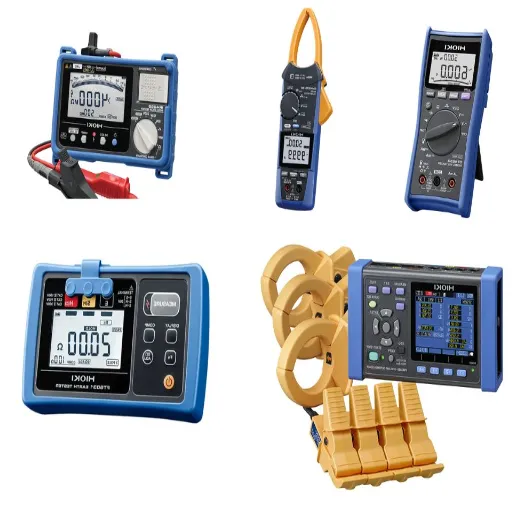
Hioki
Founded: 1935
Introduction: Hioki is a Japanese company known for its precision in manufacturing electrical measuring tools. They specialize in designing innovative and eco-friendly solutions.
Main Products: Clamp meters, battery testers, data loggers, power analyzers, and resistance meters.
Key Advantages:
- Focus on energy efficiency and eco-friendly solutions.
- Compact, portable instruments designed for ease of use.
- Targeted solutions for growing industries.
Key Disadvantages:
- Limited options for high-voltage testing.
- Some products are region-specific.
Website:www.hioki.com
7
Chauvin Arnoux
Founded: 1893
Introduction: A French manufacturer with a long history, Chauvin Arnoux specializes in creating electrical testing and measuring instruments for professionals across industries.
Main Products: Multimeters, oscilloscopes, thermal cameras, power quality analyzers, and energy management tools.
Key Advantages:
- Strong focus on ergonomic designs.
- Broad variety of products catering to industrial and domestic needs.
- Competitive pricing for mid-range tools.
Key Disadvantages:
- Some products may lack the advanced features offered by competitors.
- Support services may vary regionally.
Website:www.chauvin-arnoux.com
8
Kyoritsu
Founded: 1940
Introduction: Kyoritsu is a Japanese company renowned for its quality electrical measuring instruments tailored for fieldwork and industrial applications.
Main Products: Insulation testers, earth resistance testers, digital clamp meters, and phase sequence indicators.
Key Advantages:
- Affordable products without compromising quality.
- Compact designs suitable for fieldwork.
- Focused on essential testing needs.
Key Disadvantages:
- Limited range of high-tech solutions.
- Some equipment lacks advanced software integration.
Website:www.kew-ltd.co.jp/en
9
Rohde & Schwarz
Founded: 1933
Introduction: A German manufacturer, Rohde & Schwarz excels in delivering advanced electronic measurement instruments and broadcasting solutions worldwide.
Main Products: Network analyzers, oscilloscopes, power supplies, EMC test receivers, and spectrum analyzers.
Key Advantages:
- Known for cutting-edge technology and features.
- Excellent for high-frequency testing applications.
- Strong focus on research and innovation.
Key Disadvantages:
- Expensive compared to other brands.
- Primarily caters to specialized industries.
Website:www.rohde-schwarz.com
10
Tektronix
Founded: 1946
Introduction: Based in the United States, Tektronix is a global leader in oscilloscopes and other high-end testing equipment for electrical and electronic design industries.
Main Products: Oscilloscopes, logic analyzers, signal generators, and protocol analyzers.
Key Advantages:
- Exceptional quality for oscilloscope technology.
- Strong support network and training resources.
- Broad application across industries from healthcare to telecommunications.
Key Disadvantages:
- Higher price point compared to other brands.
- Limited product range outside of oscilloscopes.
Website:www.tek.com
Trends and Innovations in Electrical Testing Equipment

Emerging Technologies and Their Impact on Testing
The bandwidth, insight, and reliability are taken to a higher level by the next-gen analyzers, real-time oscilloscopes, and AI-driven anomaly detection. The next generation of spectrum analyzers and real-time oscilloscopes are capable of capturing the complex RF and power phenomena that are essential to semiconductor and aerospace programs. Wide-bandgap GaN and SiC devices necessitate the use of high voltage probing, faster switching analysis, and thermally aware test solutions that guarantee the long life of the electrical equipment during intensive use. By the way, AI-driven anomaly detection which is an integral part of test systems raises the reliability of these systems by revealing even the smallest deviations before they can grow into failures. Also, the introduction of digital twins and software-defined tests in qualification and EMC planning speeds up method changes without the need of buying new equipment. These development achievements grant the companies that offer testing services the opportunity to perform scalable, data-based electronic tests in distributed electrical systems, and consequently they will speed up the organization’s path to qualification.
Future of Electrical Testing Equipment Manufacturers by 2025
Manufacturers will certainly put software-centric architectures first, then go for secure cloud integration and finally end up with automated compliance engines. On top of that, Keysight Technologies and Teledyne Technologies are living proofs that the scenario is indeed happening, and that are expanding test solutions that integrate measurement science with analytics and workflow automation. Vendors will provide unified data fabrics for EMC test fields, high voltage validation, and power system analysis. Subsequently, quality control will be an easier matter to handle starting from the design phase and till the product is manufactured. Sustainability and instrument lifecycle that will be built around subscription-based services are all novelties in this industry. Equipment developers have a lot to benefit from compatibility as a result of the multi-vendor test equipment interoperating with the help of open APIs. The ultimate goal is to see the world-class manufacturers producing equipment that is down to the solution and the reliability and electrical safety is achieved through predictive maintenance, AI-caused root-cause analysis, and standardized test procedures across the global electrical systems are observed.
Integration of IoT in Testing Services
IOT-incorporated devices allow far away test facilities, fast monitoring of vehicles and automated laws. Edge-serviced devices produce continuous transmission of data to private and safe clouds to perform far away test facilities, fleet management, and automated firmware governance in testing systems. IOT can advance real-time monitoring of usage, quality, and the environment, with the major influence on measurement reliability in power, vehicle, air transport, and energy applications. Companies like Keysight and Teledyne Technologies let IOT help them to run EMC test cells, link them, plan the calibration job, and get the safety limit alert when required. The IOT process data can be used to adjust production and test outcomes and this allows for global quality control to be even more effective. Well-known companies who are using this approach, are getting rid of varying rules for each production plant, and instead, they are adopting a unified manual to follow, hence less downtime and consistent operation of power equipment can be guaranteed in a complex, multi-site electrical system.
Conclusion and Future Outlook
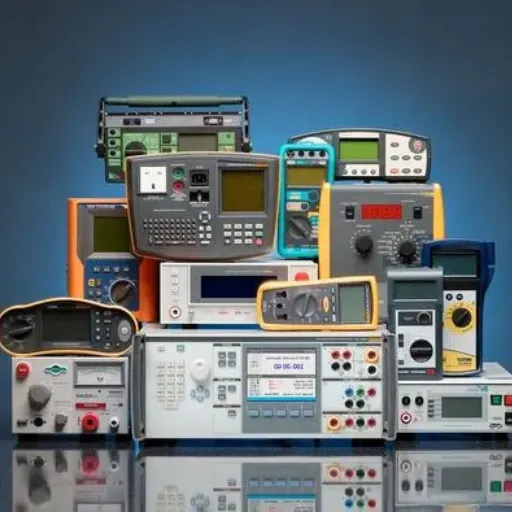
Summary of Key Takeaways
One of the main reasons why hardware and software unite is that it greatly impacts reception, speed and the ability to trace every detail. The Culture of automation will be prevailing during the 2025 at all enterprises, Production will be going on, however, the testing phase will become mostly automatic. Meanwhile, to transform the existing systems and products, as well as to design new products in a digitalized environment, the companies will gradually introduce AI. In the area of electrified robotics, equipment manufacturing including the corresponding industrial operation and maintenance has been pinpointed as a good application for 5G. Yet again, in the area of electrified industrial operations and industrial internet of things, extended IoT concerns such as security and the potential deployment of satellites could be further considered with the aim of improving data accessibility.
Future Developments in Electrical Testing Equipment
The governance of software-defined networks, Internet of Things connectivity from the edge to the cloud, and open APIs will be the main components for product development in the near future. In the case of pre-components for EMC, the digital twin would be an obligatory part to which the real-world system should be a perfect fit. In the case of yet-to-be-identified faults in the system, the digital twin can be used to trace faulty devices. Moreover, there are numerous studies on switching analysis for wide-bandgap devices, and we will see such services begin to emerge that will help in the decision-making process not only for materials but also for new structures and topologies for the devices. Lastly, the most exciting future development is likely to be the coordinated acquisition of signals, where artificial intelligence algorithms would enable the real-time processing and analysis of the signals from different sensors and systems sharing the limited access bandwidth.
Final Thoughts on Choosing the Right Manufacturer
Align vendor particular working fields with your test domains, automation needs, and lifecycle services. Prioritize vendors that show reliability in EMC, high voltage, and spectrum analyzers products at the same time as they provide automation-ready software that is proposing quality control in a streamlined way. Assess how test systems work with the current electronic test assets, facilitate access to secure cloud workflows, and provide global testing services and calibration. Keysight and Teledyne express the broadness of their respective ranges, the strict data governance, and the unmatched application expertise required for complex use cases. Eventually, the market leaders of 2025 should come up with a wide range of options of test equipment that can be easily upgraded and that do not have hidden costs, along with 24/7 customer support. This will ensure the electrical safety, faster certification, and durable performance for mission-critical systems.

![Partial Discharge Test Equipment: Types, Selection & IEC 60270 Guide [2026]](https://demikspower.com/wp-content/uploads/2026/05/0-10.webp)
![What Instrument Is Used to Measure Temperature? [2026 Guide]](https://demikspower.com/wp-content/uploads/2026/05/0-8.webp)