Understanding battery internal resistance is crucial for evaluating a battery’s performance, efficiency, and overall health. Whether in consumer electronics, electric vehicles, or industrial power systems, measuring internal resistance provides key insights into energy delivery capabilities and potential failures. With several measurement methods available—each having distinct advantages, limitations, and applications—it’s essential to adopt the right approach for accurate results. This article will explore the fundamental principles of battery internal resistance and compare widely-used measurement techniques to help you make informed decisions. By the end, you’ll gain a deeper understanding of how these methods work, when to apply them, and their importance in optimizing battery performance.
What Is Internal Resistance in a Battery?
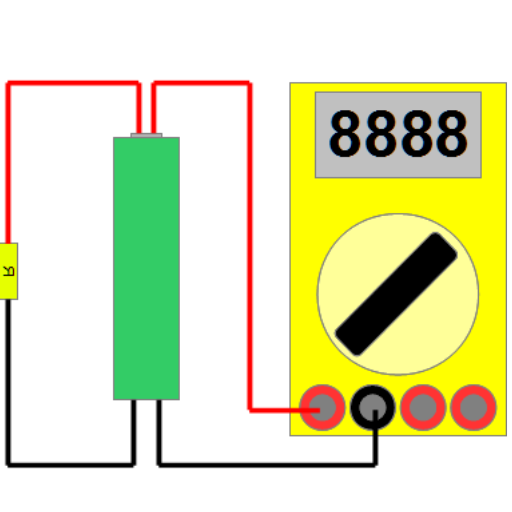
Internal resistance in a battery refers to the inherent opposition to the flow of current within the battery itself. This resistance arises from several factors, including the electrolyte’s conductivity, the quality of the electrodes, and the battery’s design and aging processes. When a current flows through the battery, internal resistance results in energy losses, which manifest as heat and a voltage drop.
The total internal resistance of a battery is generally divided into two components: ohmic resistance and polarization resistance. Ohmic resistance is associated with the physical and electronic constraints of the materials, such as the resistance of the electrolyte and electrode connections. Polarization resistance, on the other hand, is linked to slower electrochemical processes, including charge-transfer reactions and the diffusion of ions within the electrolyte.
Measuring internal resistance is crucial for evaluating the health and performance of a battery. High internal resistance not only reduces the battery’s efficiency but also limits its ability to deliver peak power, particularly under load. Consequently, it plays a significant role in determining the cycle life, energy efficiency, and thermal stability of the battery. Understanding and managing internal resistance is vital for applications ranging from portable electronics to electric vehicles, where optimal performance and reliability are critical.
Understanding Internal Resistance of a Battery
Causes of Internal Resistance
Internal resistance in a battery is primarily caused by two components: ohmic resistance and polarization resistance. Ohmic resistance stems from the battery’s conductive materials, including electrodes, electrolyte, and separators, which oppose the flow of electrical charge. Polarization resistance, on the other hand, arises due to electrochemical processes such as electrode surface reactions, ion movement through the electrolyte, and charge transfer at the electrode-electrolyte interface. Factors such as temperature, state of charge (SOC), battery chemistry, and aging contribute to fluctuations in internal resistance.
Measuring Internal Resistance
Internal resistance is commonly measured using techniques such as the impedance spectroscopy method or direct current (DC) load method. Impedance spectroscopy evaluates the AC impedance of the battery over a wide frequency range, providing detailed insights into resistance components. The DC load method applies a momentary load to the battery and calculates resistance by dividing the voltage drop by the change in current. Proper measurement is crucial for monitoring battery health and ensuring its reliability.
Impacts of Internal Resistance
Higher internal resistance results in reduced energy efficiency and increased heat generation during operation. It also leads to voltage drop under load conditions, which can affect the performance of connected devices and limit the battery’s ability to deliver peak output. Over time, this can exacerbate battery degradation, reducing total cycle life. Understanding these impacts is vital for optimizing battery usage and implementing effective thermal management strategies for high-performance applications.
Factors Affecting the Internal Resistance of a Battery
- Temperature
Internal resistance is highly sensitive to temperature changes. Low temperatures increase resistance as electrolyte conductivity decreases, whereas high temperatures can reduce resistance but may accelerate battery degradation.
- State of Charge (SOC)
The internal resistance of a battery varies with its state of charge. Typically, resistance is lower at moderate SOC levels and tends to increase at very high or very low states of charge.
- Age and Cycle Life
Aging and repeated charge-discharge cycles contribute to increased resistance due to factors such as electrode wear, electrolyte decomposition, and the formation of solid-electrolyte interphase (SEI) layers.
- Electrode Material and Design
The choice of electrode materials, along with their structural and compositional properties, directly affects the internal resistance. Poor design or inferior materials can result in higher resistance and reduced efficiency.
- Electrolyte Properties
The ionic conductivity of the electrolyte plays a critical role in determining internal resistance. Low conductivity results in significant resistance losses, impacting overall battery performance.
- Battery Chemistry
Different battery chemistries, such as lithium-ion, nickel-metal hydride, or lead-acid, inherently exhibit varying levels of internal resistance based on their electrochemical properties.
- Current Flow and Load Conditions
Higher current demands during peak load conditions can lead to increased resistance due to limitations in electron and ion transport within the battery.
- Manufacturing Defects or Variations
Variability in manufacturing quality, including inconsistencies in material deposition or assembly, can introduce higher-than-expected resistance in some cells.
- Contact Resistance
Poor connections and inadequate contact between components, such as terminals and busbars, add to the overall internal resistance of the system.
Each of these factors underscores the complex and dynamic nature of battery performance, making it essential to consider them in the design, operation, and maintenance of battery systems.
Why Internal Resistance Matters in Battery Performance
Internal resistance directly impacts a battery’s efficiency, energy output, and operational lifespan. Higher internal resistance leads to greater energy loss as heat, reducing the overall energy available for use. This can cause increased voltage drops, especially under high-load conditions, which negatively affect performance reliability. Additionally, excessive heat generation from internal resistance may accelerate chemical degradation within the battery, shortening its lifespan and potentially causing safety issues. Understanding and managing internal resistance is critical to optimizing battery design, ensuring effective thermal management, and improving system performance across various applications.
How to Measure the Internal Resistance of a Battery?
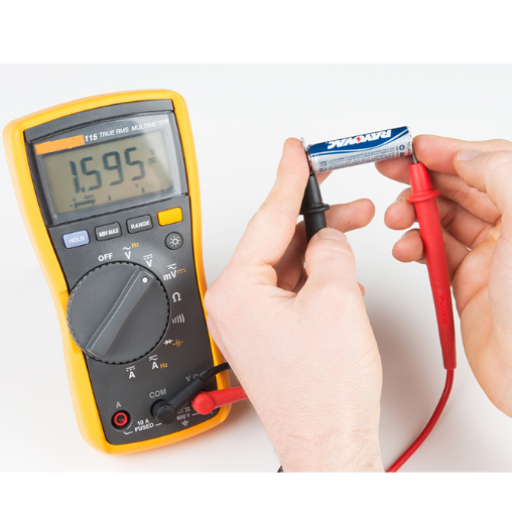
To measure the internal resistance of a battery, two primary methods are commonly used: the DC load method and the AC impedance method.
- DC Load Method: This method involves applying a known load to the battery and measuring the voltage drop and current. The internal resistance is calculated using Ohm’s Law (R = ΔV / I), where ΔV is the change in voltage and I is the current. This approach provides a direct and simple measurement but may not capture transient resistive behavior.
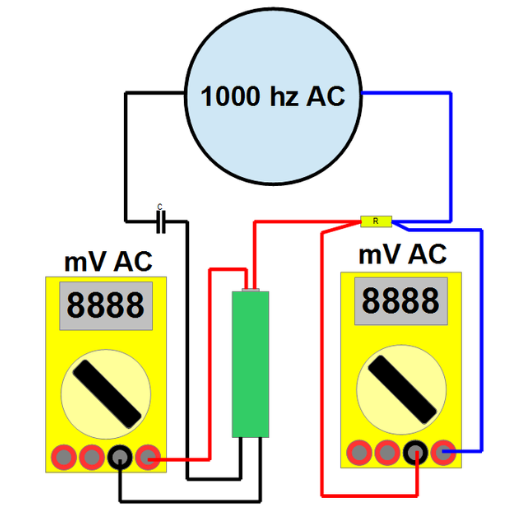
- AC Impedance Method: This method uses an alternating current signal with a specific frequency to measure the battery’s impedance, which closely approximates internal resistance. A specialized device, such as an electrochemical impedance spectroscopy (EIS) analyzer, is utilized for this process, offering higher accuracy and more detailed insights into the battery’s resistive and capacitive characteristics.
Both methods are effective, but the AC impedance method is often preferred for advanced applications due to its precision and comprehensive evaluation of battery performance.
Tools You Need to Measure Internal Resistance
To measure internal resistance accurately, I use a digital multimeter or a dedicated battery tester for basic assessments. For more advanced and precise measurements, especially in research and industrial settings, I rely on an electrochemical impedance spectroscopy (EIS) analyzer. This tool specializes in analyzing the resistive and capacitive properties of batteries under varying conditions. Additionally, having high-quality test leads and proper battery connectors is essential to ensure stable connections and minimize external interference during measurements. These tools are critical for obtaining detailed and reliable data on a battery’s internal resistance.
Steps to Measure Internal Resistance with a Multimeter
- Prepare the Equipment
Ensure the multimeter is fully functional and set to measure resistance. Use high-quality test leads and verify that their connectors are clean and secure to reduce potential interference.
- Set Multimeter to the Correct Mode
Turn the multimeter dial to the resistance (Ω) measuring mode. If the multimeter has a range selection, set it to an appropriate range based on the expected resistance value of the battery.
- Power Off the Battery
Disconnect the battery from any connected circuits or devices to prevent external current from affecting the measurement.
- Connect the Test Leads
Attach the multimeter’s test leads to the battery terminals. Ensure the red lead is connected to the positive terminal and the black lead to the negative terminal for accurate readings.
- Stabilize the Connection
Hold the test leads securely in place or use clamps if available. This ensures a stable connection and reduces potential noise or fluctuation in the readings.
- Read the Display
Observe the multimeter’s display to note the resistance value. This value typically includes the internal resistance of the battery combined with any minor residual resistance from the test leads.
- Account for Test Lead Resistance
Perform a separate test to measure the resistance of the test leads alone (by touching the leads together). Subtract this value from the initial measurement to obtain an accurate reading of the battery’s internal resistance.
- Repeat for Accuracy
Conduct the measurement multiple times to verify consistency. Variations in readings could indicate unstable connections or external interference.
- Document Results
Log the measured internal resistance for future reference and comparison. Regular monitoring can help identify performance degradation over time.
By following these steps, precise measurement of a battery’s internal resistance can be effectively accomplished, aiding in performance evaluation and diagnostic processes.
Using Ohm’s Law to Calculate Internal Resistance
Using Ohm’s Law, I can calculate internal resistance by dividing the voltage difference across the battery’s terminals by the current flowing through it. Specifically, I measure the open-circuit voltage (Voc) and the voltage under load (Vload), then subtract Vload from Voc to determine the voltage drop. This value is divided by the load current (Iload) using the formula Rinternal = (Voc – Vload) / Iload. This method provides a precise calculation of internal resistance, assuming accurate and stable measurements.
What Are the Different Methods to Measure Internal Resistance?

|
Method |
Key Points |
Parameters |
|---|---|---|
|
Voltage-Current Slope Method |
Measures voltage drop under load |
Voc, Vload, Iload |
|
AC Impedance Method |
Analyzes battery response to AC signal |
AC signal, frequency, impedance |
|
Pulse Current Method |
Utilizes voltage drop during high current pulse |
Pulse duration, current amplitude |
|
DC Load Method |
Calculates using steady-state voltage and current |
Load current, DC voltage |
|
Electrochemical Impedance Spectroscopy (EIS) |
Precise for advanced battery analysis |
Wide frequency range, complex setups |
Using a DC Load for Resistance Measurement
The DC Load Method measures battery resistance by analyzing its voltage response under a steady load current. This method involves applying a constant current to the battery and monitoring the resulting voltage change. The resistance is then derived using Ohm’s Law, \( R = \Delta V / I \), where \( \Delta V \) is the voltage drop, and \( I \) is the applied load current.
Technical Specifications:
1. Load Current (I): Should be determined by the battery capacity, typically at 1C or below to avoid overheating and ensure accuracy. For instance, a 50 Ah battery could have its load current set at 50 A.
2. Voltage Measurement Resolution: For measuring tiny changes of voltage, recommending using high precision multimeter with measurement range in mV.
3. Measurement Time: Full time required for battery to stabilize under a load, typically 10 to 30 seconds depending on battery type.
4. Temperature: Control the battery temperature within nominal operating range, 25 degrees Centigrade plus or minus 2 degrees Centigrade.
While this approach is easy to implement and does not need complex equipment, one has to be careful to not over-discharge the battery or add noise to the measurements.
Measuring with a Battery Tester
When using a battery tester, I ensure the device is compatible with the battery type I am testing. First, I connect the tester’s probes to the appropriate terminals, ensuring secure and correct polarity. Then, I activate the tester to measure the battery’s voltage, internal resistance, or capacity, depending on the tester’s functionality. These readings provide an accurate assessment of the battery’s condition, allowing for precise diagnostics without the risk of over-discharge. Most modern battery testers feature digital displays and automated settings, simplifying the process while delivering reliable results.
Method of Voltage Drop and Load Resistance
The method of voltage drop involves applying a resistive load to the battery and measuring the corresponding drop in terminal voltage. This technique is widely used to evaluate the battery’s capacity and state of health. The basic principle relies on Ohm’s Law, where the voltage drop (V) is directly proportional to the current (I) flowing through the load and the total internal resistance (R) of the battery.
In order to achieve precise outcomes, a fixed value of load resistance is applied across the battery terminals, and during the measurement, the load current with the terminal voltage is stored. The value of the load resistor is usually selected to recreate the actual working conditions of the battery, or to represent a certain discharge rate which could be defined as a C-rate. For example, a 1C rate will discharge the battery within one hour, and a 0.5C rate will take two hours.
This approach makes it possible to determine a battery’s internal resistance by calculating its open circuit voltage (OCV) and loaded voltage over the current of the load. Measurement accuracy is critical in this case; hence, high-precision multimeters and stable resistive loads must be used to eliminate variability and errors in the collected data. The surroundings also need to be controlled, such as temperature, because they greatly affect the performance of the battery and the tests results.
How Does Voltage Affect the Internal Resistance of a Battery?
Voltage plays a critical role in determining the internal resistance of a battery, as it directly reflects the electrochemical processes occurring within the cell. Within a specific operating range, higher voltage typically correlates with lower internal resistance due to increased ionic conductivity and enhanced reaction kinetics at the electrodes. Conversely, as the battery discharges and voltage decreases, internal resistance tends to rise. This is primarily due to factors such as reduced ion availability, electrolyte depletion, and potential electrode degradation. Accurate measurements at varying voltage levels are crucial for assessing how resistance evolves throughout the battery’s charge cycle.
Relationship Between Battery Voltage and Resistance
Key Factors Influencing the Voltage-Resistance Relationship
The relationship between battery voltage and resistance is governed by several technical parameters that impact performance and efficiency. These factors include:
1. State of Charge (SOC):
-
- High SOC generally corresponds to lower internal resistance, as ionic conductivity remains optimal.
- Low SOC results in diminished ion mobility, contributing to increased resistance.
- Temperature (T):
- Higher temperatures reduce internal resistance by enhancing ionic conductivity. Typical operational range: 20°C to 40°C.
- Extremely low temperatures (<0°C) can significantly increase resistance, while excessive heat (>50°C) may cause degradation.
- C-rate (Charge/Discharge Rate):
- Fast discharge rates elevate resistance due to limited ion diffusion and higher polarization effects.
- Resistance typically rises sharply with C-rates above 2C.
- Electrolyte Composition and Concentration:
- Proper electrolyte selection and concentration (e.g., 1M LiPF6 in organic solvents for Lithium-ion batteries) optimize conductivity and minimize resistance.
- Cycle Life and Aging:
- Over repeated cycles, structural changes in electrodes (e.g., SEI layer formation in Li-ion batteries) can lead to gradual resistance increases.
By measuring these parameters under controlled conditions, it is possible to model and predict the voltage-resistance behavior accurately, ensuring reliable battery performance across various applications.
Impact of Voltage Drop on Internal Resistance
The impact of voltage drop on internal resistance can be attributed to several key factors:
1. Temperature Variations:
-
- Higher temperatures typically reduce internal resistance by increasing ion mobility, whereas lower temperatures can cause a significant rise in resistance due to reduced electrolyte conductivity.
- State of Charge (SOC):
- Internal resistance varies with SOC, often increasing at extremely high or low charge levels while reaching a minimum at mid-range SOC.
- Battery Chemistry:
- Different chemistries exhibit varying intrinsic resistance behaviors. For example, lithium-ion batteries generally have lower resistance compared to lead-acid batteries, impacting how voltage drop manifests.
- Aging and Degradation:
- Over time, factors such as electrode wear, SEI (solid electrolyte interphase) layer growth, and electrolyte degradation can increase internal resistance, exacerbating voltage drops.
- Charge and Discharge Rate:
- Higher current demands (C-rates) enhance voltage drop due to the proportional increase in resistive losses, especially under high-load conditions.
- Electrode Design and Configuration:
- Material composition, electrode thickness, and porosity influence resistance, with poorly optimized designs leading to greater voltage drops.
- Electrolyte Properties:
- The ionic conductivity and viscosity of the electrolyte directly affect internal resistance and, consequently, voltage drop.
- Contact Resistance:
- Connection points, tabs, and interfacial resistance between components contribute to overall resistance, which worsens voltage drops under load.
By addressing these factors through design optimization and careful management, voltage drop can be minimized to preserve battery efficiency and lifespan.
How to Measure the Voltage of a Battery Accurately
To measure the voltage of a battery accurately, I start by using a calibrated digital multimeter set to the appropriate DC voltage range, typically higher than the battery’s nominal voltage. I ensure all connections are clean and free from corrosion to reduce contact resistance. Next, I connect the multimeter probes—the red probe to the positive terminal and the black probe to the negative terminal—while ensuring a stable connection. For precise readings, I measure under no-load conditions unless load testing is required. Additionally, I perform the measurement in a temperature-controlled environment, as extreme temperatures can affect voltage readings. By following these steps, I obtain reliable and accurate voltage measurements.
Why Is Measuring Internal Resistance Important for Different Types of Batteries?
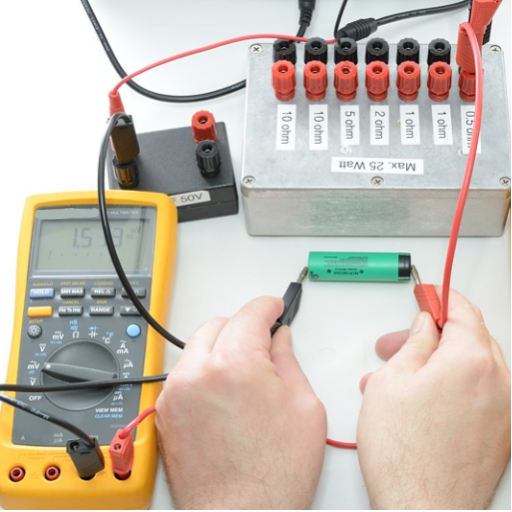
Measuring internal resistance is crucial because it provides valuable insights into the health, efficiency, and performance of a battery. Higher internal resistance often signifies aging, degraded electrolyte, or damaged cells, which can lead to reduced capacity and power output. For lithium-ion batteries, low internal resistance enables high energy discharge rates, making it essential for applications requiring rapid power delivery. With lead-acid batteries, monitoring internal resistance helps predict maintenance needs and detect sulfation or plate degradation. Across all battery types, internal resistance measurement ensures safe operation, extends lifespan, and supports optimal performance in both consumer and industrial applications.
Internal Resistance in Lead Acid Batteries
Internal resistance in lead-acid batteries is a critical parameter determining their operational efficiency and health. It is influenced by several factors, including the battery’s state of charge, temperature, age, and construction. Over time, factors such as sulfation or plate degradation can increase internal resistance, leading to reduced charge acceptance and diminished performance.
Monitoring internal resistance provides insights into the battery’s condition. Low internal resistance indicates efficient energy transfer, while a rise may signal potential issues, including sulfation buildup or corrosion on plates. These changes can impede electrolyte-ion flow, resulting in reduced capacity and shorter lifespan.
Additionally, internal resistance testing is integral for predictive maintenance, allowing early detection of faults. Measurement is typically performed using AC impedance testing or similar methods, with more advanced equipment offering precise diagnostics. By analyzing trends, technicians can proactively address degradation, mitigating failure risks and ensuring reliable operation for critical systems. Ultimately, managing internal resistance is essential for maximizing the lead-acid battery’s performance and longevity in various applications.
Measuring Internal Resistance in Car Batteries
To measure internal resistance in car batteries, I would use a specialized battery tester or multimeter capable of conducting AC impedance tests. The process involves applying a small AC current and measuring the corresponding voltage to calculate resistance based on Ohm’s law. Modern testers simplify this task by providing automatic readings for resistance and overall battery health. Additionally, I’d ensure the battery is fully charged before testing, as an undercharged battery could distort results. Regularly measuring internal resistance allows me to identify early signs of degradation, ensuring optimal performance and preventing unexpected failures.
Applications of Resistance Measurement in Various Battery Types
- Lead-Acid Batteries: Resistance measurements are critical for determining the state of health of lead-acid batteries commonly used in automotive, industrial, and uninterruptible power supply (UPS) systems. High internal resistance can indicate sulfation or grid corrosion, enabling timely maintenance or replacement.
- Lithium-Ion Batteries: Frequently used in portable electronics and electric vehicles, lithium-ion batteries benefit from resistance measurements to monitor cell imbalance, aging, or potential thermal runaway risks. These measurements help ensure performance stability and safety.
- Nickel-Cadmium (NiCd) Batteries: Resistance testing is useful for detecting issues such as “memory effect” or electrolyte depletion in NiCd batteries, aiding in effective troubleshooting for aviation or backup power applications.
- Nickel-Metal Hydride (NiMH) Batteries: By measuring resistance, users can assess energy efficiency and spot degradation in NiMH batteries, commonly used in hybrid vehicles and consumer electronics.
- Alkaline Batteries: Resistance measurement helps verify the charge remaining in disposable alkaline batteries, aiding in determining their suitability for low or high-drain devices.
- Zinc-Carbon Batteries: While primarily used in low-drain applications, resistance tests can assess performance variability and power output consistency in zinc-carbon batteries.
- Sodium-Based Batteries: Resistance monitoring is crucial for determining operational efficiency in sodium-sulfur or sodium-ion batteries, especially in industrial-scale energy storage systems.
- Flow Batteries: Internal resistance measurement in flow batteries can identify degradation in electrochemical cells, ensuring consistent long-term energy storage performance in large-scale applications.
- Solid-State Batteries: Emerging solid-state battery technology relies heavily on resistance measurements to optimize electrolyte conductivity and assess overall system reliability during development.
- Primary (Non-Rechargeable) Batteries: Resistance analysis of primary batteries, such as lithium or silver-oxide variants, ensures they meet precise power output requirements for medical devices or remote sensors.
Reference Sources
-
Online internal resistance measurement application in lithium-ion battery capacity and state of charge estimation – This article discusses a simple and effective online internal resistance detection method.
-
A measurement method for determination of DC internal resistance of batteries and supercapacitors – This paper validates a method for measuring DC internal resistance using practical examples.
-
On-line measurement of internal resistance of lithium-ion battery for EV and its application research – This research focuses on methods for measuring internal resistance in lithium-ion batteries for electric vehicles.
-
Overview of definitions and determination techniques of the internal resistance using lithium-ion, lead-acid, nickel metal-hydride batteries – This paper provides a comprehensive overview of internal resistance definitions and measurement techniques.
-
Integrated interdigital electrode and thermal resistance micro-sensors for electric vehicle battery coolant conductivity high-precision measurement – While focused on electric vehicle batteries, this article includes insights into precision measurement techniques.
Frequently Asked Questions (FAQs)
Q: What is the internal resistance of a battery and why is it important?
A: The internal resistance of a battery is the resistance within the battery that impedes the flow of current. It is crucial because it affects the battery’s efficiency and performance. As the internal resistance increases, it can cause a drop in the voltage of the battery, leading to reduced performance and efficiency.
Q: How can I calculate the internal resistance of a battery using the voltage method?
A: To calculate the internal resistance using the voltage method, measure the open circuit voltage and the voltage of the battery under load. The difference between these two voltages, divided by the amount of current flowing through the battery, gives the value of internal resistance.
Q: What role does a known resistance play in measuring battery internal resistance?
A: A known resistance is used to create a controlled load on the battery, allowing you to measure the voltage drop and the current of the load. From these measurements, you can calculate the internal resistance using Ohm’s law.
Q: Why is a voltmeter important in measuring battery internal resistance?
A: A voltmeter is essential for accurately measuring the voltage of the battery, both in open circuit and under load conditions. Accurate voltage readings are necessary to calculate the internal resistance precisely.
Q: How does battery size affect the internal resistance measurement?
A: Battery size can affect internal resistance measurements as larger batteries typically have lower internal resistance compared to smaller ones due to their higher capacity and construction. It’s important to consider battery size when comparing resistance readings.
Q: What are some reliable test methods for measuring internal resistance?
A: Reliable test methods for measuring internal resistance include the voltage drop method, the current interrupt method, and using specialized battery testers. Each method has its own advantages depending on the type of battery and the precision required.
Q: How does the internal resistance change over the battery’s lifecycle?
A: The internal resistance of a battery typically increases as the battery ages due to chemical changes and wear. This can lead to decreased performance over time, affecting the battery from birth to retirement.
Q: How do different currents affect internal resistance measurements?
A: Different currents can result in varying resistance readings. It is important to use a consistent amount of current when measuring to ensure accurate and comparable results, as the internal resistance may appear different at varying current levels.
Q: How does the internal resistance of a lithium battery compare to other types?
A: Lithium batteries, such as the 18650, generally have lower internal resistance compared to other types, such as lead-acid or nickel-metal hydride batteries. This low resistance contributes to their high efficiency and performance, making them ideal for high-drain applications.
Q: What factors can cause the internal resistance to increase?
A: Factors that can cause the internal resistance to increase include aging, repeated cycling, exposure to high temperatures, and manufacturing defects. Monitoring resistance can help assess battery quality and predict potential performance issues.