Fraud Blocker

HVDC TEST SYSTEM

HVDC Test System: 60–800 kV DC Withstand & Leakage Tester for HVDC Project Equipment

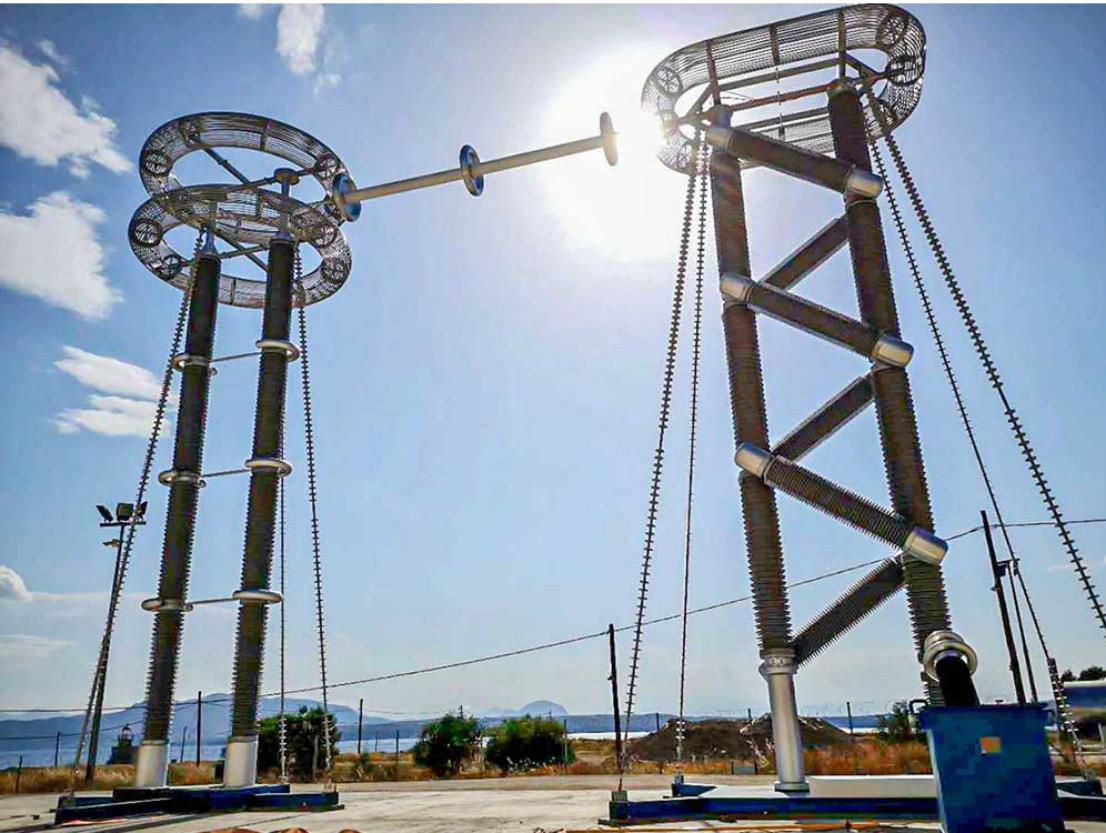
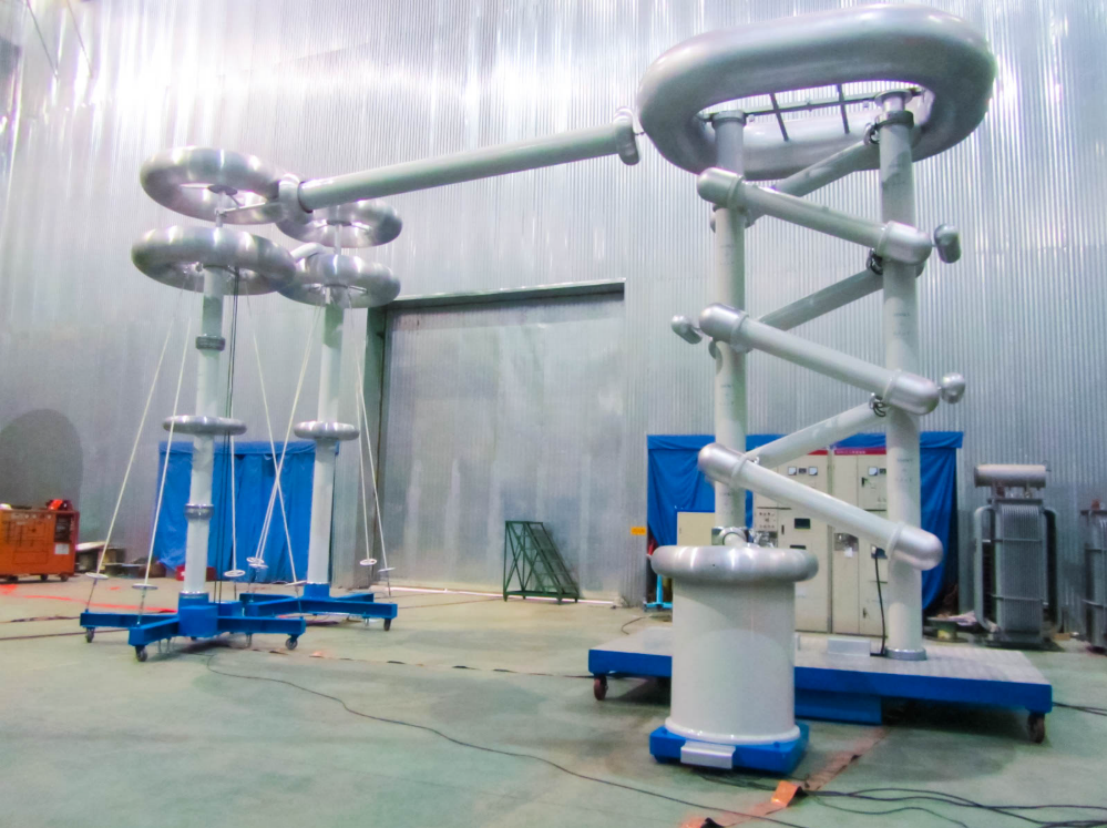
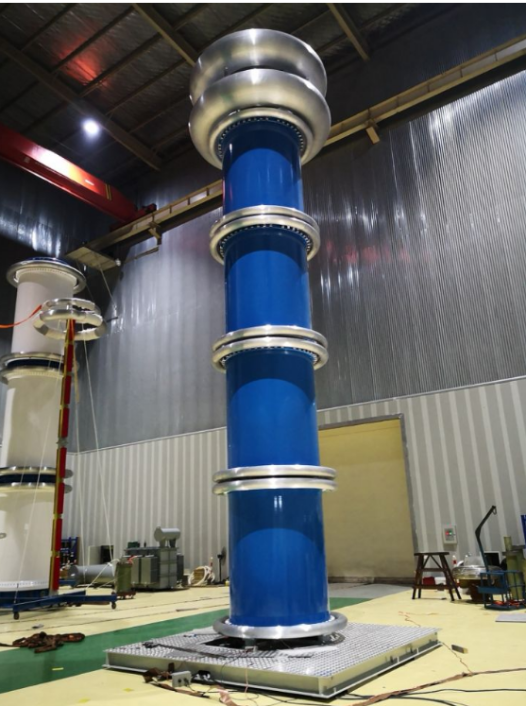
DEMIKS HVDC test systems perform DC withstand voltage testing for converter transformers, converter valves, DC bushings, cable sheaths, 66-150 kV cable accessories, surge arresters and non-XLPE insulation. Voltage multiplier rectifier topology, (1.0 % of reading + 2 digits) measurement accuracy, and DC voltage ripple below 3 % IEC 60060-1.

HVDC Test System

SOLUTION SUMMARY

  • Voltage range: 60-400 kV standard, up to 800 kV custom
  • Topology: voltage multiplier rectifier (Cockcroft-Walton)
  • Accuracy: ±(1.0 % of reading + 2 digits)
  • Ripple voltage: < 3 % per IEC 60060-1
  • Configurations: Basic / Intelligent / Custom 800 kV
  • Test objects: HVDC project equipment, surge arresters, cable sheaths, 150 kV cable accessories
  • Standards: IEC 60060-1, IEC 60270, IEC 60840, IEEE 400, GB/T 16927
🇯🇵

WP Armour ( Only visible to site administrators. Not visible to other users. )

This form has a honeypot trap enabled. If you want to act as spam bot for testing purposes, please click the button below.

Why HVDC Project Equipment and Non-XLPE Insulation Need DC Withstand Testing

For HVDC project apparatus - converter transformers, converter valves, DC bushings, HVDC cables - HVDC withstand is the natural acceptance test because the equipment is operated at direct current in service; AC testing would not reproduce the dielectric stress filed that the insulation sees every day on the line. For surge arresters, ceramic and polymer insulators, cable sheaths and 150 kV cable accessories, HVDC testing reveals local weak points that AC withstand may mask while imposing very low test set k V A on the source.

Offshore wind farms, cross-border interconnectors, and inter-regional grid links rely on HVDC for low-loss DC power transmission over thousands of kilometers and for grid stability under variable renewable input. The converter transformers, valves and DC bushings that make that interconnection possible spend their service life in steady-state DC operation, so their dielectric design assumes DC field stress - and they earn their factory acceptance through DC withstand testing, not AC. A test system that reaches 800 kV in custom configurations matches the rated voltages used in present-day 500 kV and 800 kV HVDC schemes.

The output is a steady direct current voltage with ripple below 3 % IEC 60060-1 requirement, current up to 5 mA for long-distance cable applications, and measurement chain accuracy of (1.0 % of reading + 2 digits). A highprecision resistive voltage divider sits on the high-voltage side; a microampere current sensor logs the leakage stream and stores it to Excel or CSV.

That is why HVDC test technology remains the reference for HVDC project FAT and the diagnostic of choice for non-extruded insulation.

DEMIKS HVDC Test Systems — Basic and Intelligent Configurations, 60–800 kV

Two production configurations dominate the overwhelming majority of HVDC projects commissions, cable accessory acceptance, surge arrester and research work loads, the third is a custom build for 500 kV converter transformer testing and HVDC valve hall FAT.

Basic Configuration HVDC Test System

Basic — Routine Acceptance

  • Voltage: 60–400 kV
  • Current: 0.5–5 mA
  • Touchscreen HMI
  • Excel / CSV data export
  • Dual hardware + software interlock
  • Overvoltage, over current, zero-position start, emergency stop
  • Best fit: utility laboratory acceptance, training labs, single voltage level work
Intelligent Configuration HVDC Test System

Intelligent — Field & Research

  • Voltage: 60–800 kV (custom)
  • Current: 5–10 mA
  • AI grounding monitoring module
  • Remote control over fibre-optic link
  • Automatic fault-type recording for post-test analysis
  • Unattended testing capability
  • Best fit: HVDC project FAT, on-site commissioning, fault analysis, research

Key Specifications

Parameter Basic Intelligent Custom HVDC
Output voltage range 60–400 kV DC 60–600 kV DC up to 800 kV DC
Continuous current rating 0.5 / 1 / 5 mA 5 / 10 mA per project spec
Voltage regulation graded or continuous continuous continuous
Ripple voltage < 3 % (IEC 60060-1) < 3 % < 3 %
Measurement accuracy ±(1.0 % rdg + 2 digits) ±(1.0 % rdg + 2 digits) per project spec
Leakage current resolution µA level µA level µA level
AI grounding monitor included included
Remote control optional included included
Data export Excel / CSV Excel / CSV + remote Excel / CSV + remote

Need help matching a configuration to your test object voltage class and capacitance?

🇯🇵

WP Armour ( Only visible to site administrators. Not visible to other users. )

This form has a honeypot trap enabled. If you want to act as spam bot for testing purposes, please click the button below.

DEMIKS vs DC Test Transformer vs Cascaded Voltage Multiplier — Performance & Cost Comparison

Specifying a DEMIKS HVDC test system, a step-up test transformer, or an imported cascaded voltage multiplier comes down to four practical levers: rating in kVA at the source, measurement accuracy, accumulated insulation degradation, and end-of-life capex over a decade of service. The next table benchmarks the DEMIKS design against a standard DC test transformer assembly, and a top-tier modular cascaded voltage multiplier whose output rating is matched.

Dimension DEMIKS HVDC DC Test Transformer Cascaded Voltage Multiplier
Circuit topology Voltage multiplier rectifier Step-up transformer + rectifier Modular cascaded doubler
Voltage range 60–800 kV custom 60–300 kV typical up to 1600–2000 kV
Measurement accuracy ±(1.0 % rdg + 2 digits) ±3 – ±4 % typical ±1 – ±2 %
Ripple voltage < 3 % per IEC 60060-1 3–5 % typical < 3 %
Source kVA need low (low-current DC) large (reactive AC magnetisation) medium
Leakage current resolution µA level sensor mA level typical µA level
AI grounding monitor included (Intelligent tier)
Data export Excel / CSV native manual or proprietary vendor proprietary
Cumulative damage to non-XLPE low (inherent to DC) low low
Capital cost (relative) 1.0 × 1.1–1.4 × 2.5–4.0 ×

Two practical takeaways.

First, a voltage multiplier rectifier is inherently low-current high-voltage and therefore needs a small source kVA — exactly the opposite of what a DC test transformer demands of the substation power feed. Second, accuracy specifications quoted as "high precision" without a tolerance figure are not comparable; the DEMIKS chain is calibrated to ±(1.0 % rdg + 2 digits) and the certificate ships with the unit. Vague vendor language like "accurate testing" or "low PD" without a stated tolerance is a fast filter when evaluating proposals.

Pre-shipment electrical safety verification on industrial equipment relies on the DC hipot test set to ensure dielectric strength under specified test conditions.

The same measurement chain runs an insulation resistance check through the leakage current under a constant DC voltage — a different diagnostic from breakdown-style hipot withstand. For a typical industrial DUT (device under test), the procedure begins with a low-voltage insulation resistance read to ensure baseline integrity, then ramps to the rated DC withstand voltage; both readings ship with the test record so the customer's electronics quality team can correlate insulation degradation across production batches.

Cable Sheath, Surge Arrester & HVDC Project Applications

The HVDC test system earns its keep on a few distinct workloads. None of them is "every cable acceptance" — IEC 62067 closed that door for XLPE above 150 kV — but each one is a job the equipment does better than any AC alternative.

App 01

1. HVDC Project FAT and Commissioning

Converter transformers, converter valves and DC bushings are designed for direct-current operation; their dielectric design presumes the steady-state DC field, not the AC field of a power frequency withstand. CIGRE Technical Brochure 697 (Testing and commissioning of VSC HVDC systems) walks through the layered test program - factory dielectric, thermal cycling, valve test bay, transmission system testing. A DEMIKS 800 kV custom HVDC test system is configured against that program, with documentation traceable back to IEC 60060-1 and IEC 60060-2 measuring system specifications.

App 02

2. Cable Sheath Integrity (IEEE 400 / IEC 60229)

For cable sheath testing, a DC voltage is applied between the metallic screen and an external earth, typically at 10 kV or 20 kV depending on sheath type. IEEE Std 400 documents the procedure and the pass / fail criteria; IEC 60229 covers the broader insulation and sheath integrity requirements for cables used in harsh environments. A 60 kV Basic HVDC unit handles sheath testing across the full medium and high voltage cable fleet.

App 03

3. 66–150 kV Cable Accessories per IEC 60840

IEC 60840:2020 recommends after-installation tests at 1.73 Uo or 2.0 Uo for cable systems above 30 kV up to 150 kV. The base standard uses AC withstand, but several national specifications add a DC withstand component for sheath integrity and joint commissioning. With a 100 kV insulated connection wire and a Basic HVDC unit, a typical 66 kV joint and termination acceptance runs at 2× rated voltage for 15 to 60 minutes while leakage current is logged every 5 minutes — controlled boost at 1 to 2 kV/s, slow ramp near the target voltage, controlled discharge at ≤ 2 kV/s through the dedicated discharge resistor for at least 5 minutes.

App 04

4. Surge Arrester and Non-XLPE Insulation Testing

Metal-oxide surge arresters are characterised with DC withstand and reference voltage measurement at U1mA; the leakage current at the reference voltage is the diagnostic. Porcelain and polymer insulators, capacitive instrument transformers, paper-oil bushings and rotating machine insulation all accept DC testing without the water-tree growth penalty that XLPE shows.

App 05

5. Rotating Machines — Generator and Motor Insulation

Large generator stator windings and high-voltage traction motors form a quiet but consistent workload for an HVDC test system. DC withstand on slot-cell ground-wall insulation pinpoints failure modes — moisture ingress, partial discharge erosion sites, weakened insulation — that drive outage statistics and reliability metrics in the utility fleet. The microampere leakage sensor is the right diagnostic resolution for windings where AC dielectric losses would mask a localised defect. For research labs studying insulation ageing, the same configuration supports controlled lifetime tests where the operator wants steady-state DC stress without the transient component of an AC test.

TCO Framework — Why DC Withstand on Legitimate DC Test Objects

Source kVA savings.

A voltage multiplier rectifier draws power only against the resistive leakage of the test object, so a 400 kV / 5 mA unit needs only a few kVA of source — a fraction of the kVA an equivalent AC test transformer would need against a capacitive load.

Defect localisation.

A rising leakage current under DC withstand pinpoints local weak points (air gaps, moisture, delamination) that AC dielectric loss tends to average out. On surge arresters and HVDC bushings the diagnostic resolution justifies the test.

Low cumulative damage on non-XLPE.

For porcelain, polymer and paper-oil insulation, repeated DC tests do not accelerate ageing the way they do in modern XLPE. The test object survives the diagnostic.

Footprint and transport.

The Cockcroft-Walton topology stacks vertically and ships in a 40-ft container; on-site setup at a substation is materially faster than a heavy-iron AC test transformer.
TCO derived from IEC 60060-1, IEC 60840 and IEEE 400 test practice. DEMIKS does not publish project specific ROI percentages without first-party utility data.
TCO Framework Diagram

IEC 60060-1, IEC 60270, IEC 60840, IEEE 400 — Standards Compliance and the IEC 62067 Boundary

All DEMIKS HVDC test systems include a published compliance baseline. The high-voltage test technique itself is taken from IEC 60060-1, the measurement is referenced to IEC 60060-2, partial discharge test work is anchored to IEC 60270, and the cable application is referenced to IEC 60840 and IEEE 400.

IEC 60060-1 HV test techniques — general definitions and test requirements (Ed. 4.0 :2025)
IEC 60060-2 Measuring system requirements
IEC 60270 Partial discharge measurement (pC, background < 50 % of PD magnitude)
IEC 60840 :2020 Cable accessories 30–150 kV after-installation tests (1.73 Uo / 2.0 Uo)
IEC 60229 Cable insulation and sheath integrity testing
IEEE Std 400 DC voltage testing of shielded power cable systems
GB/T 16927 Chinese HV test standard
ISO 9001 :2015 DEMIKS quality management

The IEC 62067 Boundary — What This System Is Not For

IEC 62067 specifications for extruded power cables and accessories rated above 150 kV(Um = 170 kV) up to 500 kV(Um = 550 kV). In those installations the specification calls for AC withstand testing, not DC. The coalesced industry truths are: DC voltage has an uneven electric field distribution within XLPE material, creates space charge zones within the microscopic voids of the dielectric, accelerates water tree growth within field-aged insulation, and the lifetime equivalent cable stress is AC. IEEE 400.2 supports this with a recommendation that VLF should be used in lieu of high-voltage DC for aging diagnostics of extruded cables.

DEMIKS HVDC test systems are engineered and sold for the test objects where DC withstand is the correct method: HVDC project equipment, cable sheath integrity, ≤150 kV cable accessories under IEC 60840 extended test procedures, surge arresters, non-extruded insulation, and HV research applications. We do not recommend the system for XLPE cable acceptance above 150 kV; that is an AC withstand job, and the matching DEMIKS product line for high voltage testing of extruded cables is the DEMIKS AC resonant test system. For lightning impulse, switching impulse and chopped-wave BIL verification, see the DEMIKS CJDY impulse voltage test system.

Need the full IEC and IEEE compliance documentation pack for tender submission?

🇯🇵

WP Armour ( Only visible to site administrators. Not visible to other users. )

This form has a honeypot trap enabled. If you want to act as spam bot for testing purposes, please click the button below.

Procurement Guide — Selection Formulas, Lead Time, Accessories, Calibration

The three founding principles for HVDC test system projects which appear in the DEMIKS engineering manual. Test engineers find them valuable because they protect the test object and sustain the operator.

Selection Formulas

Voltage matching.

Generator output voltage ≥ 1.2 × required test voltage. For 66 kV cable accessory acceptance per IEC 60840 at 2 Uo, that means an HVDC system rated ≥ 90 kV continuous; the 100 kV class is the practical floor with margin for divider error.

Current matching.

Rated current 1.5 estimated leakage current of the test object. 5 mA minimum baseline for long-distance HVDC cable and large capacity loads; 0.5-1 mA works for surge arresters and dry insulators.

Function matching.

Standard configuration acceptable routine testing in a controlled environment; Intelligent configuration when AI grounded monitor, remote control, fault record or unattended testing is desired; Custom 800 kV for HVDC project FAT.

Pricing Factors — Transparency Without a Quotation

Each HVDC test system is customized against its test object, its operating environment and its rules and regulations portfolio. The parameters which alter the ultimate price:

  • Voltage rating (60–400 kV standard versus 800 kV custom)
  • Current rating (0.5 / 1 / 5 / 10 mA)
  • Intelligence tier (Basic vs Intelligent vs Custom)
  • Test object accessory set (HV insulgram connection module, low-impedance ground lead, dedicated test fixture, equalization rings, discharge bank, CTT water treatment module as needed)
  • Shipping mode (40-ft container, customs and freight)
  • On-site commissioning support, operator training and witnessed SAT
  • Calibration certificate scope (annual cal cert is required for certification renewal)

Accessories That Ship With Every System

  • HV insulated connection wires sized one voltage class above the test rating (a 66 kV test calls for 100 kV wires)
  • Low-impedance grounding lead with locking lug terminations (target grounding resistance ≤ 4 Ω)
  • Dedicated test fixture set to reduce tip discharge at the HV connection
  • Equalising or grading rings to control the electric field at the high-voltage end and prevent corona
  • Dedicated discharge resistor (≥ 5 minute discharge time after voltage ramp-down)
  • Operator manuals, wiring diagrams, FAT record and IEC 60060-2 traceable calibration certificate
  • Optional: deionised water treatment unit for CTT water-filled cable termination testing (conductivity ≤ 10 µS/cm, temperature 20–25 °C)

DEMIKS Expert Engineering Toolkit

Online calculation and configuration utilities designed for high-voltage test engineers to ensure precise parameters and strict IEC/IEEE compliance.

HVDC Test System FAQ

A DC hipot tester applies a stable direct voltage to stress the insulation of high-voltage equipment, then measures leakage current to assess dielectric integrity. The terms hipot tester and hipot test set are used interchangeably; in HV utility practice a DC hipot test set refers to the integrated cabinet that contains the voltage multiplier rectifier, divider, microampere meter, control and discharge components. The DEMIKS HVDC system is built around a Cockcroft-Walton style voltage multiplier rectifier rated from 60 kV up to 800 kV in custom configurations.

A DC hipot withstand test applies a voltage above the operating stress for a fixed duration (typically 15 to 60 minutes) and passes the unit if no flashover occurs. A DC leakage test holds the voltage stable while logging the leakage current curve every five minutes; a steady or decaying current indicates good insulation, while a rising or sudden jump indicates internal defects such as air gaps, moisture or delamination. The DEMIKS HVDC system performs both functions through the same voltage multiplier and microampere sensor chain.

AC hipot testing stresses insulation at power frequency, which mirrors operational stress for AC power systems and is the IEC default for XLPE cables. DC hipot testing applies a stable direct voltage, which lets you measure leakage current at very low test set kVA, detects local weak points that AC tests can mask, and causes less cumulative damage to non-XLPE insulation. For HVDC project equipment such as converter transformers and DC bushings, DC withstand is the only test that matches operational stress.

No. IEC 62067 mandates AC withstand voltage testing for extruded (XLPE) cables above 150 kV up to 500 kV. DC testing on modern XLPE accelerates water tree growth, accumulates space charge that distorts the electric field, and does not reflect AC operational stress. The DEMIKS HVDC system is engineered for legitimate DC test applications: HVDC project equipment (converter transformer, converter valve, DC bushing), cable sheath integrity per IEEE 400 and IEC 60229, 66 to 150 kV cable accessories per IEC 60840 extended tests, surge arresters, non-XLPE insulation, and HVDC research.

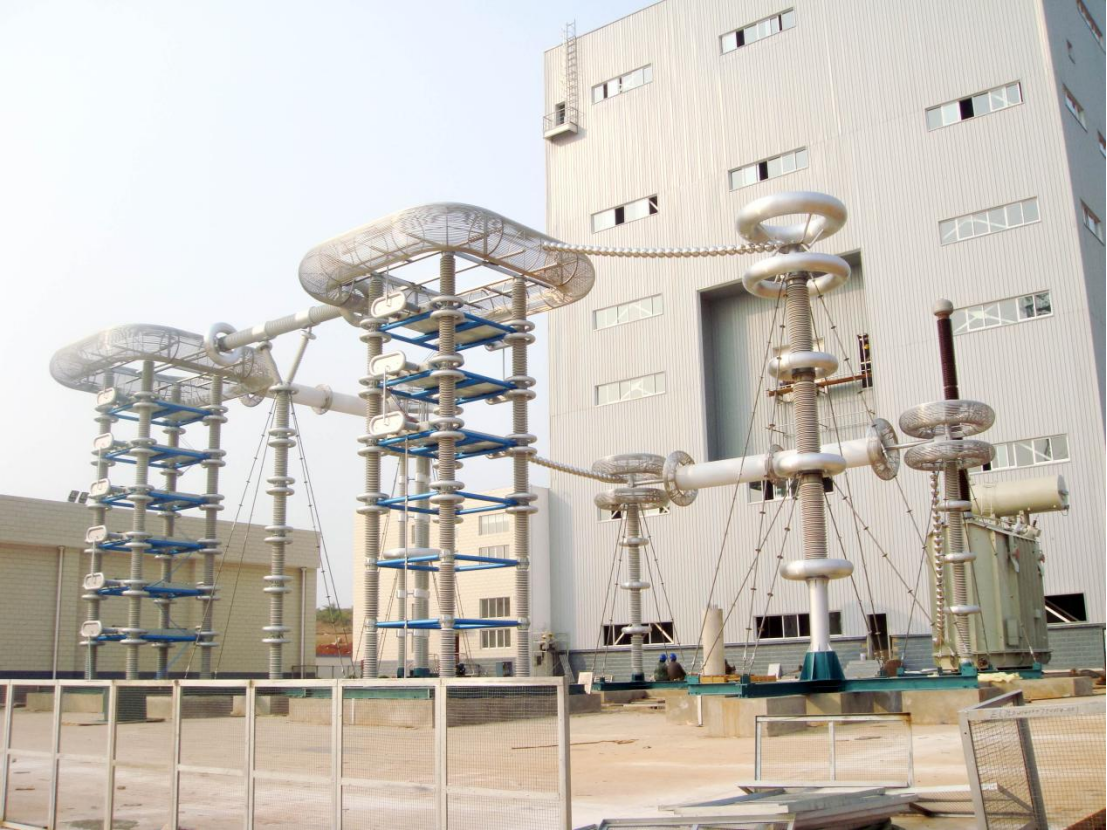
Pick the Basic configuration for routine acceptance testing in a controlled laboratory, single voltage level, manned operation with touchscreen control and Excel/CSV data export. Pick the Intelligent configuration when you need AI grounding monitoring, automatic fault recording, unattended testing, or remote control from outside the high-voltage area. Custom configurations up to 800 kV are built for HVDC project FAT and ±500 kV converter transformer testing.

Apply the DEMIKS selection rule: the generator output voltage must be at least 1.2 times the required test voltage. For 66 kV cable accessory acceptance per IEC 60840, the test voltage is typically 1.73 Uo or 2.0 Uo where Uo is the phase-to-earth voltage; a 100 kV connection wire and a HVDC system rated 150 kV or higher provide adequate headroom and avoid corona at the connection points.

Each system ships with HV insulated connection wires rated above the test voltage, a low-impedance grounding lead, a dedicated test fixture set, equalising or grading rings to control the field at the HV end, and a dedicated discharge resistor. For CTT water-filled cable terminations, a deionised water treatment unit is supplied separately. Field setup requires a grounding resistance below 4 ohms and a clear safety perimeter for energised testing.

Lead time depends on voltage class, current rating, and intelligence tier. Standard Basic configurations follow factory build, internal acceptance, witnessed FAT against the customer specification, ocean or air freight, on-site installation, SAT and operator training. Configuration, milestone schedule and warranty terms are confirmed during project scoping — request a project plan tailored to your voltage level and test object.

Yes. The Intelligent configuration adds remote control over fibre-optic or wired link, an AI grounding monitoring module that blocks voltage rise when grounding integrity is unreliable, and automatic fault-type recording for post-test analysis. The control desk can be located outside the immediate HV area, which matches the safety practice described in IEC 60060-1 for HVDC test environments.

Reduce the voltage to zero at a rate not exceeding 2 kV/s, then discharge the test object to ground through the dedicated discharge resistor for at least 5 minutes. Cable systems and capacitive loads store significant charge after DC withstand; a controlled discharge eliminates residual voltage risk and protects both personnel and the insulation. The operator manual specifies discharge times per voltage class and load capacitance.

Configure Your DEMIKS HVDC Test System

Tell us your voltage class, current rating, test object and standards regime - we will return a configuration with lead time, accessories and calibration scope.

Scroll to Top
Get in touch with DEMIKS company
Contact Form 在用