Low-voltage switchgear serves as the backbone of modern electrical distribution systems, ensuring the safe and efficient management of electrical power in industrial, commercial, and residential settings. This essential equipment is engineered to protect circuits, facilitate reliable power distribution, and minimize downtime, making it critical to the functionality of any electrical infrastructure. Whether you’re an electrical engineer, facility manager, or simply looking to expand your understanding of power systems, this guide will take you through the core principles, design considerations, and operational aspects of low-voltage switchgear. By the end, you’ll gain valuable insights into how this technology supports energy management and safety in today’s fast-evolving electrical landscapes.
What Is Low-Voltage Switchgear?
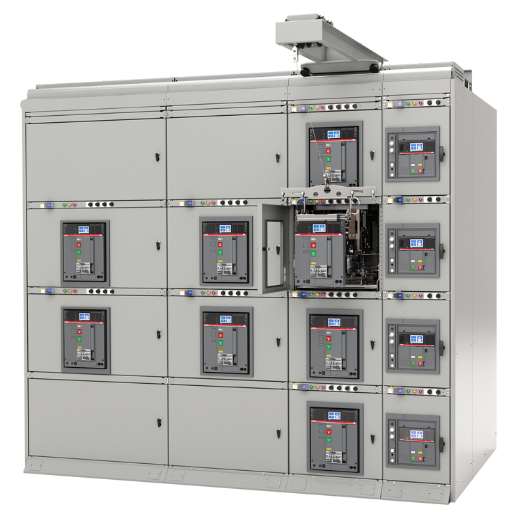
Low-voltage switchgear is a set of electrical equipment used to manage, control, and protect low-voltage electrical systems, typically operating at voltages up to 1,000 volts. It includes components such as circuit breakers, switches, and fuses, which safeguard circuits from overloads and short circuits while ensuring reliable power distribution. Designed to maintain operational safety and optimize energy usage, low-voltage switchgear is commonly found in residential, commercial, and industrial power distribution systems. Its primary function is to enhance system reliability and prevent electrical faults that could lead to equipment damage or downtime.
Explaining Low-Voltage Switchgear Basics
Low-voltage switchgear refers to an assembly of electrical components such as breakers, fuses, contactors, and switches housed in a metal or insulated enclosure. This equipment operates at a voltage of up to 1,000 volts and is essential for monitoring, controlling, and protecting electrical circuits and systems. Typically used in applications ranging from residential buildings to industrial facilities, low-voltage switchgear ensures the safe distribution of electric power by managing electrical loads and preventing issues such as short circuits and system overloads. Modern switchgear is often equipped with advanced automation features, facilitating energy efficiency, fault detection, and simplified maintenance, which significantly increase operational reliability and safety across various use cases. Proper selection and maintenance of low-voltage switchgear are critical to maintaining uninterrupted electrical power and minimizing the risk of equipment failures.
How Does Low-Voltage Switchgear Work?
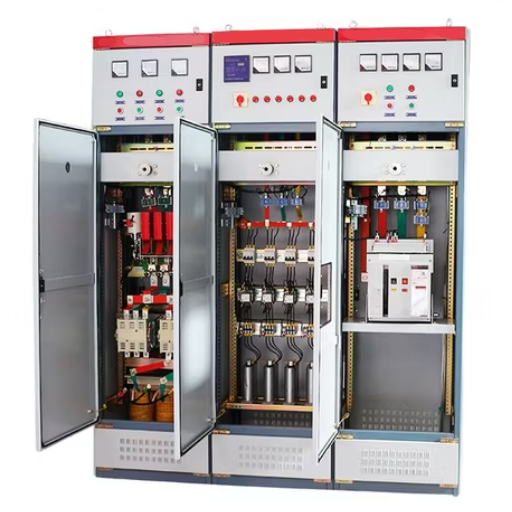
Low-voltage switchgear operates by managing and distributing electrical power to various circuits while protecting the system against faults. Its primary components include circuit breakers, disconnect switches, busbars, relays, and protection devices. The system functions to detect anomalies such as short circuits or overload conditions and isolate the affected sections to prevent further damage.
Key technical parameters for low-voltage switchgear include:
- Rated Voltage: Typically ranges from 400V to 1000V for standard applications.
- Rated Current: Can vary from 100A to 6300A, depending on the system requirements.
- Short-Circuit Withstand Capacity: Commonly ranging from 25 kA to 100 kA for a duration of up to 1 second.
- Ingress Protection (IP) Rating: Usually between IP31 and IP54, depending on the environmental conditions.
The integration of protection relays ensures real-time monitoring and fault detection, while automation features allow precise load management and enhanced energy efficiency. With proper calibration of these technical specifications, low-voltage switchgear ensures reliability, safety, and seamless operation in industrial, commercial, and residential power distribution networks.
Importance of Low-Voltage Switchgear in Electrical Systems
Low-voltage switchgear serves as a critical component in modern electrical systems by providing protection, control, and distribution of electrical power. Its primary function is to safeguard electrical devices and circuits from faults such as short circuits, overloads, and voltage fluctuations, thereby ensuring safety and preventing system failures. By incorporating circuit breakers, disconnect switches, and protection relays, low-voltage switchgear enables rapid isolation of faulty sections within a network, minimizing downtime and mitigating risks.
Furthermore, low-voltage switchgear facilitates efficient energy management through automation and real-time monitoring, enabling operators to optimize load distribution across electrical systems and reduce energy losses. It also plays a vital role in the integration of renewable energy sources, supporting seamless transitions between grid power and alternative energy systems. Designed to meet rigorous safety standards such as IEC and ANSI/UL, low-voltage switchgear is indispensable in residential, commercial, and industrial applications, ensuring operational continuity while maintaining compliance with regulatory requirements.
What Are the Key Components of Low-Voltage Switchgear?

Low-voltage switchgear comprises several integral components, each serving a specific function within the electrical distribution system. Key components include:
- Circuit Breakers – These provide overcurrent and short-circuit protection, ensuring safe operation and preventing damage to connected equipment.
- Busbars – Copper or aluminum conductors used to distribute electrical power efficiently within the switchgear.
- Switches and Disconnectors – Facilitate the isolation of circuits for maintenance or emergency conditions.
- Protection Relays – Monitor electrical parameters such as current and voltage to detect faults and trigger necessary protective actions.
- Control Devices – Components like contactors and push buttons used for operational control of circuits and equipment.
- Enclosure – Houses all internal components and provides physical protection, often designed to meet IP or NEMA standards for environmental resistance.
These components work together to ensure reliability, safety, and efficient management of power distribution in low-voltage networks.
Main Components: Circuit Breakers and Switchgear
Circuit Breakers
Circuit breakers are essential for protecting electrical circuits and equipment from overloads and short circuits. They operate automatically by interrupting the current flow when a fault is detected. Key technical parameters include:
- Rated Voltage (Ue): Typically 230V to 1000V for low-voltage applications.
- Rated Current (In): Common ranges are 6A to 6300A, depending on the application.
- Breaking Capacity (Icu/Ics): Usually specified in kA, with values like 6kA, 25kA, or higher to handle fault currents.
- Response Time: Should be in milliseconds to ensure rapid disconnection.
They ensure system safety and play a crucial role in maintaining operational continuity.
Switchgear
Switchgear refers to the combination of electrical disconnect switches, fuses, or circuit breakers used for controlling, protecting, and isolating electrical equipment. They are vital in medium- and low-voltage networks for operational efficiency. Key technical parameters for switchgear include:
- Rated Voltage (Ur): Can range from 1kV to 52kV for medium voltage systems.
- Insulation Type: Air-insulated (AIS) or gas-insulated (GIS), depending on the environmental and space constraints.
- Operational Lifespan: Often rated for over 10,000 mechanical operations.
- Protection Relays: Integrated for monitoring and preventing faults, with specifications such as overcurrent, undervoltage, or differential protection settings.
Both components are designed to operate effectively under industry standards (e.g., IEC 60947, IEC 62271) for reliability and efficiency in electrical systems.
Role of Bus and Cable Compartments
- Segregation of Components: Bus and cable compartments are designed to segregate high-voltage busbars and cables, thereby minimizing the risk of accidental contact or short circuits.
- Ease of Maintenance: These compartments facilitate organized and accessible layout designs, which significantly simplify inspection, maintenance, and replacement procedures.
- Thermal Management: Proper compartmentalization enables efficient heat dissipation, reducing thermal stress on components and preventing overheating.
- Fault Containment: They are engineered to localize and contain faults within specific compartments, ensuring minimal impact on adjacent sections and enhancing system safety.
- Support for Modular Design: Bus and cable compartments allow modular configurations, supporting scalability and flexibility to adapt to different system requirements or future upgrades.
Understanding the Metal-Enclosed Switchgear Design
Metal-enclosed switchgear is designed to house and protect electrical components within a robust, grounded metal enclosure. This design ensures safety by preventing accidental contact with live parts and shielding personnel from arc flash hazards. It also enhances system reliability by offering protection against environmental factors such as dust, moisture, and contaminants. Inside the enclosure, compartments separate components like busbars, cables, and circuit breakers, which simplifies maintenance and fault isolation. These features make metal-enclosed switchgear an essential solution for safely distributing and controlling electrical power in industrial and commercial applications.
How Does Low-Voltage Switchgear Ensure Safety?
Low-voltage switchgear ensures safety through several integrated protective mechanisms. It incorporates circuit breakers and protective relays that detect and isolate faults, preventing damage to equipment and minimizing risks to personnel. Additionally, features such as arc fault containment, insulated busbars, and grounded enclosures reduce the likelihood of electrical hazards. These systems are designed to comply with rigorous safety standards, ensuring reliable performance under normal and fault conditions.
Mechanisms for Overcurrent and Short Circuit Protection
To address overcurrent and short circuit protection effectively, I would focus on implementing key devices and mechanisms designed for these purposes. Circuit breakers and fuses are some of the most commonly used components for detecting and interrupting excessive current flow. Circuit breakers operate by mechanically isolating the circuit using thermal or electromagnetic triggers when thresholds are exceeded, while fuses provide protection by melting their conductive material under high current, breaking the connection.
Protective relays also play a critical role, monitoring electrical parameters and signaling disconnects during anomalies like short circuits. Advanced systems often integrate digital relays for enhanced accuracy and faster response times. Furthermore, the coordination of these mechanisms is essential to ensure selectivity, allowing only the affected part of the system to be isolated without disrupting the entire network. These solutions, when designed and maintained in compliance with regulatory standards, form the backbone of reliable and safe electrical circuit protection.
Protective Devices: MCCBs and Circuit Breakers
Molded Case Circuit Breakers (MCCBs) and circuit breakers are critical components in electrical systems, designed to interrupt the flow of electrical current under fault conditions such as overloads and short circuits. MCCBs are versatile devices with adjustable trip settings, accommodating a wide range of current ratings and providing protection for medium to large-scale operations. They are particularly well-suited for industrial and commercial applications where tailored current protection is necessary.
Circuit breakers, on the other hand, encompass a broader category of devices that include various types such as air circuit breakers, miniature circuit breakers (MCBs), and residual current circuit breakers (RCCBs). Unlike fuses, which require replacement after operation, circuit breakers can be reset and reused, making them a cost-effective and sustainable option.
Both MCCBs and circuit breakers function via electromechanical and thermal mechanisms to identify and respond to electrical faults. Their integration often involves advanced monitoring features, such as microprocessor controls in MCCBs, for precise fault detection and improved reliability. Proper selection and maintenance of these protective devices are imperative to uphold electrical safety, prevent equipment damage, and comply with industry standards such as those outlined by the National Electrical Code (NEC) and IEC.
What Are the Different Types of Low-Voltage Switchgear?

Low-voltage switchgear typically includes air circuit breakers (ACBs), molded case circuit breakers (MCCBs), low-voltage power circuit breakers (LVPCBs), disconnect switches, contactors, fuses, busbars, and switchboards.
|
Type |
Function |
Key Feature |
Usage |
|---|---|---|---|
|
ACBs |
Fault protection |
High capacity |
Main breaker |
|
MCCBs |
Overload protection |
Adjustable |
Distribution |
|
LVPCBs |
Low-voltage circuits |
High reliability |
Power systems |
|
Switchboards |
Power distribution |
Modular |
Control centers |
|
Contactors |
Circuit control |
Durable |
Motor control |
|
Fuses |
Overcurrent protection |
One-time use |
Safety measure |
|
Busbars |
Power distribution |
Space-saving |
Electrical systems |
|
Disconnects |
Circuit isolation |
Fast operation |
Maintenance |
Exploring Low-Voltage Metal-Enclosed Switchgear
Low-voltage metal-enclosed switchgear is designed to safely distribute electrical power within industrial, commercial, and utility systems. It consists of modular assemblies that house components such as circuit breakers, disconnects, and contactors, which work together to control and protect electrical circuits. These systems are engineered for reliability, ease of maintenance, and operational safety, making them essential for environments where power distribution efficiency and system integrity are critical. Switchgear units are constructed to comply with established industry standards, ensuring consistent performance under various operating conditions.
Differences Between Power Circuit Breaker Switchgear and Other Types
Power circuit breaker switchgear primarily differs from other types by its ability to handle higher fault currents, enhanced safety features, longevity, and suitability for complex power distribution systems.
|
Parameter |
Power CB Switchgear |
Other Types |
|---|---|---|
|
Fault Current |
High |
Moderate/Low |
|
Safety |
Advanced |
Standard |
|
Lifespan |
Longer |
Shorter |
|
Complexity |
High |
Simple/Moderate |
|
Maintenance |
Moderate |
Lower |
How Is Low-Voltage Switchgear Maintained?
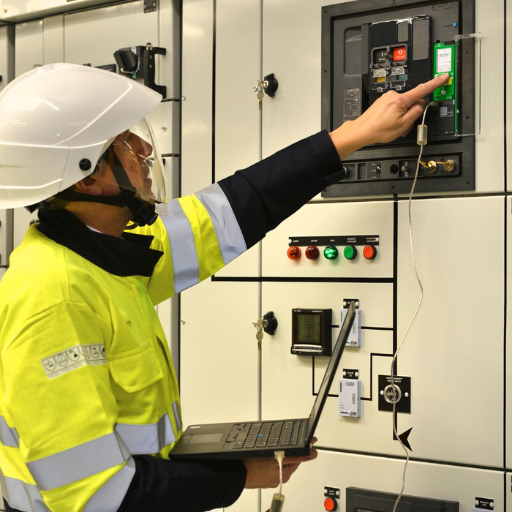
Maintaining low-voltage switchgear involves periodic inspections, testing, and servicing to ensure reliability and operational safety. Key maintenance activities include:
- Visual Inspections – Regularly check for signs of wear, corrosion, loose connections, or overheating in conductive parts and insulation.
- Cleaning – Remove dust, debris, and contaminants to prevent tracking or arcing.
- Tightening Connections – Ensure all electrical connections are securely fastened to avoid overheating or faults.
- Lubrication – Apply appropriate lubricants to moving mechanical parts to ensure smooth operation.
- Testing – Perform electrical tests such as insulation resistance, contact resistance, and functionality of protection mechanisms.
- Component Replacement – Replace worn-out parts, such as circuit breakers or fuses, as needed to maintain performance.
Routine maintenance minimizes downtime, ensures compliance with safety standards, and prolongs the operational lifespan of the switchgear system.
Regular Maintenance Practices for Switchgear Systems
To ensure safe and efficient operation of switchgear systems, I focus on adhering to structured maintenance practices based on industry standards and best practices. First, I make it a priority to schedule routine visual inspections to identify physical wear, corrosion, or debris that could impede functionality. During these inspections, I also check for proper alignment and operation of moving parts.
Second, I carry out comprehensive cleaning procedures to remove accumulated dust, dirt, or moisture, which can lead to overheating or insulation failure over time. This helps maintain optimal performance and prevents unplanned outages.
Lastly, I regularly perform critical electrical testing, including insulation resistance and thermal imaging analysis, to detect internal faults or potential areas of failure before they escalate. These proactive measures not only enhance system reliability but also ensure compliance with all safety and operational standards.
Identifying and Addressing Common Issues in Low-Voltage Switchgear
Through my experience, I have identified several recurring issues in low-voltage switchgear, such as loose connections, overheating, and insulation degradation. Loose connections, often caused by vibration or thermal cycling, can result in arcing, which damages equipment and poses significant safety risks. I address this by performing routine torque checks and applying recommended torque levels on busbars and terminal connections. Overheating, commonly due to poor ventilation or overloading, can lead to equipment failure. To resolve this, I monitor thermal patterns using infrared thermography and ensure components are operating within their design specifications. Insulation degradation, typically caused by aging or environmental factors like moisture, is mitigated by conducting insulation resistance tests and replacing compromised materials promptly. These systematic approaches ensure both reliability and adherence to safety standards.
Reference Sources
-
Eaton: Low-voltage switchgear fundamentals – A detailed overview of low-voltage switchgear by Eaton.
-
A Beginner’s Guide to Low Voltage Switchgear – A comprehensive guide for newcomers to understand the basics of low-voltage switchgear.
-
Understanding Low Voltage Switchgear – Insights into the components, functions, and applications of low-voltage switchgear.
-
PDH-Pro: Low Voltage Switchgear Course – A course designed for engineers to learn the fundamentals of low-voltage switchgear technology.
-
Enercon Power: The Basics of Low-Voltage Switchgear – A whitepaper covering the essential components and structure of low-voltage switchgear.
Frequently Asked Questions (FAQs)
Q: What is low-voltage switchgear?
A: Low-voltage switchgear, often referred to as LV switchgear, is a combination of electrical disconnect switches, fuses, or circuit breakers used to control, protect, and isolate electrical equipment. It is typically used for systems with a voltage rating up to 1,000 volts.
Q: What are the main components of low-voltage switchgear?
A: The main components of low-voltage switchgear include circuit breakers, busbars, current transformers, potential transformers, protective relays, and a switchgear assembly. Each component plays a crucial role in ensuring the safe and efficient operation of electrical systems.
Q: How does low voltage switchgear technology enhance safety?
A: Low voltage switchgear technology enhances safety by providing protection against electrical faults through effective isolation and interruption of electrical current. This prevents equipment damage and reduces the risk of electrical fires and other hazards.
Q: What is the difference between switchgear and switchboards?
A: Switchgear broadly refers to the combination of electrical disconnect switches, fuses, or circuit breakers used to control, protect, and isolate electrical equipment. Switchboards, on the other hand, are a specific type of switchgear used primarily to distribute power to various circuits within a building.
Q: What are the different types of low-voltage switchgear?
A: The different types of low-voltage switchgear include metal-enclosed or metal-clad low-voltage power circuit breaker switchgear, which can be vented or unvented, and low-voltage switchgear rated for different applications based on their design and operational requirements.
Q: How does a low-voltage power circuit breaker switchgear function?
A: A low-voltage power circuit breaker switchgear functions by automatically interrupting electrical flow upon detecting a fault condition. This helps protect electrical circuits from damage due to overcurrents or short circuits, ensuring the reliability and safety of the power supply.
Q: What is the purpose of the bus compartment in a switchgear section?
A: The bus compartment in a switchgear section serves to house the busbars, which are conductive bars used for distributing electrical power to various circuits. The bus compartment ensures efficient power distribution while maintaining safety and ease of maintenance.
Q: Why is low-voltage switchgear essential for modern electrical systems?
A: Low-voltage switchgear is essential for modern electrical systems because it ensures the safe distribution and control of electrical power, protects against electrical faults, and facilitates maintenance and operational efficiency. This makes it a critical component in industrial, commercial, and residential power systems.
Q: What are the fundamentals of low voltage switchgear design?
A: The fundamentals of low voltage switchgear design focus on ensuring safety, reliability, and efficiency in electrical power distribution. This involves selecting appropriate components, ensuring proper insulation and isolation, and designing for easy maintenance and operational control.
Q: Can low-voltage switchgear be customized for specific applications?
A: Yes, low-voltage switchgear can be customized for specific applications by configuring the components to meet the unique requirements of a particular system. This includes selecting the appropriate circuit breakers, protective relays, and busbar arrangements to ensure optimal performance.



![Partial Discharge Test Equipment: Types, Selection & IEC 60270 Guide [2026]](https://demikspower.com/wp-content/uploads/2026/05/0-10.webp)