Effective workplace safety requires the correct storage and management of gas cylinders. Effective gas cabinets with controlled storage compartments reduce the risk presented by dangerous, flammable, or toxic gases. This article delves into the most important functions of gas cabinets in industry and laboratory work for hazard and efficiency control. Gas cabinets make compliance with the law easier while also enhancing corporate safety procedures. Readers will develop an understanding of why a gas cabinet is essential for the safe storage of gas cylinders.
What is a Gas Cabinet and Its Purpose?

A gas cabinet’s main features are in-exhaust ventilation and leak detection, which enable the cabinet to contain gas leaks and fire or explosion risks. More generally, a gas cabinets is an enclosure that is airtight and ventilated to store and regulate compressed gas cyclinders safely. Furhermore, gas cabinets vent to the exhaust and leak detection system , making them sturdier than ordinary structures. By isolating gas cylinders, gas cabinets enhance compliance with safety regulations and industry standards.
What are the main features of a Gas Cabinet?
Gas cabinets are sophisticated engineered systems which ensure the safe containment of gases and cuisines for both operational and safety concerns. Below is a detailed analysis of their functionalities and major components:
- Exhaust Ventilation System
Designed with Amine scrubbers, gas cabinets incorporate air vent systems which maintain the dilution and removal of any harmful gasses within the enclosure. Many systems connect to facility ventilation or work at an airflow rate of 150-250 cubic feet per minute (CFM).
- Gas Leak Detection Systems
Additional modern detection of leaks, such as infrared or electrochemical systems, is incorporated to identify any gas escaping from the cylinders. Advanced Monitoring for emission detection is possible using supported hardware and software systems where visual feedback reinforced by audio notifications coupled with rendering of optional events can occur.
- Automatic Shutoff Valves
To prevent the discharge of gas from the cabinetry during a pre-set emergency state, gas cabinets are integrated with automatic shutoff valves. This capability substantially decreases the likelihood of exposure to danger or secondary injuries.
- Robust Structural Design
Protected with high-pressure fire-resistant powders or stainless steel, gas cabinets are protected from harsh industrial environments. In addition, they are capable of sealing isolated high-pressure cylinders.
- Purge Systems
Most gas cabinets are fitted with a built-in purge manifold system designed to remove residual gases from the cabinet prior to cylinder change-out. Purging is usually done with nitrogen and ensures no dangerous gases are present in the supply lines or within the cabinet.
All these features are designed to provide safety in the operation and control over the gas handling processes. Such engineered systems are critical for the semiconductor manufacturing and drug industries, as well as laboratory research, which have strict hazardous gas control requirements.
How does a Gas Cabinet ensure safety?
Gas cabinets provide a safe environment using several types of physical controls like advanced monitoring systems, and automated control systems. The cabinet is designed using tough, fireproof materials that help to contain any leaks or explosions that may occur. For removing gas concentrations that are considered dangerous, built-in ventilation systems are designed to take any leaked gas to scrubbers or exhaust systems, which neutralize hazardous substances.
Moreover, gas cabinets incorporate modern sensors designed for real-time detection of gas leaks. These integrated systems for toxic, flammable, or corrosive gases notifies and activates programmed responses to breaching critical levels. Elimination of danger during critical situations is provided by the automated shut-off valves which stops the flow of gas making the system safer and reducing exposure risk.
Gas cabinets are an integral safety measure for maintaining operational safety in sensitive environments, and they comprise sophisticated technologies and engineering systems which offer vital protective functions. Additional advanced protection features, known as interlocks, help enhance operator safety by providing comprehensive restricted access and enforcing strict adherence to predetermined workflows during gas cabinet operations. These measures are essential for minimizing the risk of gas cabinet operator error.
What types of gases require a Gas Cabinet?
Gas cabinets are vital for protecting flammable gases such as hydrogen, acetylene, and methane, which pose health hazards and environmental risk. Hazards and Environmental risk are oxygen rich environments where these gases can ignite and explode. In addition to flammable toxic and corrosive gases such as ammonia and hydrogen sulfide, need their own gas cabinets to contain and prevent accidental leaks that can harm employees within the workspace. Their containment is highly monitored to avoid degradation of infrastructure. Gas cabinets also aid in protecting against corrosive pyrophoric gases like silane and phosphine which need enclosed storage as they can spontaneously combust when exposed to air. Other containment that serves boron trifluoride and arsine falls under the category of research, calling for safe containment due to their highly reactive and toxic nature. To meet these needs, double-walled chambers need to be used. Protections such as these help comply with industrial standards to optimize the workflow while prioritizing safety.
How to Choose the Right Gas Cabinet for Your Needs?
- Material Compatibility: Ensure the gas cabinet is constructed from materials that are resistant to the gas being stored for the corrosive or toxic gasses. These would require special coatings and seals that resist corrosion.
- Ventilation Requirements: Make sure the gas cabinets have appropriate ventilation systems designed to eliminate dangerous gases. Ensure that the devices are in compliance with OSHA or NFPA regulations.
- Size and Capacity: Gas cabinets should be selected that do not exceed the number of cylinders needed to be stored safely and accessed easily.
- Safety Features: Choose cabinets with the most relevant safety measures such as shutoff valves, leak detection, and fire suppression systems which may be used depending on the risks posed by the gases in use.
- Regulatory Compliance: Ensure that the gas cabinet boundaries have the relevant regulations in your jurisdiction, neighboring jurisdiction, and cross-border, as well as NFPA 55, CGA and SEMI S2 for semiconductor.
Attention to these factors will allow you to select a gas cabinet with confidence in safety, operation, and compliance needs.
What are the dimensions and capacity options for Gas Cabinets?
Gas cabinets differ in size and shape to serve different operational and safety needs. For example, most gas cabinets with basic features have external dimensions of 24 to 48 inches wide, 18 to 24 inches deep, and 65 to 84 inches tall. These variations allow for both small installations and larger industrial setups.
The standard gas cabinets have flexible storage capacity engineered to hold a single gas cylinder, double-cylinder configurations, or even larger setups with up to four cylinders. Other high-capacity units designed for bulk gas supply applications tend to be more common, while low-capacity units are integrated in specialized, controlled, low-flow environments. In addition, modular designs and custom adaptations allow construction to meet more precise user specifications, such as securely shielding specialty mixtures or hazardous gases.
What materials are best for Gas Cabinets?
Equally important as the construction design of gas cabinets, is the selection of materials that guarantees operability and safety, especially for hazardous and delicate gases. The preferred grade 304 or 316L stainless steels makes these parts with abrasive material durability stronger, makes corrosion resistance, non-reactive properties also enhances the gases mistreated with corrosive and poisonous nature. The resistance of stainless steels ensures durability even under high pressures and harsh operating conditions.
For enhanced durability, electropolished stainless steel aids in augmenting construction particle adhesion and scratching contamination risks. Nonmetallic parts of the cabinet are made of PTFE (polytetrafluoroethylene) and PFA (perfluoroalkoxy alkane) plastics, which are very inert and resistant to high temperatures. Meeting the stringent requirements of the industry, for example, SEMI (Semiconductor Equipment and Materials International) or NFPA (National Fire Protection Association) standards, gas must ensure safe and efficient gas distribution systems.
How do I ensure proper ventilation in a Vented Gas Cabinet?
Correct airflow and trapping of dangerous fumes within a vented gas cabinet is a critical component for safety and regulation compliance. Compliance can be maintained by the installation of a high-efficiency exhaust system and maintaining negative pressure inside the gas cabinet, ensuring all hazardous gases are safely captured and routed to a safe exhaust.
All parts of the gas cabinet should ensure even distribution of air, achieved through the use of laminar flow which reduces gas pocket formation through smoother, less turbulent air movement. As with all gas cabinets, the exhaust flow rate needs to be controlled and must meet minimum standards set by SEMI S6 or OSHA depending on the type and volume of gas stored.
Critical to system performance are the airflow parameters, which must be constantly monitored either using differential pressure sensors or airflow monitoring devices which track flow rates, provide real time feedback, and can even set off alarms in case of airflow deviations. Gas cabinet performance is also affected by periodic maintenance such as filter checks and replacements.
Workplace safety is another aspect improved through the addition of the listed system features. This is important for all users of the gas cabinet as it protects personnel and equipment as well as meeting health and safety regulations.
What are the Safety Regulations for Gas Cylinder Storage?

- Proper Ventilation: Storing gas cylinders in Gas Cabinets needs proper ventilation due to the possible dangerous of gas build up. Gas cylinders should not be kept in closed spaces or places that have poor circulation.
- Segregation of Gases: Flammable gases such as propane should be kept at a safe distance from, or behind fire resistant barriers, oxygen or other oxidizing agents .
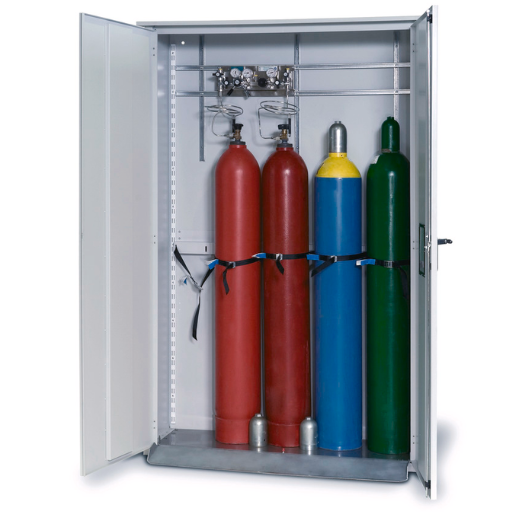
- Securing Cylinders: Gas bottles must be strapped, chained, or placed in a rack to secure them upright to avoid toppling over.
- Temperature Control: Cylinders should be kept in a spin outside the range of recommended temperatures.
- Labeling and Identification: All cylinders must be labeled correctly regarding their contents and hazard classifications. Labels must remain fully visible and undamaged.
- Inspection and Maintenance: Undertake in-depth examinations regularly to check for leaks, corrosion, or other signs of deterioration and physically remove defective ones.
Following these steps prioritizes the safety standards for the operational environments preventing major risk with gas cylinder storage.
What codes govern the use of Gas Cabinets?
When dealing with hazardous gases, some facilities use gas cabinets which are strictly enforced by various codes and regulations. The International Fire Code (IFC) and National Fire Protection Association (NFPA) 55, both of which legislate the storage and use of compressed and cryogenic gas and fluid, provide the core legislation. Also, the OSHA Standard 29 CFR 1910.101 has put in place provisions about the safe usage of compressed gases that must not be ignored.
For facilities that handle highly dangerous gases, gas cabinet safety provisions from NFPA 1 (Fire Code) deal with leak prevention and ventilation for gas cabinets. Also, the ventilation design for gas cabinets to protect workplaces is provided by the Uniform Mechanical Code (UMC). Facilities must now consider local building codes and state laws because those jurisdictions tend to have more stringent region-specific safety standards. It goes without saying that these criteria should be monitored closely for compliance and risk control.
How to properly handle and store Gas Cylinders?
Following recognized protocols is necessary in the dangerous gas cylinder handling and storage procedures. Gas cylinders must be stored standing up and strapped with chains or other equipment which holds them upright to avoiding falling. Storage areas should be free from any sources of fire, OSHA and NFPA regulated signage must be placed to warn of the hazards present as well as indicating the airflow. Cylinders which contain flammable gases must not be stored near oxidizers and must instead be kept 20 feet away behind a physical barrier. This is as per NFPA 55 guidelines.
Do not manually lift cylinders; use carts or dollies with secure clamps to prevent injury to the staff, and damage to the cylinders. The protective caps must guard the valve against impact or contamination so they should always be kept in place during transport. Caps should also be kept closed during transport to avoid contamination to the valve. Cylinders must not be dropped, dragged, or rolled as it may damage the structure.
Managing temperatures critically is a must; gas cylinders must be kept away from extreme heat over 125°F or freezing cold temperatures to prevent pressure change complications or material degradation. Any cylinders with leaks, corrosion, or damage should be inspected regularly and those which are compromised must be disposed of immediately. Reducing risks and ensuring compliance with both federal and local safety regulations, proper training for personnel which handle these gas cylinders is vital.
What are the hazards associated with Gas Cylinder Storage?
Amidst working around chemical gas cylinders and protecting oneself from a myriad of hazards, there is a critical hazard which involves risk or exposure to violence. Flammable gas such as propane, acetylene or hydrogen is stored and ignited which can lead to risk of explosion. In addition, if under too much pressure then cylinders can rupture while gas is in a contained state. Valves need to be monitored as damaged valves will lead to rapid loss of gas, which can disrupt the normal operation of the equipment.
There are also the threatening scenarios of the inadvertent release or very low concentrations of toxic asphyxiating gases that can pose poisoning such as carbon monoxide and chlorine, displacing oxygen like nitrogen or helium, and gradual corrosive damage to storage areas, such as ammonia, resulting in damaged structures and severe health risks.
Another example would be improper segregation of incompatible gases. Storing oxygen, an oxidizing agent, near flammable gases poses significant threats in fire risks. Furthermore, extreme heat can change pressure which could lead to cylinder failure, greatly increasing the risk of leak or rupture.
As for labeling protocols, failure to follow strict guidelines exacerbates the hazard. Cylinders that are unidentified or mislabeled make safe handling and usage impossible. All these risks describe the need for proper safety and regulatory guideline compliance in the storage of gas cylinders.
How to Maintain and Monitor a Gas Cabinet?
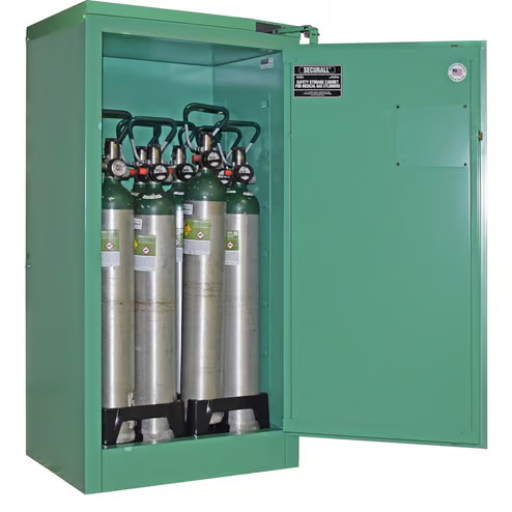
- Regular Inspections – Check gas troubled zones regularly, carrying out routine inspections covering elbow seals, corrosion and gas cabinet structures. If issues are found, fix immediately.
- Verify Ventilation – Check that all ventilations permit free flow. Vents must be functioning to maximize the movement of gas to the exhaust areas. Cluttered vents pose ventilation gaps for gas, leading to build up.
- Monitor Gas Levels – Hold the responsibility of monitoring gas levels continuously to certified exposure meters. Leakage, concentration of suspicious gas and alarm functionality should all be carefully tested.
- Check Pressure Regulators – Evaluate pressure regulators, gauges, and control valves to ensure they are in working order and within safe operating limits.
- Maintain Cleanliness – The surrounding space and the cabinet itself should be free from clutter to reduce the risk of fire and interference with the equipment.
- Adhere to Documentation Requirements – In relation to inspections, maintenance activities, and incidents, logs should be recorded and updated to adhere to safety protocols.
Following these practices helps streamline the functions of a gas cabinet, decreases risks, and increases dependability.
What maintenance practices are essential for Gas Cabinets?
Gas cabinets must be maintained and the remainder should be functioning correctly in order to assure enduring functionality, safety, and compliance with regulations. The following below outlines work steps that are crucial in maintaining gas cabinets:
- Regular Leak Testing – Regular-use leak tests with recognized detection devices are conducted for leaks in piping, valves, and other relevant fittings. Taking these precautions can avoid harmful gas emissions and avert system failure.
- Filter and Component Replacement – As per guidelines and demand from the given system, inline filters and gas regulators along with other expendable parts should be replaced at set timeframes to preserve the integrity of the gas and functionality of the system.
- Inspection of Ventilation Systems – Make sure exhaust systems as well as other ventilation ducts do not have any unrestricted flow and are functioning within specified limits. Controlled airflow minimizes accumulation of hazardous gases and improves workplace safety.
- Monitoring Pressure Gauges and Flow Meters – Check and calibrate gas pressure and flow measurement devices to ensure that adjustment valves are not over gauging gas supplied and precision control of gas delivery is maintained.
- Corrosion Assessment – Look for internal and external physical features of the cabinet for signs of humidity damage, exacerbated by corrosive gases.
By following these maintenance guidelines, gas cabinets can be optimized, and downtimes as well as possible hazardous, toxic substances can be minimized. Regular assessments alongside compliance to the latest safety policies reinforce the system’s reliability and strengthen safety within operations.
How to detect and respond to a Gas Leak?
Gas leaks pose significant threats in places that use combustible or hazardous gases. Frequently, people leak highly combustible gases which may have an unusual odor paired with hissing-like sounds, as seen at pipelines. Moreover, damaged equipment or pipelines may also be a visual indicator of leaks. In addition to the previously mentioned indicators, modern gas environments are integrated with sophisticated gas detection systems which can pinpoint areas that exceed a pre-defined level of gas concentration, aka “gas floors”.
If a gas leak is identified, sensitive measures need to be taken to avoid ignition. First and foremost, personnel should be evacuated to a safe vicinity while gas supply valves are switched off. It is also important to cut off electrical devices or anything that use flames to avoid combustion. If safe, try to ventilate the area. Finally, notify in case emergency gas support has to be alerted for the gas leak detection.
In the post-incident review, updated regulatory compliance and safety measures, along with advanced safety protocols and enhanced operational security must be adhered to in addition to root cause investigations to remove points of failure. Upgraded safety and advanced drills will ensure that personnel are prepared for effective action during emergencies.
What are the Different Configurations of Gas Cabinets?
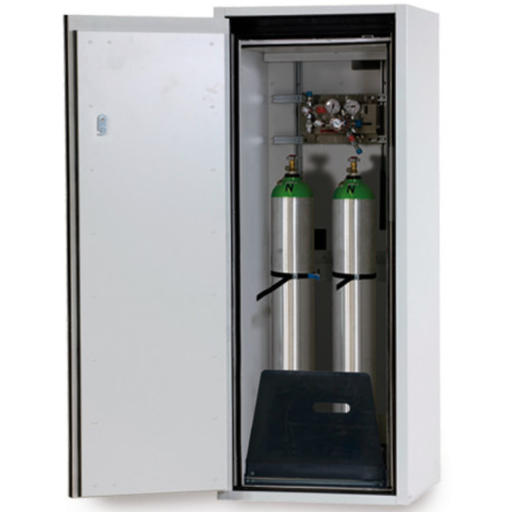
For each specific operation and safety requirement, gas cabinets can be configured in different ways. Single-cylinder gas cabinets and double-cylinder gas cabinets are the two most common types.
- Single Cylinder Gas Cabinets – Made to contain and supply gas from a single cylinder. These are best suited for applications that do not require gas in high volumes.
- Double Cylinder Gas Cabinets – Designed to hold two gas cylinders. These are often used for uninterrupted supply applications along with automatic switchover feature.
- Multiple Cylinder Gas Cabinets – These are designed for high demand operations. These cabinets can hold multiple cylinders, which are connected via a manifold system.
- Process Gas Cabinets – Focused on delicate industrial operations and equipped with safety measures such as strategic monitoring and automatic system shutdowns.
- Ventilation-Integrated Cabinets -Designed to avert the dangerous accumulation of toxic or flammable gases within a space by featuring dedicated ventilation systems.
These configurations are tailored to ensure safety, operational efficiency, and compliance with industrial standards. The type of gas cabinet required will depend on the type of gas, volume needs, and operational context.
What is the difference between Vertical and Horizontal Storage for Gas Cylinders?
|
Parameter |
Vertical Storage |
Horizontal Storage |
|---|---|---|
|
Orientation |
Cylinders stored upright |
Cylinders stored lying down |
|
Stability |
More stable, less prone to rolling |
Less stable, risk of rolling |
|
Space Efficiency |
Occupies less floor space |
Requires more floor area |
|
Access |
Easier access and handling |
May require extra effort for handling |
|
Ventilation |
Better ventilation for gas dissipation |
Less effective ventilation |
|
Pressure Distribution |
Uniform pressure distribution |
Pressure uneven, risk of leaks |
|
Usage |
Common for flammable or pressurized gases |
Rarely used for high-pressure gas cylinders |
|
Safety Risks |
Lower risk in case of leaks or rupture |
Higher risk of instability and leak dangers |
|
Regulatory Preference |
Often compliant with industry standards |
May not comply with certain regulations |
|
Storage Capacity |
Can stack more with racks in place |
Limited stacking options |
What is a Dual Gas Cabinet and when is it needed?
Having precise control, segregation, and safety with multiple gases all at once requires dual gas cabinets. For example, the research centers managed different combinations of gases or gas mixtures, manufacturing plants in need of inert gas atmospheres, and places that require a steady flow of gas during processes such as etching and welding. These gas cabinets provide safety to meet almost all regulations, enable the use of an uninterrupted backup supply simultaneously, and supply alternate stream redundancy improving performance. Adding a dual gas cabinet makes it possible to have minimal risk of gas cross-contamination while improving operator safety, therefore having high precision and safety in critical areas.
A dual gas cabinet is needed in applications such as research facilities that deal with various combinations of gases, manufacturing plants that provide inert atmospheres and places that need constant gas flow during processes like welding. These cabinets enhance compliance with safety regulations and efficiency during gas supply, while providing redundancy during supply interruptions. Dual cabinets reduce the chances of gas cross-contamination and improve protected-based operator safety, making them vital in critical applications.
How to customize a Gas Cabinet for specific gases?
Safety gas cabinets mounted for specific toxic gases requires studying the application needs, safety requirements, and listing gas properties. Special coatings of stainless steel are used to maintain structural integrity of equipment, which is important for survival and functioning purposes. Every toxic gas possesses different physical and chemical attributes like corrosiveness, pressure needs, and material compatibility.
The internal layout of the cabinet must also meet the functional requirements of the gas in use. This entails selecting suitable regulators, valves, and piping systems which are matched to the pressure and flow requirements of the gas. For toxic or flammable gases, proper ventilation becomes critical. Such gases usually integrated exhaust systems which minimize the danger of unintentional leakage.
To further enhance functionality and compliance with regulations, specialized automation, safety shutoff valves, gas detection devices, temperature controls, and monitoring systems can be added. These are crucial in assuring instant response to dangerous situations, therefore safeguarding both personnel and equipment. Markers for identification, color-coded description for grouping pipes, compliance with CGA, NFPA, ISO, or other applicable standards are also important to ensure operation and safety during use.
Working with suppliers or experts that deal with specific gases can further assist with customization. Such professionals can provide bespoke proposals and designs based on the intended operations while ensuring compliance with national and international safety requirements. Every detail maximizes the performance, safety, and durability of gas cabinet systems.
What are common applications for Gas Cabinets?
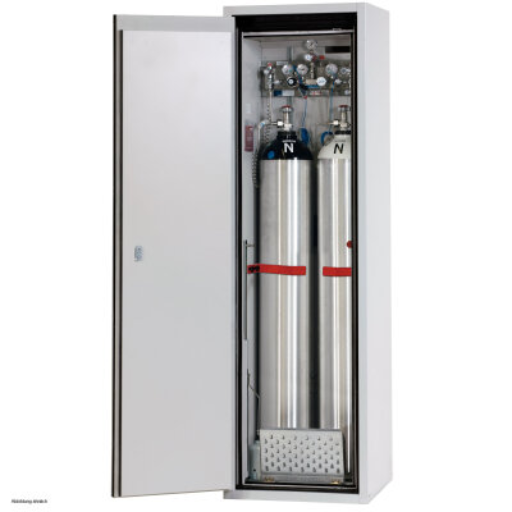
Many businesses need gas cabinets to store and handle highly pure gases or materials that are flagged dangerous to ensure the utmost safety around them. Most of the time, they are used in:
- Semiconductor Manufacturing: All gases, such as silane, ammonia, or hydrogen, used in chemical vapor deposition (CVD) and etching are kept in gas cabinets. Their supply is also controlled and monitored.
- Pharmaceuticals and Biotechnology: Those in the field monitor special gases that aid in the synthesis of produced drugs, sterilization, and other laboratory analyses.
- Research Laboratories: In gas cabinets, toxic and other reactive gases needed for experiments and prototyping are securely contained providing ease of access to scientists.
- Industrial Manufacturing: Employed during pinpoint welding, laser cutting, and other heat-intensive treatments to ensure precise delivery of gas.
- Aerospace: For engineering applications like materials testing and the development of propulsion systems, the containment and dispensing of gases is the crucial first step.
In these cases, the use of gas cabinets illustrates their value in managing safety concerns as well as in preserving the integrity of processes which depend on gases of a certain composition.
How are Gas Cabinets used in laboratories?
Gas cabinets are of great importance for the protection of corrosive gases within laboratory environments. They serve to hold gas cylinders at pressure, but also serve to reduce the chances of leaks, allergic reactions, or releases. Gas cabinets are fitted with state-of-the-art monitoring equipment, including gas leak detectors and automatic shutdowns that identify risks and take action to eliminate them in real time. These cabinets also provide flow control allowing regulated gas transmission required for precise control in analytical work such as chemistry, material synthesis, and equipment calibration. Because gas cabinets are meant to maintain pressurized gas, they are built with negative pressure rooms meant to capture excess or escaped gases to be neutralized and safely canceled outside laboratory ovens or chemically scrubbed, complying with harsh environmental regulations. All these features help maintain the required conditions in laboratories working with special gases.
What role do Gas Cabinets play in manufacturing?
Gas cabinets are crucial in safeguarding and storing hazardous or corrosive gases used in sensitive pharmaceutical and semiconductor fabrication industries. These cabinets provide critical augmentation in the treatment of ensuring advanced materials manufacturing gas flow control. With the help of sophisticated filtration systems, gas cabinets are capable of controlling the process and quality of the product. Gas cabinets further advanced technologies including modern gas cabinets which can have flow controllers, leak detectors, pressure sensors and other gas level measurement systems that need real-time monitoring data, as well as system performance data. Stringent standards for high precision in monitoring these complex functions helps in the archival of safety aligned with regulatory environmental workplace standards.
Reference Sources
-
Gas Cabinet Safety
A guide on safe storage requirements for toxic and corrosive gases, including compliance with safety codes. Read more here. -
Gas Cabinet Hood Testing and Performance Standards
Details testing and performance standards for toxic gas cabinets, particularly at Stanford University. Read more here. -
Hydrogen Gas Safety
Discusses safety measures for hydrogen gas storage, including fire sprinklers and gas detection systems. Read more here.
Frequently Asked Questions (FAQs)
Q: What is a gas cabinet and why is it important for gas cylinder storage?
A: A gas cabinet is a secure storage cabinet designed specifically for the safe storage of gas cylinders. It is important for gas cylinder storage because it ensures containment, minimizes risks of leaks, and complies with safety regulations, ultimately protecting personnel and the environment.
Q: How many gas cylinders can a typical gas storage cabinet hold?
A: A typical gas storage cabinet can hold various configurations such as 6 cylinders, 12 cylinders, or more, depending on the cabinet size and design. It is essential to choose a cabinet that meets your specific storage needs.
Q: What materials are commonly used in the construction of gas cylinder cabinets?
A: Gas cylinder cabinets are often constructed from durable materials like aluminum or steel to withstand environmental conditions and provide secure containment. The choice of material can also affect the cabinet’s weight and portability.
Q: How does a gas panel work in conjunction with a gas storage cabinet?
A: A gas panel is installed with a gas storage cabinet to control the flow of gas from the cylinders to the application. It includes valves and regulators that help maintain the desired pressure and purity of the gas being delivered.
Q: What safety features should I look for in a gas cabinet?
A: Key safety features to look for in a gas cabinet include an excess flow valve, manual close valve, venting options for exhaust, and reinforced panels. These features help manage risks and ensure safe operation of the gas storage system.
Q: Can a gas cabinet be used for both high-purity and ultra-high-purity gases?
A: Yes, specialized gas storage cabinets are available to accommodate both high purity and ultra-high purity gases. These cabinets often have features designed to minimize contamination and ensure the preservation of gas purity during storage.
Q: What are the benefits of using a fully automated gas delivery system with a gas cabinet?
A: A fully automated gas delivery system enhances safety and efficiency by minimizing manual handling of gas cylinders. It ensures precise control of gas flow and reduces the risk of human error, while also offering a lower cost in the long run due to improved reliability.
Q: How do I adjust the cabinet size for different gas cylinder diameters?
A: When selecting a gas storage cabinet, it’s important to consider the diameter of the gas cylinders you will be using. Ensure that the cabinet is adjustable or that you choose a model designed specifically to accommodate various cylinder sizes.
Q: What is the recommended assembly process for a gas cylinder cabinet?
A: The assembly process for a gas cylinder cabinet typically involves following the manufacturer’s manual closely. It is crucial to ensure that all parts are securely mounted and that the cabinet complies with local fire and safety regulations to ensure safe operation.