The prospect of wireless power transmission (WPT) evokes the vision of a time when energy transfer cords and plugs will be obsolete. It employs sophisticated technologies from the field of electromagnetic energy principles allowing current transfers to be made without cables. The scope of WPT encompasses mobile devices, electric vehicles, and even large-scale industrial applications, showcasing potentially profound impacts to society. This technology has the capacity to revolutionize information technology and communication industries. In this article, we will delve into the science of wireless power transmission, its applications, technological impacts, adoption barriers, and the solutions and innovations overcoming such challenges. The information gathered will help understand WPT technology and how it will change the face of electric power transfer in the future.
What is Wireless Power Transfer?

Wireless Power Transfer (WPT) refers to ways through which electrical power is sent to a device remotely and without any connection for wires. It also uses electromotive energies or sends energy by means of induction, resonant induction or electricity radiation such as microwaves, or radio waves. WPT technology is widely used on mobile phones, electric cars, and medical devices, as it provides ease of function as well as improves effectiveness over traditional wire-operated systems. It also reduces maintenance of physical connectors as well as safe and flexible power delivery across many distances.
Understanding the Basics of Wireless Power
WPT systems are also anchored from some fundamental electromotive principles, mainly WPT implemented inductive power transmission systems depend on the law of Faraday, which states that there must be an active change within one magnetic field to create electromotive force in a conductor situated within. The transmitter forms an oscillating electromagnetic field which creates an alternating current on a receiver coil placed nearby. Depending on the specific method employed—such as inductive or resonant covalently coupled inductive coupling—the efficiency of energy transfer varies based on distance, alignment, and environmental factors.
Recent developments in the WPT industry have achieved cutting-edge designs in power delivery efficiency, thermoregulation, and multi-device compatibility. For example, several meter-range wireless charging resonant systems are now available. This makes them appropriate for use in maneuvering charging zones like roadways for electric vehicles (EVs). Ongoing improvements in the performance of the WPT due to advancements in coil design and frequency tuning are positioned to make it one of the most important elements in smart cities and the Internet of Things (IoT). These emerging technologies need rapid wireless charging systems.
How Does Wireless Power Transfer Work?
Depending on the design of the system, Wireless Power Transfer (WPT) can either work on the basis of electromagnetic induction or resonant inductive coupling. Similar to any technological application, WPT also has a transmitter coil, and in this case, it serves as a secondary coil that energizes the primary coil by flowing through room temperature alternating current (AC). The close proximity of the secondary coil enables the oscillating magnetic field to induce an electric current within it. Advanced techniques such as resonant inductive coupling improves the energy transfer efficiency by tuning both ends to the same frequency which reduces losses when the two systems are misaligned or too far.
The focus of recent research in WPT has been on improving efficiency and range. The use of modern high-frequency inverters along with intricate circuit layouts enables energy transfer with negligible losses. Moreover, advancements in materials science have also made a positive impact, for instance, the use of ferrite-backed coils and coils made with conductive wires. WPT is essential in developing the second generation of electric vehicles as well as portable equipment because they are vital for the future of wireless energy systems.
Applications of Wireless Power Transfer Technology
The technology of Wireless Power Transfer (WPT) is currently being used in different sectors of the economy as it’s possible to deliver power without physical connections. Below are the major uses and their respective impacts:
- Electric Vehicle (EV) Charging
WPT is transforming the Electric Vehicle (EV) industry through the introduction of advanced charging systems that are more efficient. Charging infrastructure such as inductive charging pads offers plugless vehicle power up, lowering both mechanical failure risks and wear. Market reports suggest that the EV global WPT market is estimated to be worth $322 million by 2028 due to enhance market adoption and government policies aimed towards eco-friendly EVs.
- Consumer Electronics
Smartphones, smartwatches, and earbuds serve as primary examples of consumer electronics that utilize wireless charging technology. The industry standard Qi was developed by the Wireless Power Consortium. Their collaborations make sure that multiple devices will work together giving them a robust ecosystem. This market will increase from $11 billion in 2022 to over $28 billion by 2030.
- Medical Devices
With WPT, the need for surgeries to replace batteries on medical implants and wearables is eliminated. Devices like cochlear implants, pacemakers, and insulin pumps benefit from wireless charging devices, allowing patients to receive greater safety and convenience. Research suggests these devices will boost operational lifespan and lower healthcare costs.
- Industrial Automation
Automated guided vehicles (AGVs), robotic arms, and various sensors within warehouses and factories can be powered through wireless power transfer (WPT). These systems reduce connection failures and boost flexible safety succors. Studies show WPT industrial automation use is predicted to rise 17% every year until 2027.
- Aerospace and Defense
WPT systems drones, satellites, and other unmanned machines are being equipped with WPT systems to ease power delivery in drones during missions. WPT decreases reliabnce on physical connectors enhancing device reliability, which prolongs lifespan. Drones could wirelessly recharge mid-air and extend operating periods without landing.
These examples demonstrate the face-changing innovation WPT and its diverse applications bring into times of efficiency and sustainability in many fields.
How is Wireless Power Transmission Used in Electric Vehicles?
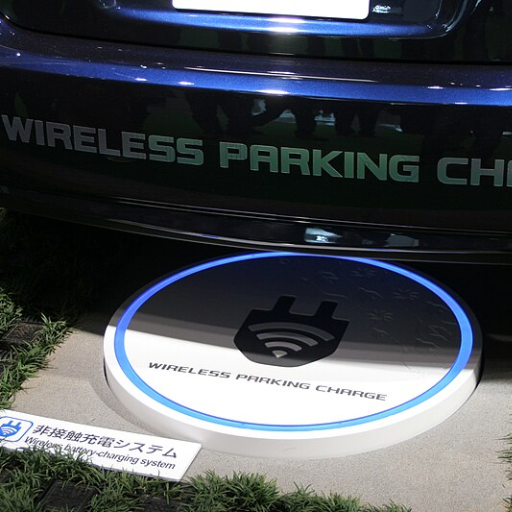
Wireless Power Transmission, or WPT, allows for charging ease with no physical connection required for electric vehicles (EVs). Energy is transferred through inductive coupling or with the use of magnetic resonance between a charging pad placed on the ground and a receiver fitted within the vehicle. Usually, the vehicle is stationed over the charging pad for seamless powering. Apart from reduced wear and tear due to removal of plugs and connectors, WPT warrants greater user convenience and the ability to charge EVs while driving on specially prepared roadways. Its use boosts the servicing of electric vehicles by enhancing their charging energy efficiency.
Wireless Charging for Electric Vehicles: A Game Changer
Electromagnetic induction allows for the wireless charging of electric vehicles (EVs). The system consists of two primary components: a transmitting pad installed on or beneath the surface of the parking area and a receiving coil integrated into the EV. Current flow through the transmitting coil (AC) activates the transfer coil generating a time-varying magnetic field. A voltage is induced through the receiver coil and rectified back to DC to charge the vehicle battery.
Modern technology enables wireless charging systems to function with a high efficiency rate, frequently exceeding 90%. This coupled with precise vehicle alignment with the charging pad improves electromagnetic coupling and is often aided by vehicle positioning systems or guided parking technologies. Control systems also adjust the power level and monitor parameters like battery temperature and power to prevent unsafe overheating or power fluctuations, maintaining the safety of the system and waterproof longevity.
The ongoing development in the power transfer rates which now some reach up to 11 kW mark is redefining the experience for EV users. There is still ample room for enhancement so the technology can be adapted for greater energy requirements and larger EV’s which include trucks and buses, expanding the scope of the technology to many different forms of transport.
Advantages of Wireless Power Transfer for Electric Vehicles
- Convenience and Automation
Physical cables and connectors are eliminated, boosting phone and electrical vehicle efficiency and user satisfaction. Provided vehicles equipped with wireless charging capabilities, users will experience hands-free automation during the aligning with charging pads making devices extremely useful during bad weather or for those with mobility restrictions.
- Weather Resistance and Durability
Due to the absence of moving parts and external conductive components, fully wireless power transfer systems are less susceptible to environmental wear. This increases reliability in harsh weather conditions such as rain and snow, as well as reduces maintenance costs over time.
- Improved Safety
Due to there being no direct electrical contact or exposed wiring, the risk of electric shock is reduced during operation. This is especially important for public or shared chargers where user safety is the main priority.
- Enhanced Energy Efficiency
Modern systems of wireless charging reach efficiency rates of 92-94%, which is on par with conventional plug-in systems. Further research is likely to lead to improvements in these figures, thereby reducing energy waste and optimizing power transfer.
- Scalability Across Vehicle Types
Current wireless power transfer systems have been implemented to cover a wide range of energy requirements. For instance, light passenger vehicles can draw from systems with approximately 7.7 kW power ratings, while systems under development aim to charge heavy-duty vehicles, such as electric buses, at 50 kW and higher. This adaptability makes the technology useful across personal, commercial, and public transportation.
What are the Benefits of High-Voltage Wireless Power Systems?

High-voltage, wireless power systems come with several distinct advantages:
- Efficiency: These systems are designed for optimal energy transfer with minimal loss, particularly in multi-function or heavily-loaded scenarios, ensuring great efficacy.
- Convenience: The absence of physical connectors or cabling makes wireless systems easier to use and reduces the potential for damage to the equipment.
- Safety: The risks of exposed wires and connectors incur less electrical hazards like short circuits; hence, there is greater protection from shocks.
- Scalability: These systems are high-voltage and can be adapted for other uses, such as personal electric vehicles, commercial fleets, or public infrastructure.
- Durability: The systems can withstand greater use because there are no mechanical elements for the connection, translating to greater operational lifetime.
Integrating these advantages are today’s modern energy transfer technologies that are both dependable and highly efficient, thus, increasing reliability in demanding sectors.
Efficiency of High-Voltage Wireless Power Transfer
High-voltage wireless power transfer systems have hyper-resonant inductive coupling and sophisticated power electronics at their core. Recent development highlights that energy transfer efficiency can go beyond 90% under optimal conditions, especially over short distances. This performance stems from the accuracy in alignment of the transmitter and receiver coils, low resistive losses, ideal circuit configurations, and refined coil alignment. Furthermore, modern material innovations such as high-performance ferrites and low-loss dielectrics aid in reducing energy dissipation. These systems excel in alignment controllable stationary applications in electric vehicle charging and industrial equipment powering. By improving the hardware and software components of the system, engineers and researchers are making great strides towards shifting industry standards of energy transfer efficiency. This advancement makes it increasingly accessible for high-demand industries.
Potential of High-Voltage Systems in Power Supply
The need for reliable, efficient power in an increasingly electrified world has made high-voltage systems ubiquitous. These systems maintain their superiority when economical transfer of large quantities of energy over long distances with minimal resistive energy losses is required. The power supply infrastructure provides a significant reduction of conductor material when mounted to a voltage range of tens to hundreds of kilovolts, thus realizing cost-efficient construction.
Application of renewables as well as energy storage systems and long-distance power lines requires renewed high voltage systems with the latest insulation material and switching technology to preserve reliability while obtaining safety and performance. Now, these systems allow regions with connected ultra-high-voltage (UHV) direct current transmission lines to access remote renewable energy sources such as wind turbines placed far off the shores or solar farms located in deserts. This helps curb proactive energy shortages while enabling high-voltage systems to maintain their importance while aiding the integration of sustainable energy systems.
Use Cases for High-Voltage Wireless Power Applications
The advancement of high-voltage wireless power transmitting systems has great promise for transformation in several important economic areas. One example is in the infrastructure of electric vehicles, wherein charging of EVs is done wirelessly, eliminating the need for physical connectors. This reduces wear and tear and greatly improves user convenience. Adoption of high-voltage wireless systems can increase charging efficiency and range. This will enable fast energy transfer and support widespread adoption of electric vehicles.
Another use case is powering remote off-shore equipment such as mining machinery. Utilization of high voltage wireless power can facilitate energy transmission in high-risk industrial zones and offshore platforms, which often have sprawling terrain, hazardous working conditions, and extensive maintenance costs, while recabling significantly reduces recurring servicing expenses.
Moreover, the ability to wirelessly transmit energy boosts urban resilience projects where these systems can be employed during natural disasters or infrastructure failures enabling swift deployment of emergency energy ports, replacing damaged power lines instantaneously while temporarily fueling vital centers such as hospitals, data centers, or any other entity requiring constant power with dependable electricity.
Finally, UAVs and space vehicles benefit from unmanned aerial vehicles (UAVs) and spacecraft. The power requirements for these applications enable weight reduction and higher mission duration due to a lack of large on-board batteries. These innovations showcase the incredible adaptability as well as profound impact high-voltage wireless power technology has in solving contemporary energy problems in various sectors.
What Technologies Power Wireless Energy Transmission?

The issuance of the ultimate description rests on the hand of a number of technologies, primary and fundamental in a particular field and distance:
1. Induction – Employs coils to generate pulsating magnetic fields that transfer energy. charging devices such as electric toothbrushes and smart phones.
2. Resonant inductive Coupling – With a matched resonant frequency between the induction coils, this type operates on both the extender and charging unit permitting enhanced range. Commonly used for charging electric vehicles.
3. Radio Frequency (RF) Transmission – Transforming electrical energy to RF signals enables long distance transmission of power which is often applied IoT devices and remote sensors.
4. Microwave Power Transmission – Utilizes high-frequency microwaves to communicate energy over long ranges. It has been studied for satellite or space system applications.
5. Laser Power Transmission – Transfers energy using sharp and focused laser beams. Appropriate for scenarios that need a direct line-of-sight transmission like drone or spacecraft fueling.
These technologies are innovative solutions toward developing wireless energy transmission systems, opening new opportunities in many sectors, while solving system efficiency and practical implementation problems.
Inductive Power Transfer: The Core Technology
Inductive Power Transfer (IPT) systems work based on electromagnetic induction where energy transfer occurs between two coils: transmitter and receiver coils. IPT systems can be charged from a distance since a changing magnetic field in the transmitter coil generates current in the receiver coil. This transfer of electrical energy is done without providing any physical connection. This form of technology is mostly used in wireless charging systems for electronics, electric vehicles (EVs), and even in some medical devices, particularly those implanted within the body.
Enhancements on IPT have been made concentrating on increasing their efficacy with improved coupling capabilities and minimized losses in power. For better alignment and strength of the magnetic field, sophisticated coils like planar and multilayer are being used. In addition, high-frequency switching, resonant circuit design as well as other auxiliary system components with resistive losses contribute to overall system performance improving stable power transfer.
Charging systems for electric propulsion vehicles automate charging while providing superior performance. Modern prototypes surpassing 90% transfer efficacy are demonstrating growing adoption for dynamic charging. In addition, further developments of high permeability ferrites and wide bandgap semiconductors are reducing thermal losses and improving reliability in operation. Thermal reliability and modular configuration combined with scalabitility are making IPT a key tech frontrunner in the development of wireless energy transfer.
Innovations in Wireless Communication Technologies
Recent years have seen the emergence of new technologies directed toward wireless communication. The need for greater access to higher data volumes, lower latency, and better connectivity has served as a motivator. Constructing and introducing fifth-generation (5G) networks also serves to provide further enablement as they will provide up to 10 Gbps data transmission speed along with ultra-reliable low latency (URLLC) for self-driving cars and smart manufacturing plants. Some new possibilities brought by the 5G architecture include: beam-forming, Massive MIMO, and Network slicing, all primary contributors to spectral efficiency along with custom configurations for dedicated use case networks.
Moreover, this integration of mmWave frequencies has yet again increased the available bandwidth for high-speed communication, although it comes with a few issues like signal loss, attenuation, and the need for line-of-sight. Addressing these challenges requires the refinement of existing repeater and relay technologies. Furthermore, explorers of terahertz communication aim to increase the limits of wireless throughput.
The newly emerging technologies like the upcoming Wi-Fi 7 (IEEE 802.11be) also promise to offer multi-gigabit speeds and significantly decreased interference while improving the Quality of Service (QoS) in high-density network situations. In addition, the use of artificial intelligence (AI) and machine learning (ML) on the network management systems facilitates real-time optimization, predictive analysis, and even adaptive resource allocation, guaranteeing efficient network resource management. All these innovations accentuate the foundation that enables smart cities as we know them today, IoT ecosystems, and more.
How Does Wireless Power Transmission Improve Energy Transfer Efficiency?
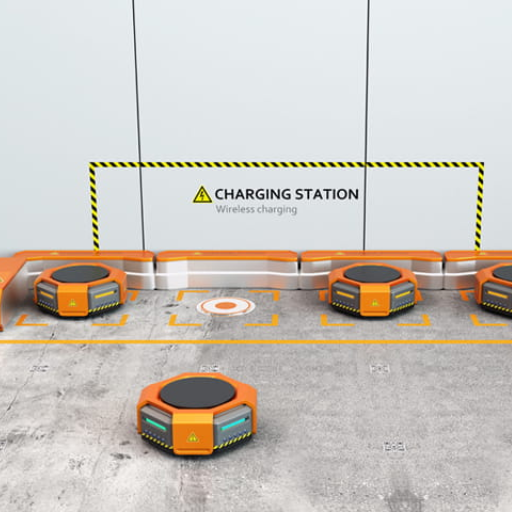
The efficiency of energy transfer improves with wireless power transmission since there are no physical conductors to incur losses such as resistance in wires or connector faults. It uses electromagnetic fields to transfer energy over small distances with minimal loss. Furthermore, resonant inductive coupling and focused microwave beams improve modern precision and energy transfer efficiency. All of these approaches also lessen wear and tear compared to traditional systems, increasing overall reliability and performance.
Factors Influencing Transmission Efficiency
There are some issues that hinder the efficiency of wireless power transmission systems. These issues are fundamental to the critical factors influencing the ratio of power successfully provided and energy wasted by the targeted device. Below is an elaboration of these mechanical and electrical constraints.
- Distance Between Transmitter and Receiver
The efficiency of energy transfer tends to decline as the distance increases between the transmitter and receiver. Systems that rely on inductive coupling tend to suffer exponentially greater loss beyond a couple of meters distance. Take for example, the common Qi wireless charger. It maintains a commendable optimum efficiency of up to 90% within 5mm distance, however this drops to less than 50% at distances greater than 10mm.
- Frequency of Operation
Operation of the system heavily impacts its frequency. While all frequencies allow for better energy transfer over short distances, some pose challenges in terms of interference or excess heat generation. As an example, mid-range wireless charging makes use of resonant frequencies around 6.78 MHz. This is well established efficient and safe operating region.
- Alignment of Transmitter and Receiver Coils
Transmitter and receiver coils in inductive or resonant systems need to be properly positioned to optimize energy transfer. Even minor adjustments decrease energy transfer significantly. Magnetic coupling accuracy above 90% can sustain over 85% transmission efficiencies, but 20% misalignment can drop efficiency below 50%.
- Quality of Materials and Components
The efficiency of the transmission system is also affected by the materials and their properties. For instance, strongly conductive materials like copper are commonly employed for the transmitter and receiver coils to reduce resistive losses. In addition, advanced magnetic materials for cores like ferrite improve coupling efficiency and reduce flux leakage, thus enhancing coupling.
- Environmental Interference
Physical barriers or other devices emitting electromagnetic radiation, or even metallic objects within the vicinity could interrupt the energy transmission and disrupt the service. These conditions often cause interference which lowers efficiency, thus requiring additional design cov ering, and shielding. For example, metallic surfaces close to wireless charging pads can result in induced currents causing energy and heat loss.
Taking these variables into consideration during design and implementation allows technologies for wireless energy transmission to demonstrate consistent high efficiency for a variety of applications.
Measuring the Efficiency of Wireless Energy Transmission
In assessing the effectiveness of wireless energy transfer systems, a number of critical metrics and methods are devoted. efficiency is in most cases gauged as the proportion of energy successfully transfered from the transmitter to the energy input at the transmitter. This is in % and provides a useful measure of teh systems performance.
Other factors affecting the efficiency include; positioning of coils, remore distance, inter coil distance. Proper orientation and distance lead to lower energy loss owing to electromagnetic field dispersion. In addition, the coils material and geometry, environmental conditions constitute significant factors that determine performance.
Special devices such as network analyzers and pm are implemented for their use within particular measurement setups for the production of input and output power measurements for specific conditions. Having these controlled in a laboratory setting allows architects and engineers to focus on the other forms of inefficiency like thermal energy escape, impedance mismatching, and system component tolerance. There have been notable findings in the compact multi-layered coils with wide-band amplifiers with adjustable filters employing resonant coupling techniques which significantly improve systems performance and such advancement is not limited to.
The use of advanced simulators in conjunction with standardized testing procedures increases precision and accuracy in measurements. Because of this, validation of wireless energy systems can be performed consistently across various consumer and industrial automation technologies.
Strategies to Enhance Power Transfer Efficiency
- Optimizing Resonant Frequency Alignment
For optimal efficiency, both the transmitter and receiver must resonate at precisely calibrated frequencies. Research has shown that even the smallest alignment errors can lead to large power losses. For example, losing 5% of resonant frequency can cause up to 20% drop in efficiency. Complex adaptive and automatic tuning systems are used to preserve alignment during environmental shifts.
- Minimizing Energy Loss through Magnetic Coupling
The quality of transfered energy from a source to a target coil is enhanced with the increase in the magnetic coupling of the involved coils. High Q (quality factor) coils are used almost exclusively to reduce resistive losses. Additionally, ferrite materials and shielded constructions are used to reduce leakage of the magnetic field. Some literature suggests that transfer efficiency can be improved by 15-30% through optimizing coil geometry.
- Implementing Dynamic Load Management
System efficiency may be sustained using advanced strategies such as automated impedance matching circuits, which increase energy transfer rates by 10% when compared to static systems, by dynamically matching the load of the receiver with the signal being transmitted.
- Using Highly Conductive and Low-Loss Materials
Replacing standard resistive coil materials with low-resistivity copper or superconductors greatly minimizes axial resistive heating losses. Such materials have also been shown to improve the efficiency of power transfer systems by 8–12% in comparison to traditional conductors, especially in systems with higher power outputs.
- Leveraging Advanced Control Algorithms
Modern control systems provide and require machine learning and predictive algorithms to be employed for adaptive modification of control parameters. For instance, real-time adjustment of power output through its predictive models based on environmental factors or device positioning saves up to 25% of energy under varying conditions.
Integration of these strategies allows power transfer systems to be used in a broader variety of applications, from small IoT devices to large-scale industrial infrastructure, while optimizing performance and energy efficiency.
Comparing Wireless Power Transfer with Traditional Power Transmission
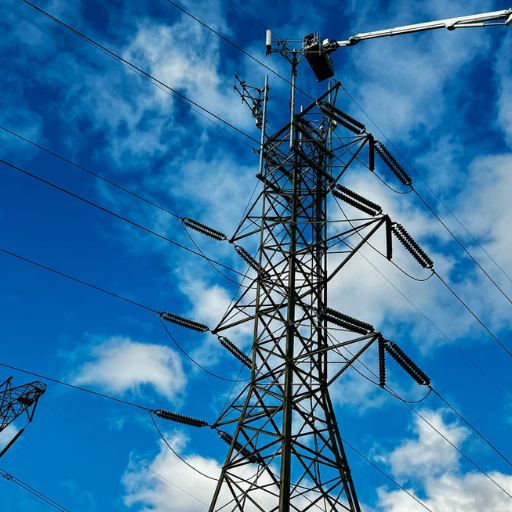
WPT, or Wireless Power Transfer Technology, as the name suggests, fundamentally changes the concept of powering devices without the use of wires. This form of power delivery systems utilizes electromagnetic fields rather than the conventional physical connectors such us wires or cables, conduits or pipes, which not only brings mobility, but accessibility as well focus on convenience for end other industries such as healthcare.
WPT wireless power transfer does face issues of efficiency, especially over longer distances, but physical wear incurred by connectors is minimized, therefore reducing ongoing maintenance costs overall. While traditional wired systems might maintain better efficiency, such systems tend to require more frequent servicing due to regularly deteriorating cables and mechanical connections.
Finally, with emerging technologies like IoT and electric vehicles, WPT wireless power transfer has an edge due to unexplored possibilities for growth and adaptation. In contrast, systems which use traditional power transfers are preferred for larger operational scales and high-power installations, where maximum energy transfer efficiency is the primary concern and critical. Both methods have advantages depending on the scenario.
What are the key differences between wired and wireless power systems?
|
Key Point |
Wired Power Systems |
Wireless Power Systems |
|---|---|---|
|
Energy Transfer Efficiency |
High, minimal loss |
Lower, influenced by environment |
|
Range |
Limited to cable length |
Short to moderate, wireless range |
|
Installation Complexity |
Requires physical wiring |
Simpler, reduces wiring needs |
|
Cost |
Lower initial costs |
Higher setup costs |
|
Mobility |
Limited by physical connections |
High, supports free movement |
|
Maintenance |
Requires cable repairs/replacement |
Less wear, minimal physical damage |
|
Power Capacity |
Suitable for high-power applications |
Limited to low-to-medium power |
|
Safety |
Risk of exposed wires |
Safer, no exposed wiring |
|
Integration with IoT |
Less flexible in dynamic settings |
Seamless integration, adaptable |
|
Scalability |
Difficult for large networks |
Easy to scale for modern demands |
|
Environmental Impact |
Increased e-waste from cables |
Potentially reduced e-waste |
|
Interference |
Not affected by external signals |
Susceptible to signal interference |
|
Device Compatibility |
Limited variation tolerance |
Requires specific receiver designs |
|
Energy Loss During Transfer |
Minimal |
Significant, depending on distance |
|
Application Suitability |
Industrial, large-scale power needs |
Consumer electronics, mobile tech |
How does power supply reliability compare between the two systems?
When comparing the reliability of wired and wireless systems regarding power supply, factors such as stability, telemetrics, ecological condition, and efficiency of the operations need to be taken into consideration. Wired powered supply systems have always been considered more reliable because of their direct linkage and constant energy supply with reduced loss and interference. These systems are less vulnerable to environmental disruptions like electromagnetic interference or obstructions which degrade performance.
In relation to wireless power systems, these pose possible weaknesses in reliability due to their dependence on exact distance and alignment. Distance spatially worsens energy transfer effectiveness. Furthermore, wireless power systems may suffer greater environmental interference when operating at the same frequency as the power transmission, such as metals like rods or other electronic devices. Nonetheless, more recent advances in wireless power technologies such as resonant inductive coupling have enhanced their performance stability and adaptability to differing conditions.
In summary, as critical/high-demand applications require wired systems to maintain their reliability advantage, adaptive consumer needs justify the evolution of wireless systems.
Reference Sources
-
Design and analysis of wireless power supply system for high‐voltage transmission lines across 500‐kV insulator distance: This paper presents an effective design approach for long-distance wireless power transmission, achieving a load receiving power of no less than 5 W.
-
Smart and Secure Wireless Power Transfer for EVs: Exploring IoT, Edge Computing and Blockchain Solutions: This study explores a dual-channel design for high-power wireless systems, integrating IoT, edge computing, and blockchain for enhanced security and efficiency.
-
Wireless power transfer for low power domestic loads: modelling and analysis: This paper focuses on the modeling and analysis of wireless power transfer circuits, particularly for short-range applications.
Frequently Asked Questions (FAQs)
Q: What is a wireless power transfer system?
A: A wireless power transfer system is a technology that allows the transmission of electrical power from a power source to a wireless device without the need for physical connectors or wires, utilizing methods such as inductive coupling or resonant inductive coupling.
Q: How does a wireless power transfer system transmit power?
A: The system transmits power through electromagnetic fields. It creates a magnetic field that can induce current in a coil placed within the field, allowing energy to be transferred wirelessly to the device.
Q: Who is credited with the initial concept of wireless power transmission?
A: Nikola Tesla is often credited with the initial concept of wireless power transmission, as he conducted experiments in the late 19th century to demonstrate the feasibility of transmitting electricity without wires.
Q: What are some applications of wireless power transfer for medical microsystems?
A: Wireless power transfer for medical microsystems is used in applications such as powering implants, sensors, and other medical devices, allowing them to operate without the need for batteries or wired connections, improving patient comfort and device longevity.
Q: What is the maximum power transfer efficiency in wireless transmission?
A: The maximum power transfer efficiency in wireless transmission can vary based on the technology used, but advancements in inductive wireless technology have achieved efficiencies of over 90% in optimal conditions.
Q: Can wireless technology be used for high-power applications?
A: Yes, wireless technology can be used for high-power applications, although the amount of power that can be transmitted wirelessly is subject to limitations based on the design of the system and safety regulations.
Q: How is wireless power different from traditional power transmission?
A: Wireless power differs from traditional power transmission in that it eliminates the need for physical power wires, allowing for greater flexibility in device placement and reducing wear and tear on connections that can occur with wired systems.
Q: What are the current standards for wireless charging?
A: The current standards for wireless charging include the Qi wireless charging standard, which is widely adopted for smartphones and other small wireless devices, facilitating interoperability between various products.
Q: How does the transmission of electrical power affect data transfer in wireless devices?
A: The transmission of electrical power can affect data transfer in wireless devices by providing a stable power source for data communication, ensuring devices can operate efficiently without interruptions or power fluctuations.