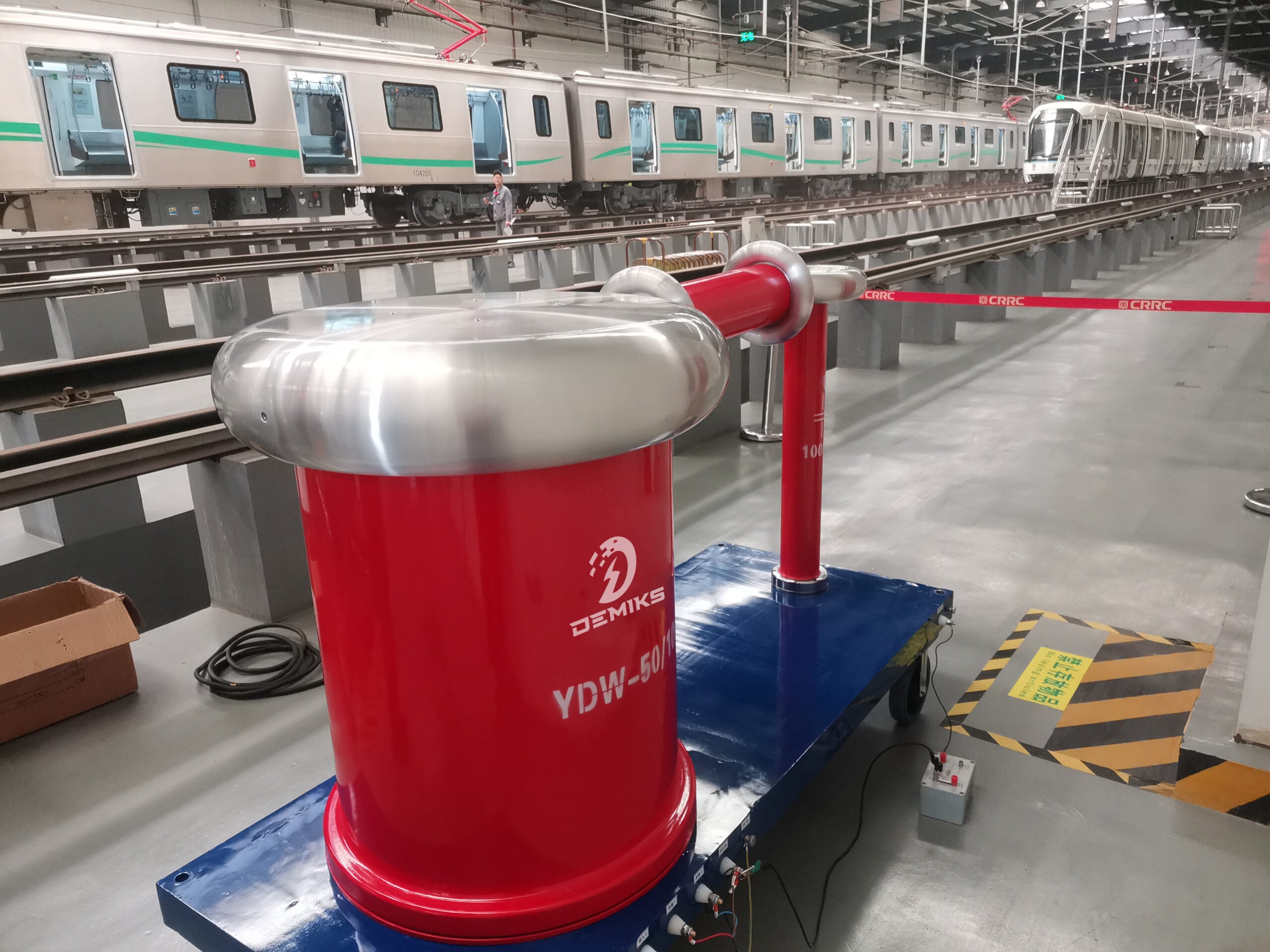
Testing the integrity and reliability of electrical cables is indispensable for the upkeep of safe and efficient power systems. Among the best tools available for this purpose is the Very Low Frequency (VLF) test equipment, which nowadays finds universal acceptance amongst engineers and technicians around the globe. Due to factors such as the types of cables under consideration, environmental factors, or test standards, selecting the VLF tester is a relatively complex and cumbersome matter. This guide aims to ease the process for you. Whether you are a seasoned professional or a newcomer to the industry, this article will walk you through all there is to know about VLF cable testing, including the essential features you must consider when reviewing test equipment. Furthermore, it will give you sound advice and workable pointers on choosing a suitable solution that fits your particular challenges. When you finish reading this blog, you will be ready and confident to go through the market and pick the ones that best serve your cable testing needs.
Understanding VLF Test Equipment

What is VLF Testing?
VLF testing is the most important diagnostic technique for testing the medium- and high-voltage cables, transformers, and electrical equipment for insulation integrity. Such equipment subjected to testing usually carries sinusoidal AC voltages ranging from 0.01 Hz to 0.1 Hz. Thus, there should be no excessive voltage stress or damage to the cable insulation. It is tested for dielectric factors by direct application, and, although at very low frequency, the relevant period evaluation is carried out.
VLF would enable the engineer and technician to look for weak insulation, locate faults, and ensure compliance with industrial standards, including IEEE 400.2 and IEC standards. The test application will relate to upkeep, troubleshooting, and commissioning within the utilities, power plants, or an industrial facility. With increasing dependence on computerization, state-of-the-art VLF testers contain integrated diagnostic methods such as partial discharge detection, tan delta testing, or other detection means for corrosion analysis. Thus, this added dimension to VLF testing makes it a potent and highly versatile tool in the reliable implementation of electrical systems.
Importance of VLF in Cable Diagnostics
Very low-frequency (VLF) testing is vital in determining the reliability and serviceability of medium and high-voltage cables. By imposing an AC of much lower frequency than the usual 50/60-Hz, VLF testing replicates somewhat the operating conditions of the cables while exposing the least mechanical stress to their insulation. This method is beneficial for uncovering weak points in old or degraded insulation, thereby forging a path for preemptive maintenance to prevent failures.
Technological upgrades have seen VLF-testing equipment accommodate partial discharge and tan delta measurements, thereby enabling the detection of insulation faults and deterioration with great precision. With tan delta analysis, considerable data on dielectric loss and the subsequent processes that target slightly deteriorated trends developed along the aging process are obtained. On the other hand, partial discharge testing illuminates the defensive deficiencies and pinpoints specific locations so that the maintenance technicians can act on them to some measure.
Such testing considerations would contribute immensely to uninterrupted operation in areas such as power transmission, wind, and industrial facilities. Evidence in the literature suggests that early fault detection and repair using VLF diagnostics have proved efficient in reducing unscheduled outages, thereby reducing repair costs and downtime. Thus, VLF testing provides momentum for asset health management company strategies to be more sustainable while contributing to the general system’s reliability.
How VLF Test Equipment Works
VLF test equipment is used for applying a low-frequency AC voltage across high-voltage cables and electrical installations that cause operational stress yet do not cause damage. The operating frequency lies between 0.01 Hz and 0.1 Hz, within which the voltage level is high with low power to affect insulation tests without the risk of generating excess heat or thermal damage.
The testing process involves charging the cable under test to the desired voltage and then studying the response over time. Measurements on dielectric strength, insulation resistance, and partial discharges are considered key during the measurement. The latest systems add a layer of precision with controls and automated analysis to provide an extremely accurate yet simple diagnostic procedure.
With VLF testers, one may opt for the waveform options (sinusoidal, square wave, or cosine-rectangular) of choice, selecting the one most appropriate for the test at hand, depending on cable types or network configurations. Coupled with the ability to log data, test results may be stored and later analyzed to identify any weak point(s) or trends suggesting impending insulation deterioration, assisting in moving toward maintenance planning. This perfect mix of versatility and reliable results makes modern VLF test equipment the most important for securing the long life of electrical systems.
Types of VLF Test Equipment

VLF Hipot Testers
Traditionally, VLF Hipot testers ensure the dielectric strength of high-voltage cable systems, transformers, motors, and other electrical assets. VLF Hipot testers would operate at shaving frequencies, generally at or lower than 0.1 Hz, so that the voltage can be applied effectively without excessive currents being induced in capacitive loads of a large magnitude, whether these may be too long cables. By applying an AC voltage on the system under test, VLF Hipot Testers may be used to identify defects such as weak or thin insulation points, potential breakdowns, or manufacturing defects.
Modern testers may offer many options, such as smart UIs, automated test procedures, and exact voltage control systems. Many modern units are designed for portability and robustness so that tests can be performed on-site with minimal setup. VLF testers are being used to store and export test data, helping in diagnostics and long-term system analysis. Safe and practically perfect testing methods using VLF testers can ensure that electrical systems continue to operate reliably.
The practical application of these devices drastically reduces risks, reduces downtime, and prolongs the useful life of central machinery for utilities and industrial operators.
VLF Cable Test Sets
VLF Cable Test Sets assist in high-voltage cable testing to verify insulation and potential faults in cables used in critical infrastructure like power grids and industrial systems. The testers apply VLF AC voltage in a controlled manner to the wires, thereby simulating real-world electrical stresses without the possible resultant damage caused by widely used high-voltage DC tests.
Today’s VLF cable test sets use automation with control schemes for the utmost precision control of voltage levels and user-friendly interfaces for easy system operation. They also support diagnostic tests such as Tan Delta or Partial Discharge measurements, essential for assessing insulation health and predicting cable life expectancy. These tests empower engineers to identify weaknesses early on and avoid surprise failures, optimizing maintenance strategies. Designed to be rugged and portable, VLF Cable Test Sets can be quickly deployed and provide dependable performance in the most adverse field conditions. The operators guarantee a sustainable and resilient electrical infrastructure by embracing these highly advanced tools.
AC versus DC VLF Testers
The key differences between AC and DC Very Low Frequency (VLF) testers lie mainly in their technical characteristics, applications, roles, and relative advantages in cable testing. AC VLF testers most commonly apply sinusoidal waveforms that mimic the legitimate operating conditions on underground cables and other high-voltage apparatuses; therefore, it is a fair representation of the stresses the cables encounter under regular working circumstances. Thus, the AC systems are suitable for identifying possible weaknesses in insulation and simulating dielectric stress without inflicting damage on the cable.
On the contrary, DC VLF testers apply static voltage, which is good in determining that the insulation is indeed being polarized, there exist records of long-term degradation, or confirming that there are high-resistance faults. With the technological progress, it is asserted that DC testing may be detrimental because residual charge remains in some cable materials, which may put cable condition readings into dispute when the measurements of the cables have to be repeated after some time, especially with modern polymeric insulation types.
Data recommends that AC VLF testers are better for modern extruded dielectric cables such as XLPE, as they avoid overstressing while providing a more realistic assessment of cable condition. Hence, DC testers remain essential for service to older paper-insulated cables and where historical practices require their use. Choosing the right tester will ultimately depend on cable composition, which goes hand in hand with its age and operational requirements to ensure the adequacy of diagnostics and maintenance of infrastructure.
Choosing the Right VLF Test Equipment

Factors Considered When Selecting a VLF Tester
Several crucial factors enter into the selection of the appropriate Very Low Frequency (VLF) testing instrument to produce accurate and long-lived diagnostics for cables. Firstly, consider the voltage output with respect to the cable’s rated voltage. This ensures that the insulation is fairly stressed and that unacceptable overstress does not damage the component being tested.
Secondly, consider the nature of the test waveform—sinusoidal, Cosine-Rectangular, or others suitable for different types of cables and diagnostic standards. For example, sinusoidal waveforms are generally recommended for clean partial discharge tests, while rectangular waveforms offer a better simulation for load cycling.
Thirdly, it would be best to consider the capacitance that must be handled. Bigger cables or longer cable runs have inherently higher capacitance. Hence, this will determine the tester’s choice with the higher capacity, which is incredibly beneficial in avoiding extended test periods and operational downtime.
Portability and user-friendliness follow. Being compact and lightweight facilitates on-site testing, whereas an intelligent user interface prevents operational faults in a harsh field environment. EVAULT may also provide added usability when combined with advanced technology such as a digital display or wireless monitoring.
Lastly, ensure that the tester complies with relevant industry standards, such as IEEE 400.2 and IEC 60502, governing how testing is conceived and interpreted worldwide. By being compliant, the tester ensures reliability and ensures that the results are legally accepted under safety and performance standards.
Considering all these criteria will help find a VLF tester that meets operational needs, meets excellence standards in diagnostics, and guarantees the long-term reliability of cable exploitation.
Understanding Voltage Ratings and Capacities
Voltage ratings and capacities are a significant consideration in rating the capabilities and ensuring the compatibility of Very Low Frequency (VLF) testers with the electrical systems. The voltage rating of any device implies the maximum safety voltage that it can handle, which is opposite to the requirement of the tested cable. Medium-voltage cables usually require testers capable of voltages of between 5 kV and 60 kV, depending on the regional standards and system specification. Using a VLF tester with a voltage capacity equal to or higher than these requirements is very important for conducting correct tests and avoiding damage to the equipment.
Furthermore, the capacity of a VLF tester should correspond to the system’s load requirements and testing duration. Short length cables may not accommodate a tester with great capacity. Still, long or high-capacity systems like long underground transmission lines require more robust testers capable of sustaining the required voltages within testing periods. Extended formulations in these devices allow for real-time voltage stability monitoring and output precision for more reliable diagnostic outcomes. In this regard, proper analysis of these technical specifications will enable the operator to ensure the suitability and best performance of the tester for their respective infrastructural need.
Evaluating Equipment for Medium and High Voltage Applications
However, more importance must be given to testing durability and precision for medium and high voltage equipment evaluation, while ensuring high compatibility with modern infrastructure systems. Highly advanced insulation arrangements assure the equipment against high electric stress and minimize the risk of arcing or failures of the systems themselves. Fundamental material properties ensure thermal stability, moisture resistance, and resistance against UV exposure, for long-term reliability of rubber.
The advent of digital monitoring solutions brings further benefits to operational efficiency. These solutions allow real-time data acquisition and analysis so that operators can follow voltage performance metrics like voltage fluctuation, current distribution, etc. Some systems have already embedded predictive algorithms for pinpointing potential unwanted conditions that would lead to expensive outages.
Another parameter for consideration is the compliance with international standards such as IEC 60694 or IEEE C37. Such standards ensure the equipment meets stringent safety and performance requirements, thus promoting interoperability across systems worldwide. Modular-type equipment is gaining traction nowadays, making it easy to evolve and reducing downtime when it undergoes maintenance.
Overall, new-generation materials, smart diagnostic equipment, and international standards pave the way not only for safe medium and high-voltage systems but also for scalable ones that may sustain their demands in the near future.
VLF Testing Procedures

Preparing for VLF Cable Testing
Before a VLF Cable Test, the cable should be prepared for testing to ensure that the results from the VLF measurement will be meaningful and include reliable data. This preparation involves a thorough inspection of the equipment and the testing site to determine potential hazards that might cause harm to personnel or compromise the quality of data acquisition. The cable should be clean, dry, and free from any surface damage or contamination that may interfere with the measurement.
Once the cable is ready, you must ensure that the testing equipment and accessories, including the VLF generator, comply with the manufacturer’s specifications and are calibrated for optimum performance. Loose connections are equally unacceptable, as these may cause erroneous readings or even harm the equipment.
Next, check the equipment’s correct earthing. Proper grounding must be in place to minimize the risk of electrical shock to those conducting the testing procedure. The measured area should be demarcated, isolated, and supervised to prevent unauthorized entry during testing.
The test evaluation should include assessing environmental factors such as humidity, temperature, and working conditions, as these may affect test results. This should be recorded to relate the data situation to the environment for further and more accurate cable condition analysis.
The final preparation step is training all personnel engaged in the testing and familiarizing them with the procedures. A day before testing, the involved team shall be briefed on safety aspects and operational procedures to conduct the tests in a timely and safe manner and obtain precise and reliable test results.
Performing the VLF Withstand Test
The Very Low-Frequency Withstand Test is a primary diagnostic method for judging the integrity of medium and high-voltage cable systems. It is conducted by applying a low-frequency AC voltage (usually 0.1 or less) across the cable insulation and monitoring its ability to withstand stipulated electrical stresses for a given period. One expects that a defect or a weak point in the insulation will be identified prior to premature failure.
First, ensure that a calibrated VLF Test set can provide test voltages, specified with relevant Standards, e.g., IEEE 400.2 or IEC 60502-2, and is present in the setup. While testing, the cable should be well-isolated from the associated circuit and grounded to avoid interference from stray current sources. Voltage and time parameters must be followed carefully as presented in the Standard. Adherence to the Standard shall also include careful consideration of the time period and voltage level for the actual tests, which are based on the cable type and installation specification.
Continuous observation is necessary during testing. Measurements of parameters such as leakage current levels, voltage stability, or any indication of insulation failure are recorded. Leakage currents presenting anomalous variations, sudden surges, and noises indicative of internal discharges would mark the presence of insulation problems. In the event of a breakdown, the test is immediately terminated to avoid further damage, and the fault can be located using other methods, such as Time Domain Reflectometry (TDR).
Modern data-logging and analysis-enhancing tools make these test results more reliable and interpretable, enabling a comprehensive evaluation of the cable’s health status. After the tests, an important aspect is documenting all phenomena and measurements that occurred during testing. This information describes the present state of the cables. Still, it will also serve as a future point of comparison for the subsequent test intervals, enabling strategizing more on maintenance rather than repairs.
Interpreting Test Results
Interpreting TDR results requires a systematic approach to analyzing the reflected signals and any irregularities. Identifying and assessing anomaly patterns provides crucial information regarding impedance and fault locations in the cable: for example, uncharacteristic spikes, dips, or harshly contrasting changes on the reflectogram may be correlated with manifestations of cable faults, such as breaks, corrosion, or insulation deterioration.
Advances in data analysis enable the mapping of these signal irregularities with great precision, allowing technicians to localize faults more accurately. Visualization techniques, such as overlaying with past testing data for comparison, may reveal conspicuous patterns like gradual impedance variation, possibly indicating wear and tear over time. Further, combining data from complementary diagnostic techniques, such as insulation resistance and partial discharge testing, offers a more representative, comprehensive picture of cable conditions. Such a thorough, multifaceted approach ensures that technicians will be equipped to make a well-informed decision on whether cables should be repaired or replaced to ensure optimal system performance.
Advanced VLF Testing Techniques

Tan-Delta Testing for Cable Diagnostics
From my perspective, Tan Delta testing for cable diagnostics is an exact and highly effective method to test the insulation condition of power cables. The test measures the dissipation factor, the energy lost as heat in the cable insulation, usually pointing to degradation or a potential fault. The dielectric test with VLF alternating voltage ensures the cable system is not overstressed while testing its dielectric properties. Consequently, this method allows for the timely identification of aged or faulty insulation, which provides consistency in high performance and longevity of the cable.
The procedure for diagnosis is the analysis of changes in Tan Delta values during the testing. Increasing Tan Delta values usually imply deterioration of insulation due to moisture, contamination, or material fatigue, which may lead to loss of cable integrity over time. Once these defects are identified, preventive maintenance plots can be more efficiently designed, thus saving time, money, and effort that would have been expended on equipment failure.
I consider Tan Delta testing to be a dynamic and non-destructive testing method that aligns well with the maintenance schedules of power infrastructure. Apart from assessing the cables in their entirety, it aids us in deciding whether the cable needs repairs, rejuvenation, or outright replacement. Tan Delta testing offers a chance to embrace system reliability with confidence, where risks can be effectively mitigated, ensuring consistent performance throughout all terrains of the electrical network.
Partial Discharge Testing in VLF
PD testing is one of the key aspects of performance-based systems and assures reliability when using VL frequency tests. From my point of view, PD testing presents invaluable information by identifying insulation faults or weaknesses inside cables, joints, or various other system components. They help identify and isolate issues at the onset—glory days of aging, manufacturing inconsistencies, or stress from external sources—before the troubles become more costly. VLF testing amplifies the results of PD tests by providing increased detection sensitivity at low frequencies, all while simulating operating conditions that would be faced in the field for a truly comprehensive assessment.
I find the combination of VLF testing with PD testing to form a strong diagnostic approach. While VLF testing provides the controlled, high-voltage level for discerning various partial discharges to occur, PD testing measures those discharges to obtain valuable insight about the insulation system condition. Together, they offer a non-destructive test that poses minimal risk to the cable while offering useful data for predictive maintenance approaches. This approach improves operational reliability and extends the life of the power system infrastructure.
Ultimately, Partial Discharge testing applied in conjunction with VLF testing allows us to take an active approach to managing assets, ensures better safety and performance considerations, and optimizes cash flow by allowing us to target needed repairs and not schedule unnecessary downtime for the system. The juxtaposition of these technologies speaks to a progressive recipe for intelligently managing widely complex and high-stakes electrical systems.
Implementation of HV Diagnostics for Better Safety
HV diagnostics are more proactive in ensuring the safety and reliability of electrical systems. They implement technologies that are far advanced in preemptively diagnosing potential problems, accidental degradation of insulation, or other hidden faults that might otherwise have led to catastrophic failure. This mitigates the risk of equipment failure and maintains the entire system’s integrity for a safe and dependable operational environment.
HV diagnostics allow me to plan maintenance better. Equipped with precision insight, they allow me to prioritize repairs equitably and make full use of available resources by avoiding downtime or fast-tracking urgent jobs. This will result in fewer emergency situations, less disruption to working schedules, and better system performance. Thus, when management utilizes diagnostic instruments, the emphasis shifts to prevention and informed decision-making.
Incorporating HV diagnostics into regular operations ensures that I can entrust the infrastructural reliability I am responsible for. It puts safety on a pedestal and enables me to anticipate forthcoming challenges and outsmart them. This strategic approach guarantees a sustainable electric system for a long time, securing the assets as well as the people.
Reference Sources
-
VLF Test Equipment Recommendations – A discussion on recommended VLF test equipment, including user experiences and insights.
-
VERY LOW FREQUENCY (VLF) AC TECHNOLOGY – A detailed FAQ document addressing common questions about VLF AC Hipots and their applications.
-
An Introduction to VLF Cable Testing – A blog post exploring the history, role, and importance of VLF testing in insulation diagnostics.
-
Medium Voltage Cable Testing Guide – A presentation covering specifications and considerations for selecting VLF test equipment.
-
VLF Testing Equipment by Hangzhou Tanbos – A guide on key considerations for selecting VLF test equipment tailored to specific applications.
Frequently Asked Questions (FAQs)
What is the utility of low-frequency VLF test equipment?
Low-frequency test VLF equipment is mainly used for high-voltage tests on medium and high-voltage cables. Test equipment within the frequency range of 0.01 to 0.1 Hz allows efficient testing of the insulation of wires under high voltage. When applied with a VLF test voltage, inspection determines the integrity and dielectric strength of insulation on the cables according to industry standards; the low frequency applied thus reduces capacitive charging currents, which refines testing of longer cable lengths. Therefore, VLF testing remains a critical assurance tool for a reliable electrical infrastructure.
Explain how cable testing equipment works for voltage withstand tests.
The equipment for cable testing for voltage withstand tests subjects the cable insulation to high voltage so that it is operable under operating conditions. It is particularly imperative for the medium and high voltage cables testing that they withstand overvoltage without failure. The cable testing equipment produces a test voltage of several kV while observing how the cable responds. Through these tests, designers look for any abnormalities in insulation that can fail. Well-calibrated voltage cables provided with proper testing procedures allow good test results.
What are the advantages of using DC hipot for cable insulation testing?
By imparting a continuous, steady DC voltage on the cable, a DC hipot or high potential tester may be used to test the cable’s insulation. This enables an accurate assessment of the integrity of the insulation. In contrast with AC testing, DC hipot testing diminishes the chances of corona discharge and better exposes any weak points of the insulation. This testing evaluates tan delta cable insulation, which helps understand the dielectric characteristics of the cable. Regarding the other advantages, the DC hipot test frequency is adjustable, allowing it to be tailored to suit a particular cable type. DC hipot testing makes an installation safer and more reliable in the long term.
What is AC hipot’s relevance for cable testing?
AC hipot testing is relevant for cable testing since it replicates the electrical stresses that cables face in actual scenarios. Through this testing by AC voltage application, generally at frequencies such as 0.1 Hz, insulation problems that might arise can be detected by DC testing. The AC hipot is the best way to test the dielectric strength of medium and high voltage cables to withstand operational voltages. It helps perform voltage withstand testing by observing the cable under AC conditions. Therefore, AC hipot is a fundamental test for ensuring the safety and reliability of electricity.
How does a voltage source aid with cable diagnostic testing?
A voltage source is one of the most essential powers in cable diagnostic testing since it gives power while testing cable insulation and potential failures. A successful voltage source must be accurate in output and stable at any moment during VLF or DC testing. A good voltage applied to a capacitive load allows technicians to test the cable’s behavior under stress by recording capacitance and insulation resistance. Proper cable diagnostic testing ensures a cable meets IEEE standards; therefore, there is less chance of electrical failure. A good voltage source is another name for success during cable diagnostic tests.
What should be done when performing high-voltage VLF tests?
There are several procedures to follow to carry out high-voltage VLF tests effectively. Conduct calibration before each use and ensure the VLF equipment and all accessories remain in proper working order. Always apply the test voltage gradually since a sudden voltage application would impose severe stress on the cable. Monitoring the cable load during the test while watching for irregularities is essential. Application of IEEE guidelines, such as IEEE 400.2, will serve to complete a well-grounded procedure for reliable testing. Finally, ensure all documentation on test results and observations is drawn up for future reference and analysis.