Thinking from the point of view of ensuring potential reliability and safety, earth fault detectors need to be regarded as the most significant piece of equipment. Power failure and interruption remain the greatest concerns in industries, business centers, and homes, rendering downtime, damaging equipment, and sometimes even accounting for the loss of life. What if you had an option to detect a fault and take corrective action before it actually grew into a fault? The earth fault detector detects problems within electrical circuits and protects the systems from sudden failures. This article puts forth an argument for the utmost importance of earth fault detection, mechanisms for the same, its emergence into present-day electrical systems, and why investment in it is worthwhile over time. How then do you safeguard your power system? Perhaps an earth fault detector is something worth pondering on. Stick around and learn some basics and working tips on free-managing your power systems.
Introduction to Fault Detection and Earth Faults

⚡What are Earth Faults?
In other words, an earth fault occurs when the live conductor of an electrical system is connected to the earth or to the grounded parts of the system. These kinds of faults stop the normal flow of current and give an alternate path of lower resistance to the earthed conductor- that is, to the earth. Earth faults usually occur due to the deterioration of insulation, failure of wiring, or some external reasons such as water ingress or mechanical damage to the cables.
The usual safety hazards that these faults might impose on persons are electric shocks or great fire hazards, while damages might be caused to devices, hence reducing network efficiency. A minor earth fault, for example, may result in equipment downtimes or in increased maintenance costs, not to mention a hazard to operations in industrial settings or in systems running at high voltage. Modern earth fault detection systems have a host of advantages in swiftly detecting earth faults using advanced technology like current sensors and relays that then send signals commanding all safety intervention needed so that the electrical systems may remain capable of operating reliably and safely.
🛡️Need of Earth Phase Fault Detection in Electric Systems
The electrical safety, in general, and the electrical safety of installations, in particular, is significantly enhanced by the detection of a ground fault. A state-of-the-art incipient detection mechanism enables instantaneous identification, segmentation, and fault tracking, minimizing downtime while expediting the resolution of issues. In fact, industry reports indicate that damage to hazards and infrastructure due to late detection of faults can be reduced by nearly 30%, thereby minimizing maintenance costs.
Modern systems deploy intelligent algorithms and digitally-monitored systems for continuous supervision of electrical networks. This shreds apart operational risks such as hazards of fire, hustling outages, or equipment failure. They stand highly compatible with the already existing electrical networks, presenting an excellent chance for the expansion of both industrial usage and commercial usage states. By installing an efficient ground fault detection system, organizations can rely on consistent system performance, safety enhancement, and savings on the asymmetric grounds of costs.
🔧Overview of Fault-Detection Technologies
Recently, fault detection technologies have undergone significant evolution, and innovative techniques have been developed to achieve greater accuracy, scalability, and efficiency. Alongside many other advanced techniques, real-time monitoring systems detect irregularities in electric currents or equipment operation using smart sensors. These sensors may also be integrated with Internet of Things (IoT) platforms to facilitate data acquisition and analysis for predictive maintenance.
These thermographic cameras would furnish another tool in searching for temperature effluxes in the circuits that may be nothing but hot spots or failure potentials. This method ensures that it remains non-invasive while actually serving great in applications where there is no direct access for inspection. Further, based on past fault history, the machine-learning algorithm analyzes the pattern to foresee failures ahead of time so that interruptions can be averted at organizational levels.
Meanwhile, as one of the primary testing methods for detecting structural faults in mechanical and electrical systems, it detects high-frequency sound waves emitted during the stressing or failure of materials, thereby providing fairly accurate information on potential problems without requiring disassembly.
This and other technologies are complemented by niche software for fault diagnosis and root cause analysis. Such software entails visual dashboards, automated reports, and recommendations to counter decision paralysis. Harnessing a mix of these latest technologies allows industries to shorten downtime, optimize performance, and ensure safety for highly complex infrastructures.
How Earth Fault Detectors Work
Understanding Ground Fault Monitoring Systems
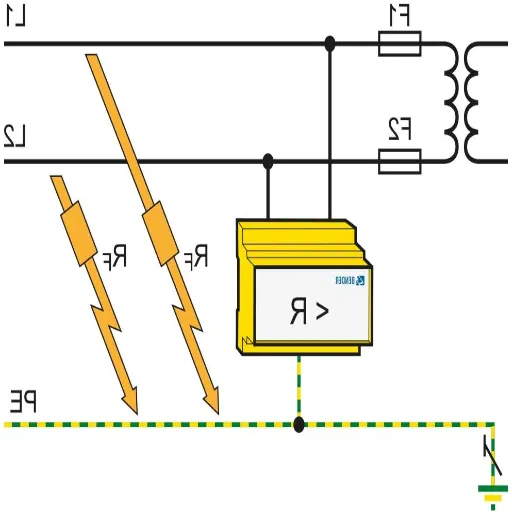
Ground fault monitoring systems operate by combining precise components to detect and troubleshoot faults accurately. The first component is a sensor that detects anomalies in electrical currents by measuring the difference between the current entering and leaving a system. These sensors are typically paired with current transformers for enhanced accuracy.
The other essential component of the system is the controller unit. This controller receives input data from the sensors and utilizes advanced algorithms to analyze the current imbalances, determining whether a fault condition exists. If an issue is recognized, the system issues alerts or initiates automatic corrective actions to minimize the risk.
Present modern systems are user-friendly, with real-time monitoring and comprehensive data visualization provided for user reference. Typically, exceptions giving rise to alerts are routed to the notification system for a swift response. These fancy systems also allow remote monitoring facilities or even deploy on variable IoT settings, allowing the mobile operator to stay on the proactive track of fault prevention and system resilience. Hence, it may be said that the ground fault monitoring system presents a technologically viable and efficient approach to safeguard electrical safety and operational continuity.
Key Components of an Earth-Fault Detection Application
Earth fault detection devices are crafted from a whole array of precise components, each serving a specific purpose to ensure the safety, efficiency, and reliability of the device. Here are a few essential components that make up these systems and allow them to operate effectively:
⚙️ Current Transformers (CTs)
Current transformers play a crucial role in detecting and measuring leakage currents through electrical systems. They provide precise readings, enabling the device to identify and isolate the fault condition in a short span of time.
🧠 Microcontroller Unit (MCU)
The microcontroller is often referred to as the brain of the device. It receives data from the sensors and performs real-time analysis on the received data. It performs fault detection algorithms with higher processing speeds and more accurate results.
🔌 Relay System
The relays are the switching component of this device. Once a fault is detected, the relay will disconnect the faulty circuit to prevent further damage and enhance safety.
📊 User Interface (UI)
Sophisticated devices feature an intuitive user interface with displays for real-time data visualization, system status, and fault notifications. This equates to operators being armed with clear insights for swift decision-making and system diagnostics.
✅ Self-Test Functionality
Due to integrated self-test functions, a device can continuously monitor its health and performance parameters. In this way, the system remains always up and running and will be an effective fault detector.
🌐 IoT-Enabled Connectivity
Today, earth fault detection devices utilize IoT integration for monitoring, ad hoc control, and remote control. Operators can view system data, receive alerts, and perform analysis on system performance through secure platforms from anywhere, thus providing operational agility.
🔋 Power Supply Unit
The supply should provide reliable power to keep the device working without interruption under various conditions. They also offer redundancy channels under certain situations where the power supply may fluctuate or fail.
💾 Data Storage and Logging
The system can record all significant events important in fault history via data logging mechanisms. This enriches post-event analysis, thereby contributing to timely maintenance and enhancing the fault response strategy.
The answer lies in a perfect combination that brings together advanced technologies into the fault detectors, thus making it easier to identify, analyze, and remedy faults that arise in the earth. As these devices continue to evolve with newer technological advancements, they will be able to offer more precise results, simple-to-use interfaces, and even better safety features.
Interpreting Output Readings from Fault Detectors
An output reading from the fault detector is interpreted and analyzed for correct application using a standard procedure. Modern fault detection systems offer readings about the fault parameters; these include information on fault type, location, and severity. Through interrogation of these readings, the technicians find that they have to treat transient or permanent faults, which is a determining factor in pursuing remedial measures and priority.
Also, an advanced design of these detectors realizes the graphical depiction of data and numerical outputs. For example, a spike in current accompanied by a drop in voltage and phases being out of deviation may signify the possibility of earth fault or insulation breakdown. Thus, identifying such patterns at the earliest will help minimize downtime and damage to equipment. Operators must verify parameters, such as resistance of fault and time, with the output to further evaluate the magnitude of the problem and then identify its cause.
A predictive maintenance approach is one method of increasing operational efficiency. Continuous results are obtained, which are then fed back into the analysis. With data from the past being readily available to monitor and look for trends, the team can anticipate potential recurring issues and devise solutions accordingly. The fault interpretation covers all systems with max precision so that decision-making can be qualitative and apt to aid in risk minimization and maximized reliability.
Types of Ground Fault Detectors
Benefits of Using Earth Fault Detectors
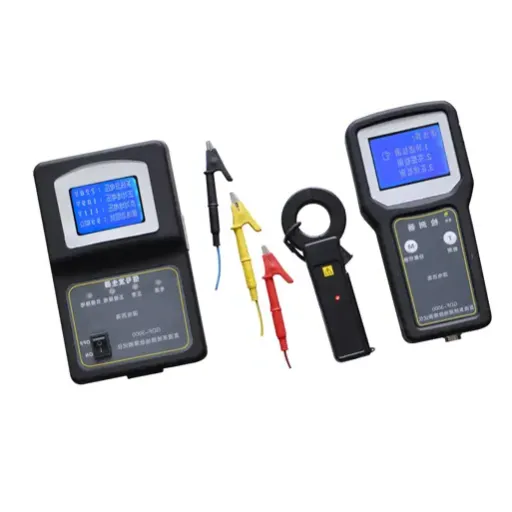
Enhancing Fault Protection in Electrical Circuits
Any modern electrified setup cannot operate without an earth fault detection device that acts as an earth fault detecting device. By locating a fault at a very early stage, the earth fault detector helps reduce interruptions in a system and prevent damage to an equipment. Several years ago, protection against a fault was generally provided by a simple relay and from simple monitoring tools. However, with the advancement in technology, the detectors for faults have become almost intelligent, with the inclusion of highly precise sensors and adaptive algorithms.
One major enhancement of the fault detection mechanisms is given by the ability to process real-time data. The modern-day fault detectors use advanced mathematical algorithms that detect exact irregularities in current and voltage and correct them immediately after detection. Hence, almost all of these devices are now made communicative so that they could be linked to centralized systems where the operator can, in real-time, access the updates and schedule maintenance based on fault predictions; they can also look at historical records of traveling waves generated by various fault activities. Such connectivity ensures grid sturdiness and provides an effective decision-making system to maintain operational efficiency. Therefore it is these advances that render infrastructure safer and more reliable with the increasing complexity of the grids.
Improving Safety in Ungrounded Systems
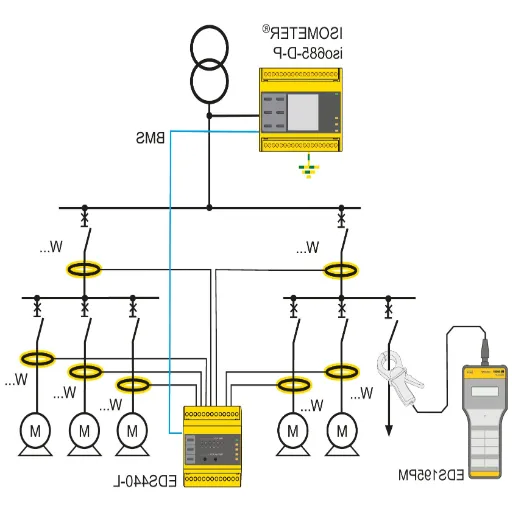
Ungrounded electrical systems have their benefits in reducing fault currents; however, they also present serious safety hazards that must be mitigated with advanced methods. Foremost, ground faults must be located and addressed because an ungrounded system can continue to function despite a single fault, potentially leaving the system down for a prolonged period with the fault remaining unnoticed. To aid in these conditions, new insulation monitoring devices are used that offer continuous monitoring of insulation resistance and provide an immediate alarm upon the identification of abnormalities. Abnormality alarms enable operators to perform timely maintenance, preventing disastrous failures.
Another aspect of safety in ungrounded systems is ground-fault location technologies. Using automatic signal injection techniques, electrical systems should isolate the faulted circuits in the shortest possible time and with the utmost precision, minimizing downtime and maximizing quality diagnosis. Complementing these are robust training programs to empower the workers with the knowledge to identify abnormalities and safe working practices. Together, these augment the dependability and safety of ungrounded systems to fully perform in even demanding environments.
Economics of Fault Detection Systems
Investing in new-generation fault-finding systems for ungrounded systems yields significant cost benefits over time. They avoid operational disruptions by quickly detecting and isolating faults, thus preventing that extra costly manual search. Industry data suggest that downtime could be reduced by half through the use of automated fault detection, thereby saving a great deal of time on production, as well as labor costs.
Besides, it is through fault detection that catastrophes are averted, which could otherwise have brought immense costs due to repairs or replacements. The technology also allows a full utilization of asset life since it only ensures the operation of systems under safe conditions, thereby also reducing maintenance costs throughout the economic life of the equipment. With the economic life of the equipment in mind, imparting training to assist operators further would then allow the industry to gain operational efficiencies. Consequently, due to the benefits offered by fault-detection systems, a modern endeavor putting a high degree of cost focus on reliability and safety stands.
Challenges and Limitations of Ground Fault Detection
Common Issues in Fault Resistance Measurement
The primary issue I have observed in fault resistance measurements is related to environmental factors. Situations such as moisture in the air, temperature changes, and soil stratification may exaggerate the resistance values. For example, whenever it is rainy and wet, the resistance levels decrease, falsely indicating the presence of a fault in the system. Resistance values differ from season to season; hence, one is forced to recurrent calibrations for consistent and reliable results.
How sneaky! Measurement setups themselves somehow pose limitations. A device can fall victim to any interference such as electrical noise from nearby systems or a grounding loop. Distortions appear in readings, and devices could give places of inconsistencies as a false positive during tests. Calibration and maintenance could be done regularly to prevent such errors, but large resources and time are required.
One last thing should be considered: the chance for an error to come through human interference. Human error may sneak in if the operators are not following a correct or consistent measurement procedure to yield the results. This misinterpretation can take place if operators are left untrained or if they are not properly guided, making the implementation of the tools erroneous. Solution-wise, civilized definition of the protocols and implementation of training programs for the operators will greatly increase the reliability of the measurement and decrease the possibility of problems caused by human errors.
Factors Affecting Ground Fault Detection Performance
Certainly, several factors affect the operation of a ground fault detection system, and discussing each of these systematically will basically shed light on the subject. Thirdly, primarily, the detection accuracy depends on the sensitivity and the calibration of the sensor. Improper calibration or insufficient sensor sensitivity in some installations could lead to an undetected ground fault at a low level. Hence, if this false-negative situation is admitted by the detection system, the outcome might be hazardous, or damage to the equipment could occur. Consequently, to maintain optimum performance of their detection system, the manual recommends that the operator should carry out periodic inspection and calibration.
Environmental considerations relating to conditions in which the measurement equipment will be operating are another critical factor indowndetering from system reliability. An instance here is too much moisture, which could generate false positives and perhaps degrade components over time; on the other hand, some electrical noisewhikhaparke fault signals and renders them less distinct. To counter these difficulties, the installation is undertaken with equipment intended to operate in particular environmen and wherever possible has noise suppression techniques applied.
Finally, a proper setup and integration with the electrical infrastructure are very important. This means making sure the detection threshold is not set too high to miss faults or too low to give trouble interruptions. Furthermore, it is very important to do the training of system operators so that they will understand fault data and can respond to it accordingly. Hence, I do not doubt that, with due sensor calibration and understanding of environmental and system configuration factors, the performance and reliability of ground fault detection would be surely enhanced.
Dealing with False Alarms in Fault Monitoring
False alarms from fault analysis systems represent long-standing problems that at times have led to unwarranted downtimes, wastages of resources, and operator fatigue. Addressing this matter, in my opinion, requires proper calibration, refined analytics, and efficient feedback. The first thing is ensuring detection parameters are optimally set according to operational thresholds. Suppose it is an incorrectly defined parameter that is too sensitive, then an alarm may be triggered unwarrantedly, but if the parameters are well set, alarms should be triggered by actual faults.
And also, machine-learning and pattern recognition methods classify false positives from actual anomalies. By looking through past data and searching for recurrent patterns, the system is given some intelligence-it uses this intelligence to differentiate between what is normal and what could mean some kind of fault. Equally important is for operators to be trained well, to understand the stretch and complexities of the system to act with confidence when confronted with alerts. When this happens, very few disruptions, if any, occur, and this acts as a bar to foster a proactive culture in system monitoring.
Lastly, having a feedback mechanism in place to assess and fine-tune fault monitoring systems periodically ensures continuous improvements. Input from operators, along with performance data, informs the adjustment of system parameters to enhance its accuracy over time. This orderly and efficient way of addressing false alarms enhances fault monitoring reliability and efficiency, creating higher benefits and fewer nuisance disruptions.
Reference Sources
-
Earth Fault Explained – Basics and Functions – Discusses the importance of earth fault monitoring in enhancing electrical system reliability and safety.
-
Ground-Fault Monitoring: The Concept – Bender Latinamerica – Explains how earth fault monitors work and their role in detecting voltage shifts during faults.
-
Why is Ground Fault Protection Needed? – Highlights the necessity of ground fault protection for ensuring safety and maintaining system reliability.
- Find more info now.