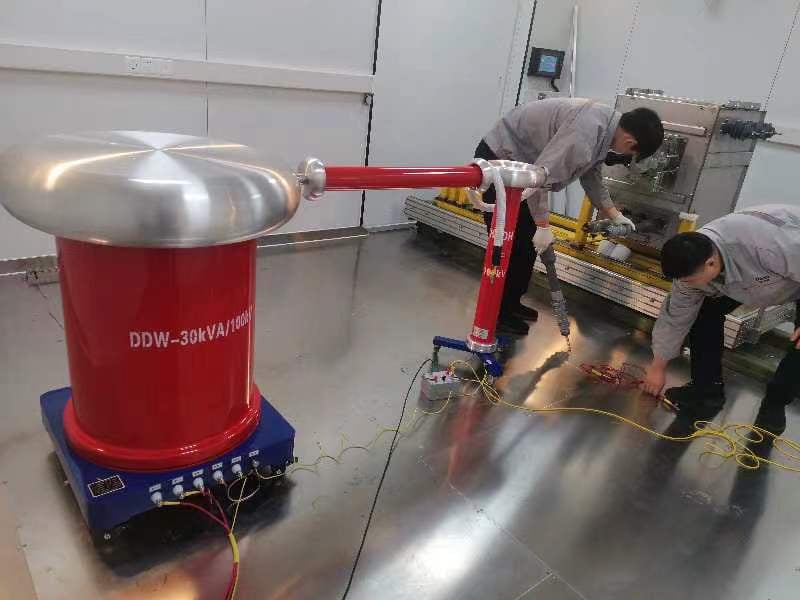
The concept of AC voltage dividers, like all circuits in Electrical Engineering and Circuit Design, serves as a building block that has many applications. From precision voltage regulation and measuring tools to classification and telemetry systems, voltage dividers underpin countless applications in electronics. In this full guide, I will explain the principle of functionality of voltage dividers and the ways in which they differ from DC analogues, their uses, and practical differences. Whether you are an electrical engineer who is refreshing your knowledge or you are just starting to explore the world of electrical engineering, this article will provide you a comprehensive explanation of the components of AC voltage dividers, how they are derived, calculated, and utilized in practice. Enabling modern electrical systems, we will uncover the intricacies of AC voltage dividers.
What is an AC Voltage Divider?

An AC voltage divider is a type of electrical circuit whose function is to proportionate an alternating current (AC) voltage to lesser values, based on the load connected to it. As with almost all circuits, these consist of resistors, capacitors, and inductors. The voltage division is due to the impedance of these components, which is frequency-dependent in AC circuits. Rather aptly named, AC voltage dividers find use in signal processing, measurement systems, and audio equipment where the intended voltage requirement is critical to ensure precise operation.
Definition and Purpose of an AC Voltage Divider
An AC voltage divider works based on the principle of impedance division, distributing the input voltage across several constituent components according to the defined impedance values. The most important parts of an AC voltage divider are passive components such as resistors, capacitors, and inductors. For alternatign current(AC) consideration, the impedance of each component is dependent on the frequency of the signal, therefore, the division ratio can be a function of the signal frequency. This feature makes AC voltage dividers important in circuits which need to make voltage adjustments that are frequency sensitive, for instance in audio filtering, impedance matching, and signal conditioning.
The main function of an AC voltage divider is to obtain a smaller output voltage that is scaled down from the input voltage with as little distortion as possible for the waveforms and frequency components. With careful selection of the impedance values of each component, it is also possible to design voltage dividers for a specific signal path and provide controlled voltage levels in complicated electronic circuitry. This flexibility makes AC voltage dividers a necessity in modern electronics where accuracy and flexibility are very important.
How does an AC voltage divider work?
An AC voltage divider divides the overall input voltage into parts based on the different impedances of the components that make up the divider. The total impedance of the circuit is defined as a very specific and frequency-dependent function of the individual impedances due to the alternating current signal’s frequency. This voltage-dependent property of the divider serves as a filter. Thus, the voltage divider can be designed to only accept or reject signals of certain frequencies. Through the proper manipulation of the components’ values, a specific output voltage can be achieved for multiple levels of system tuning, filtering, and balancing in sensitive electronic systems.
What components are used in an AC voltage divider circuit?
In general, an AC voltage divider circuit is a device that contains passive electrical components like resistors, capacitors, and sometimes, inductors. To divide the voltage, individual resistors are employed in the circuit to the ratio of their values and according to Ohm’s Law. With respect to circuits, capacitors provide a frequency-dependent form of impedance which empowers the circuit to control output signal’s amplitude & phase for a given input signal frequency selectively and vice versa. Inductors are not frequently used in basic AC voltage dividers; however, they may be applied to more advanced designs to form resonant tank circuits or provide additional impedance characteristics. When these components are placed in series or parallel configurations, they allow the circuit to control voltage levels at different frequencies. In addition, practical implementations can include connectors, soldered circuits, enclosures, and others for stable and dependable operation in electronic systems.
What is a Capacitive Voltage Divider?

A capacitive voltage divider is a circuit which uses capacitors to divide voltage proportionally. It works under the principle of capacitive reactance, where each capacitor’s reactance will determine how the input voltage is divided. These dividers are often used in AC circuits and are especially useful at high frequencies in signal processing and power applications. The output voltage depends on the capacitance values and input voltage, and it follows the rule provided by the capacitive reactance formula. Such voltage dividers can be used in measuring instruments, in impedance matching, and in applications when the voltage needs to be scaled accurately.
How does a capacitive voltage divider differ from a resistive one?
|
Key Point |
Capacitive Voltage Divider |
Resistive Voltage Divider |
|---|---|---|
|
Governing Principle |
Reactance of capacitors |
Resistance of resistors |
|
Voltage Division Basis |
Impedance depends on frequency |
Ohm’s Law |
|
Frequency Dependency |
Highly frequency-dependent |
Frequency-independent |
|
Accuracy in High Frequencies |
Highly accurate |
Less accurate due to reactance |
|
Power Dissipation |
Minimal power loss |
Significant power loss as heat |
|
Component Types |
Capacitors |
Resistors |
|
Common Applications |
High-frequency circuits |
Low-frequency circuits or DC applications |
|
Suitability for AC Signals |
Optimal for AC signals |
Suitable for both AC and DC signals |
|
Effect of Temperature Changes |
Less impact |
Potential variations in resistance |
|
Energy Storage Capability |
Can store and release charge |
Cannot store charge |
What are the applications of capacitive voltage dividers?
Capacitive voltage dividers are utilized in a variety of fields as they enable precise voltage scaling, signal conditioning, and more. Below is a detailed list of their applications:
- High-Frequency Circuitry
Capacitive voltage dividers are used in high-frequency circuits, RF systems, and related areas due to their ability to manage high-frequency signals with minimal loss.
- Oscilloscope Probes
These dividers are crucial to the design of the oscilloscope probes. They allow the attenuation of the high input voltage signals to levels that the oscilloscope can safely and accurately read without risk of distortion or damage to the device.
- Capacitance Measurement Devices
In devices like LCR meters, designed to measure unknown capacitances, capacitive voltage dividers are used. With the divider configuration, this capacitance can be transformed into a voltage ratio, thus allowing accurate measurement.
- Power Line Monitoring
In the monitoring of power line voltages, the system is used to measure and analyze high voltage AC signals. In this case the precision of the voltage division becomes crucial, as constant division is required in order to keep the equipment safe.
- Electrostatic Field Measurement
Capacitive voltage dividers are used in the measurement of electrostatic fields. They efficiently reduce field-generated potentials to levels that are easy to monitor and interpret.
- Signal Coupling and Filtering
These dividers are employed in coupling AC signals between circuits, as well as in filtering applications to eliminate certain frequencies and suppress noise.
Capacitive voltage dividers are of great importance in applications that require careful voltage reduction and have an alternating current (AC) signal and high frequency requirements. Often, these systems take advantage of capacitors which, in comparison to other components, are less affected by temperature changes and are greatly suited to AC signals. This makes them valuable in industrial and research applications.
How to calculate voltage in a capacitive voltage divider circuit?
Understanding the relationships between capacitances is necessary to compute the voltage across a capacitive divider circuit. Applying the concept of capacitive reactance allows one to calculate the voltage across a capacitor.
Vx = (Ctotal / Cx) Vin
Where:
- Vx is the voltage across the capacitor of interest.
- Cx is the capacitance of the specific capacitor for which the voltage is being calculated.
- Ctotal is the series equivalent capacitance of all capacitors in the divider, calculated using the formula for capacitors in series:
1 / Ctotal = 1 / C1 + 1 / C2 + … + 1 / Cn
- Vin represents the total input voltage applied to the divider.
Capacitive voltage dividers are based on the premise that voltage, in a series configuration, is inversely proportional to capacitance. Larger capacitors will have a smaller voltage drop across them while smaller capacitors will have a proportionally greater voltage.
All capacitance values must be precise for accurate calculations. The system must operate at high frequencies so that capacitive reactance dominates over resistive elements to ensure the divider performs as intended.
How to Create an AC Voltage Divider Circuit?

As for creating the AC voltage divider circuit, I start by choosing capacitors with exact capacitance values appropriate for the intended ratio of voltage division. After that, I ensure to connect the capacitors in series while considering the correct polarity if polarized capacitors are used. After that, I check the operating frequency if it is high enough for the capacitive reactance to prevail. Exacting connections and rigorous measurements are essential for accomplishing the anticipated voltage distribution.
Materials Needed for Building an AC Voltage Divider Circuit
To build an effective AC voltage divider circuit, these components and tools are necessary:
- Capacitors – Select capacitors with appropriate capacitance values and voltage ratings. Ensure they are non-polarized if being used in AC circuits.
- Resistors – These should be precise so that the divider uses high-quality resistors and one impedance can be fine-tuned.
- Function Generator – This source should be able to generate sinusoidal, square, or triangular waves and have variable frequencies.
- Oscilloscope – This is a must-have for measuring and verifying the voltage across the circuit.
- Breadboard or PCB – These serve as platforms for the circuit’s assembly and testing. While PCBs provide solutions for static circuits, breadboards are ideal for prototyping.
- Electrical Wires and Connectors – Provides stable electrical connections.
- Multimeter – For measuring resistance and capacitance to test circuit continuity.
- Power Supply – AC power supply should be regulated and calibrated with the circuit’s voltage and frequency parameters.
- Clamp or Alligator Clips – These offer secure attachment of spare parts and components during testing.
- Soldering Kit (Optional) – This comes in handy for making permanent connections if PCBs are implemented.
As such, all of the above ensure that the circuit is built accurately and operates optimally under the conditions it was designed for.
Step-by-Step Instructions to Build the Circuit
- Design the Circuit Diagram
Draw a detailed circuit schematic first. Use professional tools such as Eagle or KiCad to create the schematic of the components and connections. All parts must be labeled as well as the power supply polarity to avoid damage during testing.
- Prepare the Work Area
Use your workspace illumination and ventilation properly. Systematize your tools and components to prevent obstruction with the assembly. Use an anti-static mat when dealing with sensitive parts such as transistors and ICs.
- Place Components on the Breadboard or PCB
Using your schematic as reference, start placing the parts of the circuit and components on the breadboard or printed circuit board (PCB). Although the schematic serves as a direct aid, logic should also be employed by starting with larger components, resistors, and capacitors so they can be aligned to the pins that hold them.
- Check Connections and Layout
Plumbing through the schematic, always verify placements and connections with the circuit diagram. In doing so, errors such as misplacing components, or swapping connectors, would help maintain functionality and avoid failures.
- Connect Components Using Wires
Components that are on the breadboard should be connected with jumper wires. Soldering on PCBs must also match the schematic to bolster secure connections and avoid loose ends.
- Integrate the Power Supply
Connecting the regulated power supply should be done with care, ensuring voltage is set correctly along with polarity. Not powering the circuit until all connections have been confirmed would yield zero risks.
- Verify the Assembly
With a multimeter, check critical connections and components for continuity, resistance, and voltage. This confirms that the circuit matches what is given in the schematic.
- Initial Testing
Under controlled circumstances, power on the circuit. Observe overheating components, general heat levels of the board, or measuring outputs. If any of these signs indicate something abnormal, disconnect the power and troubleshoot using step-by-step diagnostics.
- Optimize and Secure Connections
As for permanent builds, components should be soldered onto the PCB and wires secured using heat shrink tubing or cable ties to improve reliability. Prior to placing components on the PCB, optimize the performance first by adjusting the relevant components or connections.
- Final Inspection and Evaluation
Do a full assessment with the assembled circuit to check for errors, saving and documenting test results, noting any changes that can improve the design and later altering the document. This makes certain the final device works wherever it is used.
Following all the steps outlined above, you will have reduced the chances of faults and errors while efficiently adding all the circuits.
Testing and Measuring Output Voltage in the Circuit
Let’s go through the steps that will best help you in measuring and testing the output voltage in a circuit:
- Preparation of Testing Equipment
Make sure you have all the necessary equipment in place and check all the requirements. In this case, you will need a digital multimeter that is well calibrated. In addition, ensure that the DMM is reading on the appropriate voltage measurement range. Just like in DC circuits where one uses the DC setting, for AC circuits, make sure to switch to the AC voltage setting.
- Establishing Reference Points
As for measuring, you will place the test probes on the positive output terminal as well as the common ground. Make sure they have firm contact in order to minimize any possible movement that may raise measuring errors.
- Measuring Voltage
When powering up the circuit, connect the red probe to the positive terminal and the black probe to ground. Pay attention to how you are making contact and avoid movement that disrupts connection as the circuit is powered. Now carefully observe the multimeter reading. If you are measuring in multiple places, ensure you do not miss measuring all the critical components.
- Documenting Observations
The measurements need logging and clearly documenting it; at what location were which measurements taken will help find discrepancies faster paves way in diagnostics and quick troubleshooting. A well structured document helps improve accuracy in reference-based modifying.
- Safety Considerations
Always disconnect the equipment from a power source completely before connecting or moving the probes to prevent the possibility of electrical shock and damage to the equipment. Look for instability issues that may be caused by overheating or excessive heat somewhere along the system too.
Following these steps helps guarantee an exact measurement of precision of the circuitry as well as its output voltage ensuring that all the steps are performed for proper functioning and and all programmed conditions and requirements are fulfilled.
What is the Voltage Divider Rule in AC Circuits?

The Voltage Divider Rule applied to Electric circuits allows to split the input voltage between the series impedances depending on their values. As in the case of DC circuits, series circuits divide the voltage among the series impedances in a way that the voltage across an impedance is dependent on that impedance as well as some other factors. In case of AC circuit a similar approach is typically taken where in addition to R the reactance (X) is taken into account. By this principle it is also possible to determine the output voltage with the following formula:
Vout = Vin (Ztarget / Ztotal)
In the above statement Vout refers to the voltage across the target impedance, Vin symbolizes the total input voltage, Ztarget represents the impedance in question, and Ztotal is sum of all series impedances. This can be applied in the studying the distribution of voltage across various components of a given circuit with a view to designing circuits intended for particular values of output voltage.
Why is the voltage divider rule important?
The voltage divider rule holds significance in electric engineering due to its usefulness in numerous cases. It allows the engineer to control and predict voltage levels in a circuit, which helps in the designing of efficient and dependable electronic systems. This rule is extremely crucial in generating reference voltages in operational amplifiers, biasing of transistors, and other applications that are required for measurement or signal processing. In addition, the voltage divider concept is used in the interfacing of outputs with precision so that the output data can be accurately obtained during the data acquisition process. The calculation of the voltage divider is straightforward therefore aiding in the analysis of a circuit, so that in anything from chilly electronics to heated electric systems, this tool is indispensable when designing or repairing the system.
Examples of using the voltage divider rule in different circuits.
- Sensor Signal Conditioning
Voltage dividers are frequently used in the sensor circuits to reduce the output voltages to a level suitable for microcontroller input. For example, 0 to 10V temperature sensor’s output needs to be shifted down to 0 to 5V. This can be achieved quite simply by selection of Resistors in the voltage divider which does not distort the sensor’s data.
- Biasing Transistors in Amplifier Circuits
Adjusting the bias voltage needed for the base terminal of BJTs is done with the help of voltage dividers. For example, in common-emitter amplifiers, voltage dividers keep the base biased at a voltage level that enables the transistor to remain in active necessary for effective amplification and reduced distortion.
- Adjusting LED Brightness
A voltage divider offers the required LED voltage in circuits incorporating LEDs. Given the resistor values, the LED current is limited to non-destructive levels, assuring long operational life and brightness.
- Reference Voltage in Analog Circuits
In creating reference voltages for comparators and operational amplifiers in analog circuits, voltage dividers are used. For instance, a 12V supply is conveniently split using a voltage divider to generate a reliable 6V reference which can be used for precise comparisons or operations.
These examples show how far reaching is the application of the voltage divider rule which is still one of the corner stones of modern circuit design in a wide range of fields.
Common Problems and Solutions with AC Voltage Dividers

Like any AC voltage dividers, dividers dealing with reactance as well as frequency-dependent components have their own unique problems. One such issue is the accuracy of voltage division due to the impedance mismatch. My solution is to take the load impedance as a much higher value than the impedance of the divider circuit. Another frequent issue with dividing voltage are the phase shifts that are introduced by the reactive parts such as capacitors and inductors. I resolved this issue by running a detailed calculation of the reactance and taking into account the frequency at which the circuit operates.
What are common issues faced in voltage divider circuits?
Beyond the core problems of impedance mismatch and phase-shifts, more problems occur externally with a voltage divider circuit. One of them is thermal drift, which changes the temperature which in turn, alters the resistor values leading to monitoring changes in the voltage levels outputted. This is of vital importance in precision circuits which value stability. In addition, noise from other components or electromagnetic sources can deteriorate the performance of the circuit requiring proper shielding and optimizations to the layout of the circuit. Power dissipation is also overlooked—if the resistors are incorrectly rated for the current passing through them, overheating and consequent failure will occur. Controlling these problems demands choosing the best materials, rigorous multi-condition testing, and following design principles to ensure optimal performance.
How to troubleshoot an AC voltage divider?
A systematic method is needed to troubleshoot an AC voltage divider to improve its performance. Check the input voltage first to confirm it matches the design requirements since the wrong input can greatly affect function. Use an oscilloscope to inspect the AC waveform at the input and output terminals. Look for any distortions, phase shifts, or unexpected noise that could indicate underlying problems.
Evaluate the resistors and capacitors in the circuit for proper value since these parts help determine voltage division and phase response. The resistance reading should match the schematic. The capacitors must be checked for proper value of capacitance and whether or not the dielectric is healthy to avoid frequency related faults. Also make certain all the joints and connections are tight and cleaned because these can add unwanted corrosion, resistance, or even signal interference.
Proceed to the consideration of the AC signal and its frequency range with regard to the impedance of the divider. High frequency signals demand components which have low parasitic inductance and capacitance. If there is a voltage at the output terminal that is not consistent during testing or is at levels not expected, check the components for any thermal effects especially if the circuit is hot as this may change the properties of the materials and in turn the performance of the circuit.
Look for outside factors such as electromagnetic interference (EMI). Correct grounding and shield earth the circuit to reduce interference and maintain signal to ensure a high quality performance of the voltage AC divider. Ensure the AC voltage divider is reliable for the conditions it was designed for by performing these tests systematically.
What to do if the voltage drop is not as expected?
To troubleshoot an unexpected voltage drop, check the source supply first by double-checking the input voltage with a reliable multimeter. After this, focus your attention on the resistors within the voltage divider circuit and make sure they conform to the design specifications. Resistor tolerance and aging could greatly affect the voltage drop. Directly measuring the resistance values and evaluating them against the specified limits considering their tolerances would be ideal.
Make sure to analyze the load connected to the divider too. Erroneous changes in load resistance may lead to deviation from expected voltage. Should the load be dynamic, it may be worthwhile considering redesigning the divider to buffer such fluctuations using an operational amplifier.
Look for loosely bonded connections or components with inadequate thermal stability, especially in situations where the environment changes. Focusing the other way, excessive heat can change the resistance and performance of certain materials; thus changing the voltage drop. Along with that, other causes such as electromagnetic interference, or anything else that could introduce unwanted signals into the circuit, should be monitored as well.
Lastly, make sure that no corrosion or damage occurs at any connection points. These can create unwanted resistance which affects the intended voltage output. Carefully checking all of these factors will help identify and resolve inconsistencies in voltage drop.
Applications of AC Voltage Dividers

AC voltage dividers are used extensively in many industrial and practical settings because they divide the alternating current voltages proportionally. Some of their uses include:
- Signal Conditioning in Electronics
They are specifically useful in lowering the input signals to the measurement devices such as low bandwidth oscilloscopes and data acquisition systems so that there is no waveform distortion.
- Impedance Matching
They assist in impedance matching between components in alternating current (AC) circuits which enhances power transfer efficiency and reduces signal reflection in high frequency systems.
- Power Distribution
These dividers are used in the power distribution systems for monitoring the voltage levels especially in the areas where very precise regulation of the voltage is needed to maintain the stability of the system.
- Control Systems
These voltage dividers assist in controlling the input levels for automation including AC motor drives by giving scaled down reference signals.
- Testing and Calibration
AC voltage dividers assist in the accurate generation of reference voltages for diagnostic purposes during testing and calibration of the equipment.
By utilizing their functionality, AC voltage dividers streamline complex circuit designs across diverse applications while still providing precision in voltage control.
Where are voltage dividers commonly used?
Voltage dividers have become increasingly popular in many industries for the precise control and measurement of voltage. A well-known application is in electronic circuits, where signal levels are shifted in order to match the voltages between different components. They are also used in sensor systems to step down the output signals from the sensors so that they can be accurately processed by microcontrollers (MCUs) or analog to digital converters (ADCs). Furthermore, voltage dividers are used frequently in power supply circuits to monitor the voltage level, regulating it as needed to maintain system safety and stability. In industrial automation systems, voltage dividers are also used for conditioning input control signals to match the control circuitry specifications. In research and testing laboratories, voltage dividers are used for simulation and calibration purposes. Because of their reliability and flexibility, voltage dividers are used in commercial and technical environments without concern.
What role do voltage dividers play in measuring AC voltage?
To safely measure high-voltage AC signals, voltage dividers allow for the careful stepping down of the signal to an appropriate level for the equipment used. This is accomplished using a network of resistors or capacitors which keeps the integrity and waveform of the AC signal intact. Specially designed capacitive voltage dividers are often used for ultra-precise AC voltage measurements because of their capability to handle high frequencies with minimal phase distortion. These are used with oscilloscopes and in monitoring power systems and high-voltage research because they accurately isolate and scale the voltages, interfacing safely with sensitive measurement devices.
Reference Sources
-
Research on 1000 V/20 Hz Two-Stage Excitation Induction Voltage Divider: Published in 2025, this study introduces a two-stage excitation low-frequency induction voltage divider. It uses a closed shielded iron core structure and coaxial cable winding to enhance accuracy and reduce errors. The device achieves a transformation ratio error better than 1 × 10⁻⁷, making it suitable for low-frequency AC transmission.
-
Enhancing Measurement Quality of Voltage Divider Circuit and ACS712 DC Current Sensor: Published in 2024, this research focuses on improving voltage divider circuits for solar power plants aboard maritime vessels. By applying linear regression techniques, the study reduced voltage measurement errors from 34.88% to 0.45%, showcasing significant advancements in measurement precision.
-
Understanding Voltage Divider Circuits: Published in 2023, this article provides a comprehensive overview of voltage divider principles, applications, and design considerations. It emphasizes the importance of the “10% rule” for minimizing power waste and ensuring stable voltage outputs.
Frequently Asked Questions (FAQs)
Q: What is an AC voltage divider calculator?
A: An AC voltage divider calculator is a tool used to calculate the voltage drops across components in an AC circuit, typically using resistors, capacitors, or inductors. It helps in analyzing how the supply voltage is divided among the components connected in series.
Q: How does Kirchhoff’s voltage law relate to a voltage divider example?
A: Kirchhoff’s voltage law states that the sum of the voltage drops around a closed loop in a circuit must equal the total supply voltage. In a voltage divider example, this principle helps to determine the voltage drops across each resistor or capacitor connected in series.
Q: What components are typically used in a simple voltage divider?
A: A simple voltage divider typically uses two resistors connected in series to divide the source voltage. The voltage drop across each resistor can be calculated using the voltage divider equation.
Q: Can capacitors be used in an AC voltage divider?
A: Yes, capacitors can be used in an AC voltage divider to create a capacitive voltage divider network. The reactance of the capacitor must be taken into account to calculate the rms voltage drops across each capacitor.
Q: What is the voltage divider equation?
A: The voltage divider equation is used to calculate the output voltage (Vout) of a voltage divider circuit. It is given by the formula Vout = Vin * (R2 / (R1 + R2)), where Vin is the source voltage, R1 is the resistance of the first resistor, and R2 is the resistance of the second resistor.
Q: How does frequency affect an inductive voltage divider?
A: In an inductive voltage divider, as the frequency increases, the reactance of the inductor also increases, which can affect the voltage drops across the components. This means the voltage reference may change depending on the frequency of the applied voltage source.
Q: What is a voltage reference in the context of voltage dividers?
A: A voltage reference in the context of voltage dividers is a stable voltage output that can be used as a reference point for other measurements or circuits. It is crucial for ensuring accuracy in voltage measurements and stability in circuit performance.
Q: How do I calculate the rms voltage drops in a capacitive voltage divider network?
A: To calculate the rms voltage drops in a capacitive voltage divider network, you must first determine the reactance of each capacitor at the operating frequency. Then, apply the voltage divider equation taking the reactance values into account to find the voltage drops across each capacitor.
Q: What is the significance of using a potentiometer in a voltage divider?
A: A potentiometer can be used in a voltage divider to adjust the output voltage dynamically. By varying the position of the wiper, you can change the resistance ratio, thus allowing you to fine-tune the voltage reference without needing to change fixed resistor values.