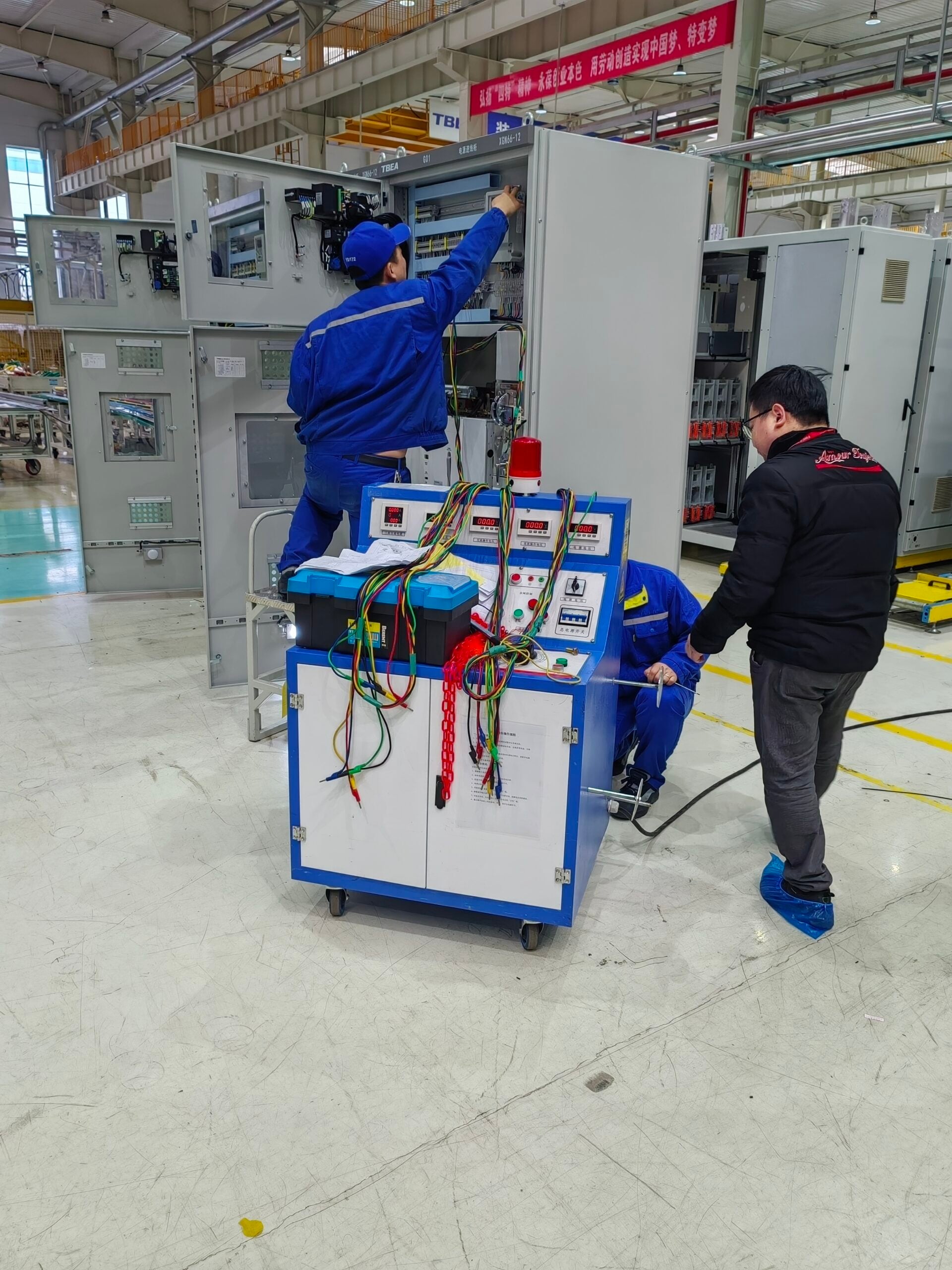
Thanks to the device’s capabilities, the Current Injector Tester is one of the most important devices in electrical testing and diagnostics. They assist in checking the functionality of circuit breakers, relays, and other protective devices. Electrical engineers, technicians, and other professionals dealing with electrical equipment need to know how the Current Injector Tester works and its uses to ensure reliability and safety for the electrical systems. In this guide, you will learn the principles, functions, and advantages of this device which are key to proper execution of electrical tests using the Current Injector Tester. After reading the article, you will understand how to use the device as part of your standard operating procedures for electrical tests in your company while ensuring accuracy, compliance, and precision to the provided benchmarks of the industry.
What is a Primary Current Injection Test?

A Primary Current Injection Test is one of the test methodologies designed for assessing the status of advanced electrical machines like circuit breakers alongside their supporting systems such as transformers and protective relays. The tested equipment must have an high direct current analog simulation or actual environment simulation means attached to its primary side to enable infusion of current. Moreover, Primary Current Injection tests are helpful in determining the testable real world operational capabilities of devises where accuracy is a necessity. Given the growing complexity of modern electrical systems, efficient approaches to system level testing are paramount to guarantee unconditional reliability of the entire system during operation.
Definition and Purpose of Primary Current Injection
Primary Current Injection Testing has some essential benefits, especially for high voltage and industrial uses. In evaluating protective devices like current transformers, circuit breakers, and protective relays, these tests offer a remarkable insight by checking their operational effectiveness against simulated fault conditions while under actual loads. The test determines how well the system can sense and respond to abnormal current levels and guarantees safe operations.
Moreover, this test is a crucial tool for malfunction detection to validate the calibration and time-current characteristics of protective equipment. Implementing these tests also aids in the detection of incorrect-sensitive shielded devices such as improper trip times, sensitivity malfunctions, or other failures that could damage the electrical infrastructure. With the modern computer-aided design automation Primary injection test sets, engineers can now program complex tests in conjunction with advanced data acquisition systems to record real-time performance metrics and produce detailed diagnostic reports further improving compliance with IEEE and IEC standards.
Applications of Current Injection Testing
Current injection testing is important for validating protection systems, circuit breakers and relays in various electrical engineering fields. The following are some of the key applications with details:
- Protective Relay Testing
Relays are needed to monitor electrical faults and execute protective actions. Current injection testing confirms the accuracy of relay settings, coordination and counterclaim benchmark timings with load and fault condition simulations. This makes certain that the relays function within the tolerances provided alongside maximum and minimum variables.
- Circuit Breaker Performance Evaluation
Relay setting verification entails testing each protective relay system by applying controlled current to simulate overload or fault conditions. This tests the trip time of the protective relay, the efficiency of the triggering mechanism and provides benchmarks to measure against for interrupting specified current levels during operation. This also assists in determining electromechanical deterioration and compliance to IEC standards like IEC 60947.
- Switchgear Verification
High and medium voltage switchgear require current injection testing to validate critical parts and their capability alongside busbars and isolators and their conductors for operational and fault currents. Current injection testing validates equipment by exposing them to performance altering conditions like insulation breakdown and thermal stresses.
- Transformer Differential Protection
Transformers have internal faults detected by differential protection schemes. Current injection testing applies simulated fault currents to differential relays yielding accurate results of their operation verification. This ensures swift disengagement of faults in control mechanisms lessening damage risks to the transformer and the connected systems.
- CT and VT Ratio and Polarity Testing
Current Transformers (CTs) and Voltage Transformers (VTs) can be tested for ratio and polarity using current injection. Accuracy in measurement and protection functionalities depend on ratio and polarity accuracy, thus satisfaction with misconfiguration or saturation troubleshooting is resolved in this phase.
Current injection testing comprehensively assesses components and complex systems while ensuring regulatory compliance and operational reliability for the equipment, long-term reliability, environmental sustainability, and protection configuration optimization in complicated electrical networks.
Equipment Needed for Primary Current Injection Testing
Testing and verifying the operation of protective devices and systems requires primary current injection testing which requires specialized equipment tailored to output high-current with precise control. The following are the components integral to the process:
- Primary Injection Test Set
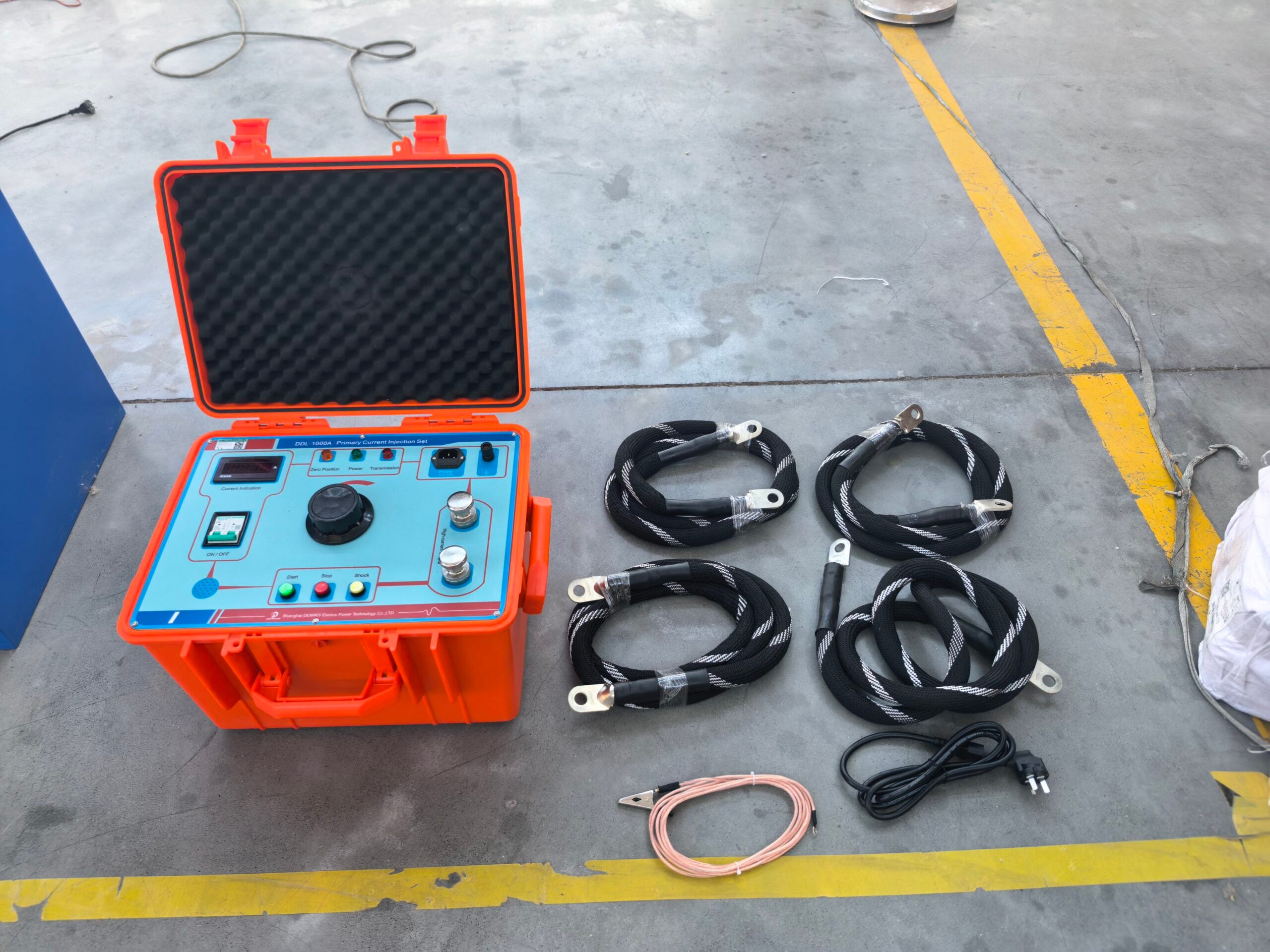
This is the core piece of equipment used to generate the high current necessary for testing. It consists of a powerful current source capable of supplying a steady, accurate current for long periods of time and with precise adjustability to mimic system needs.
- Current Transformers (CT)
Test equipment, as well as the equipment used under test current transformers, serve the purpose of measuring the current, as well as stepping down the measured high current to lower levels that can easily be analyzed.
- Protective Relays
During the performance verification, fault conditions are simulated while the protective relay devices are connected to the system to ensure that the relay’s performance under these conditions is accurately measured.
- Power Supply Units
The uninterrupted operation of the primary injection test set is only achievable when there is a seamless, consistent, high-capacity, stable power source so there are no interruptions or inconsistencies.
- Measuring Instruments
Testing and measuring tend to offer a fine grained, detailed outcome especially when it relies on specialized apparatus such as multimeters, ammeter and digital oscilloscopes to measure relevant parameters.
- Test Cables and Connectors
Providing a safe current pathway during the testing procedures requires the use of robust, high current rated connectors and cables to test equipment, ensuring secure joining hardware.
With the use of these tools and proper safety measures, the primary current injection testing can effectively be performed to ensure the equipment and systems are compliant with operation and safety for critical electrical networks.
How to Perform a Current Injection Test Set?

Carrying out current injection testing is a core activity to assess the reliability and functionality of electrical systems and devices. This process verifies that circuit breakers, relays, and other critical components function properly under high current conditions, thereby safeguarding essential electrical networks from possible failures. In this part, we will describe the most important parts of performing current injection testing.
Step-by-Step to Perform Current Injection Test
1. Planning and Preparation
A comprehensive test plan must be prepared before current injection testing commences. This plan must detail the specific electrical system to be tested, safety measures to be observed, and an itemized list of test equipment needed such as a primary injection test set, current transformers, and other measuring devices. All staff participating should be well-trained and fully briefed to avoid unnecessary risks.
2. Equipment Setup
To reduce movement during testing, position all devices for ease of access and secure those that are loose. Follow the device’s parameters with the primary injection test set and connect it to the device under test. Tighten all connections, including grounding, phase, and reference connections to verify that all connections are proper in relation to the system under test to eliminate erroneous results and safety risks.
3. Calibration
Prior to infusing any current into the system, ensure that the test set is calibrated against reference standards for measurement output checks. Accuracy verification of all connected instruments like ammeters and voltmeters is necessary to minimize data collection uncertainties. Calibration is necessary to make systematic adjustments in the workflows of the processes and bring them to expected control.
4. Current Injection
Slowly inject current in increments beginning with lower ranges up to the designated test value. At each level, monitor and log responses such as voltage drops, currents, and other system reactions. Look out for abnormal or out of the ordinary and not within the expected range readings and behaviors which could indicate fault conditions.
5. Results Verification
Assess the readings obtained against pre-established limits and tolerances provided in the specification of the test. Looking out for discrepancies, like extreme voltage drops with a disproportionate current distribution, provide answers to the why. With this process, critical failures that may affect reliability and availability can be detected at the earliest possible time.
6. Post-Test Analysis
Follow checklist items of prescribed safety protocols while carefully turning off all the equipment and breaking all the interconnections. Analyze the data set to check if the systems and sub-systems meet the operational criteria or if recalibration, readjustment, or realignment procedures are necessary. All findings must be documented in a report detailing all actions taken or recommended corrective actions if any.
Following this structured methodology fosters accuracy and uniformity in the performance of primary current injection testing and strengthens the reliability of important electrical systems.
Safety Precautions for High Current Testing
Tests requiring an application of electrical currents must follow strict test procedures and safety measures designed for the protection of both the equipment and personnel involved. For example, all zones containing equipment and test facilities must be clearly demarcated and access restricted to trained personnel for exposure control. For the safety of all personnel and equipment, all leads, test plugs, and facilitatory apparatuses must be checked and prepared to ensure no overheating or equipment failure.
Employees should wear PPE such as thermal rated gloves, safety glasses, and arc rated clothing to protect against electrical burns and arc flash effects. In addition, all test equipment should contain elements like grounding mechanisms or overload protection to prevent hazards from unexpected faults. Emergency shutdown procedures must also be visually accessible as well as outlined for responding swiftly in case of anomalies.
To uphold accuracy and safety, all the instruments must be properly calibrated, and all contacts examined for damages and wear prior to testing. In addition, conducting high current operations requires an environment with proper ventilation for reducing thermal charge. Finally, real-time monitoring in conjunction with international standard IEC 60947-2 or IEEE backup guidelines mark the very core for the execution of safe high current tests.
Common Mistakes to Avoid During Current Injection Tests
1. Wrong Choice of Testing Equipment: One of the most common mistakes is omnipresent in testing circuits with improper current levels. Compliance with the exact specifications and rating of circuit breakers and relays is a prerequisite for using test devices. The use of wrong equipment may cause either incorrect results or damage to the tested devices.
2. Forgetting Calibration and Service: Inaccuracy of all some measuring instruments which are not calibrated can yield inaccurate measurements. Constant checking and recalibration of these standards ensures the functions of the instruments are intact and as per the market’s requirements.
3. Insufficient Earth Connections: Weak adherence to within the acceptable standards remain as one of the biggest breaches to operator safety. Poor earth connections increase the chances of dangerous electrical faults affecting the equipment and the operator. Grounding rules have to be followed all the times without fail.
4. Forgetting Look-See Inspections: Failing to check for damage, wear, or loose connections might lead to some unsafe conditions while carrying out the tests. These steps should be undertaken first so that malfunctions or failures do not occur.
5. Neglect of the Environmental Conditions: Factors like temperature and ventilative flow are important in High Current Testing. These conditions must be monitored and controlled especially in closed spaces, as they may lead to equipment overheating or wrong test results.
To avoid these mistakes, there must be well-defined processes that define systematic approaches and documented standards. Compliance to set standards reinforced by regular personnel training and use of more reliable testing devices improves safety and precision during high current injection testing.
What are the Specifications of a Current Injector Tester?

A current injector tester is a device tailored for rigorous high-current testing. Typical key specifications include:
- Current Output Range: Adjustable output current, often from a few to thousands of amperes.
- Output Accuracy: Precise measure with very small error within limits of ±1% or better.
- Measurement Capabilities: Measurement and indication of a current, voltage, time with digital displays.
- Power Supply: Operates on standard mains voltage (e.g., 230V or 120V) with sufficient power capacity to perform high-current injections.
- Safety Features: Overload protection, emergency stop, operator insulated connections, and operational safeguards.
These features effectively guarantee that the tester enables comprehensive testing for high-stakes scenarios while ensuring safety for the user and the operations being performed.
Understanding Current Loads and Output Current
Safeguards must be in place to ensure efficient resource use and operational integrity for testing equipment and systems. Current load is defined as the total amount of electrical current drawn by a connected device or system. The output current is the current injected by the testing equipment under specific conditions. Calibrating and measuring these currents should always be checked to pre-defined thresholds to ensure continuous and safe operations as well as avoid unanticipated malfunctions.
The output current is usually a function of load and it heavily depends on how well the equipment can sustain voltage levels during varying demand. Sophisticated testing systems are able to manage fluctuations across different load profiles to simulate realistic scenarios effectively. These systems are equipped with controls for a changing dynamic current range and feedback systems, ensuring accurate regulation in difficult conditions.
Research shows that today’s testers are able to precise and static changes in output current with some ranging as low as ± 0.1%. This level of precision is pivotal for transformer testing, circuit breaker validation, or assessment relay since these tests are dependent on currents delivered and minor inaccuracies can provide false evaluation leading to equipment malfunctions.
Key Features of a Primary Current Injector Test System
- High Current Output
Modern primary current injectors are designed for high and precise output verification and can easily exceed 1000 Amperes. The most advanced primary injectors can reach 20,000 Amperes for unique niche industrial applications. This is especially important for high-capacity electrical components testing.
- Adjustable Output Range
The precision of modern primary current injectors goes as low as 0.1 Amperes, meaning the output current can be controlled to exceedingly fine levels. This is important for the calibration of multi-level sensitivity devices.
- Advanced Digital Control and Monitoring
Such systems are fitted with modern digital interfaces. They can include LCD/LED screens that monitor vital outputs: Current, Voltage, and Resistance. Furthermore, LOGIC controllers and software can automate processes to increase efficiency.
- Built-In Protective Features
Primary current injectors must also include safety features. These add overcurrent safety mechanisms, thermal shutdowns, and fail-safe interlocks. Most modern injectors will stop working when the preset current threshold is reached.
- High Accuracy and Stability
Most primary identity systems boast high stability and accuracy of ±0.1% to 0.5%. Stringent circuitry combined with advanced compensation techniques ensures stability by maintaining the output even when loads fluctuate, further enhancing reliability.
When incorporated, a primary current injector test system ensures the reliability, accuracy, and efficiency professional electrical test and diagnosis systems work with while addressing the critical demands for them.
Comparing Different Current Injection Test Sets
|
Feature |
Model A |
Model B |
Model C |
|---|---|---|---|
|
Current Output Range |
10A to 5000A |
5A to 3000A |
1A to 1000A |
|
Accuracy |
±0.1% |
±0.2% |
±0.5% |
|
Stability |
High |
Moderate |
Moderate |
|
Control Interface |
Digital Touchscreen |
Dial and Buttons |
Manual Knob |
|
Safety Features |
Overload Protection |
Basic Alarms |
Basic Alarms |
|
Portability |
Compact and Lightweight |
Mid-Sized |
Heavy and Bulky |
|
Power Supply Compatibility |
Universal (AC/DC) |
AC Only |
AC Only |
|
Built-in Diagnostics |
Available |
Limited |
Not Available |
|
Application Suitability |
Industrial and Commercial |
Light Industrial Use |
Laboratory Use Only |
|
Cost Range |
High-End |
Mid-Range |
Economy |
How Does Circuit Breaker Testing Work?

The testing of circuit breakers is conducted to check the accuracy and dependability of a circuit breaker to check if it functions as expected during electrical or thermal faults. The procedure involves the following steps:
- Visual Inspection – Looking at the circuit breaker for any physical damage, wear and tear, or even loose connections.
- Mechanical Operation Tests – Ensuring all moving components like switches and handles are operating correctly.
- Contact Resistance Testing – Assessing the value of electrical resistance of the breaker’s contacts to ascertain poor conductivity.
- Trip Tests – Simulating fault and overload conditions to ensure that the breaker trips as specified.
- Insulation Resistance Testing – Simulating fault and overload conditions to ensure that the breaker trips as specified.
Conducting the above operations helps ascertain that the circuit breakers will function seamlessly and mitigate the risk of electrical system failure during crucial situations.
Importance of Circuit Breaker Testing
Testing of the circuit breakers is very important in agricultural, industrial and residential fields because it boosts the reliability as well as safety. It is necessary that the circuit breaker be tested sponsor safely shuts down the equipment and systems, electrical circuits processed, and hazards to personnel, fires avoid. Data shows a large portion of electric faults stem from poorly functioning circuit protection devices which need to be routinely checked, indicating the importance of performance tests and assessments.
The latest testing methods make use of modern technologies like digital trip testing equipment and (IR) thermal imaging cameras to detect issues more accurately. In addition, international standards such as IEEE C37.09 and IEC 60947-2, ensure that these circuit breakers are tested against marked operational limits which ensure that unnecessary system downtimes are avoided. Compliance with these standards greatly optimizes system safety, reliability, as well as operational functionality. Cumulative testing also increases the circuit breaker equipment’s lifespan, optimizing the equipment cost over its value and minimizing the risk of suffering from unplanned outages, especially in critical infrastructure situations.
Using a Current Injector for Circuit Breaker Testing
A current injector is an important tool used in the testing process of circuit breakers in a controlled way especially under simulated fault and overload conditions. This device makes available high current outputs which enable testing of protective relays and trip circuits in a precision. Thus ensuring that the coordination settings and interruption thresholds are compliant to system requirements.
Nowadays, current injectors have been integrated with digital controls, programmable sequences, and automated data logging. These improve testing accuracy and reduce human error while offering detailed performance analysis. In addition, using a current injector helps with standard compliant tests while offering root cause analysis for potential problems. This is especially crucial for systems in high-demand environments where reliability and safety are critical.
What is the Difference Between Secondary Current Injection Test and Primary Current Injection?

The difference between secondary current injection testing and primary current injection testing is based on their approaches and methodology of execution.
The Secondary Current Injection Test is aimed at verifying the operation of the protective relay and control circuitry systems in a bounded manner. It does not engage the entire system as it operates normally; rather, it controls conditions by injecting current directly to the relay. This procedure is quick, less costly, and is performed during routine servicing and check-ups done to the relays.
Preferred Testing Method does need a labeled description, but this refers to the Primary Current Injection Test. In this method, all components of the entire system are tested, including current transformers (CTs), protective relays, and circuit breakers/, as the system is in operation. During this method, a high current is injected through the primary side of the CTs to give full response to the entire system. The method is comprehensive, however, it requires lots of tools and resources, making it ideal for commissioning new setups or troubleshooting complicated issues with the system.
There are advantages to each method; they simply depend on what one’s aims are with the system and the objectives of testing.
Definition of Secondary Current Injection
Secondary current injection method is a testing technique that evaluates the verification of protection relays and their systems without energizing the primary circuit. This process injects controlled, secondary-level currents into the relay terminals or the lower side of the current transformers (CTs) to simulate faults. This method confirms the relays measuring and response systems for current variations detect and respond appropriately within the set parameters.
This approach is very effective as it ensures the response times and calibrations of the relays are checked during fault conditions simulation. There is no piercing injection testing, as there are no high currents or complex equipment, thus simplifying the setup and reducing time. Because this method is reliable and efficient, secondary current injection methods are more preferred for troubleshooting and maintenance, as well as verifying the procedures for protection schemes in low and medium voltage systems.
Advantages of Primary Current Injection Testing
- Accurate Representation of Real-World Conditions
The primary current injection test method uses actual high current levels to test the entire system including CTs (current transformers), switchgear, and protection relays. This is more effective because every element is tested under realistic conditions and their performance is verified against conditions they are most likely to experience in reality during faults. Employing such thorough techniques reduces chances of unexposed errors or misoperations occurring.
- Comprehensive System Testing
In contrast to secondary injection techniques, primary current injection method tests the entire protection loop as well as the CT ratio, polarity, burden, wiring and relay and circuit breaker operation. Such a matter gives a comprehensive approach which allows engineers to detect and correct the failures of the interconnected components strategically.
- Verification of Installation Integrity
Primary current injection testing the whole installed circuit validates that all interconnections, current transformers, and protective devices are properly wired and operational. The procedure can reveal installation problems such as loose connections, erroneous polarity, and incorrect CT burden values, which would otherwise be masked in partial testing.
- High Precision in Fault Simulation
Test procedures are simplified and optimized with primary injection testing. This allows emulated faults to be simulated from a system’s operational current level by controlling the amount of injected current and its duration. It also makes protection systems functioning on precise predetermined time intervals, current thresholds, and operational limits easy to validate.
- Application in High Voltage and Complex Systems
For high voltage systems, primary current injection testing is almost always preferred compared to secondary current injection testing; especially when dealing with the difficult operating conditions of CTs and protection devices. It is also the best method for testing intricate and sensitive electrical systems because of this advantage.
The integrity of complex electrical systems is validated using primary current injection testing. The system’s response under predetermined scenarios is evaluated, and accurate primary injection test results make these evaluations reliable.
When to Use Each Type of Test
Both primary and secondary current injection testing have different functions and are selected based on the electrical system under evaluation. Primary current injection testing is critical for the full system including the current transformers (CTs), protection relays, associated wiring, and the circuit breakers as they need to be tested under real-world operating conditions. This approach is particularly useful for commissioning new systems, validating installations, or testing devices that are supposed to function during extreme or fault conditions since it gives the most complete assessment of system performance.
Focusing away from the CTs and other primary components, secondary current injection testing concentrates on the protection relays and their directly associated elements. These tests are best suited for proactive maintenance, diagnostic assessments, or testing relay configurations. Because secondary injection tests need less resources and no high-power equipment, these tests are available to be used routinely to check the devices independently of thorough system evaluation.
The importance of a system defines how it should be tested, the system’s operational environment, and the goals set for testing. For example, primary injection testing is crucial for safety-critical systems in power plants or substations. Parts of a complex system located in simpler environments do not need as thorough testing; secondary injection testing suffices for routine checks.
What are the Applications of a Current Injector in Industry?

Current injectors have found application in diverse fields for testing and confirming the effectiveness and reliability of electrical protection systems. Their most notable use involves testing circuit breakers and protection relays, as well as transformers, for their accurate operation during fault simulations. They are vital in power generation facilities, substations, and industrial plants for regular maintenance and troubleshooting tasks. In addition, current injectors are used to certify protective devices after thorough checks during the QA processes to ensure compliance and safety with the required standards and regulations. These tools are effective in lessening system downtimes while greatly reducing risks relating to electrical failures.
Use Cases in Power Generation and Substations
The modern power distribution and generation systems depend heavily on the use of current injectors. These are used in power generation plants to calibrate protective relays, circuit breakers, and transformers within the system which must function properly under various load conditions. This helps maintain the stability of the system to avoid possible cascading failures during fault conditions.
Current injectors are also heavily used in the substations for maintenance as they are located at nodes of the electrical grids. Relative equipment testing and validation takes place such as testing overcurrent relays, differential relays and other protection schemes which require proper issuance of simulated fault conditions to test their response. With injectors, accuracy is guaranteed whereby lowering the chances of faulty or delayed response during real faults. Current injectors are being manufactured with software solutions for diagnostics aiding data logging current injectors and modern software tools. Operators can now generate comprehensive reports which help in meeting regulations while effectively managing the assets.
Use of current injectors help businesses optimize their maintenance strategies as well as enhancing the dependability of critical electrical infrastructures while also reducing risks towards the equipment and personnel.
Role of Current Injectors in Relay Testing
Today’s current injectors are crucial for testing the accuracy and operational integrity of protective relays used in fault detection and isolation in modern electrical systems. During relay tests, current injectors apply simulated faults with specific current injections to the relay under test to determine if the relay functions within the set parameters, enabling the tester to determine if the relay is functional within specified tolerances. This helps to confirm that the relay follows the designed operational logic during fault conditions so that electrical apparatuses do not sustain unnecessary damage during faults.
Modern devices also incorporate more advanced features such as automated test procedures, digital displays as well as real-time display interfaces, improving the accuracy and consistency of testing while reducing operator influences on the results. Moreover, current injectors aid in testing all classes of relays, including overcurrent, differential and distance relays; thus, they serve all utility operators and maintenance personnel. Since the current injectors can model complicated fault conditions, they assist in the thorough evaluation of the relays which enhances the reliability of the grid and reduces breakdown maintenance.
Reference Sources
-
An automated fuel injector shear stability tester:
- Focus: Describes an automated mechanical bench test for fuel injector shear stability.
- Key Findings: Presents data and methodologies for testing injector stability.
-
- Focus: Laboratory experiments on fuel injectors in indirect injection engines.
- Key Findings: Explores the use of electric current to analyze control parameters.
-
Development of diesel injector tester with intelligent pulse generator:
- Focus: A low-cost diesel injector test machine with intelligent pulse generation.
- Key Findings: Highlights mobile device integration and user-friendly reporting.
-
Improvement of diesel injector nozzle test techniques:
- Focus: Enhancing test techniques for diesel injector nozzles.
- Key Findings: Discusses reliability improvements and testing for alternative fuels.
-
Gasoline fuel injector spray measurement and characterization:
- Focus: A new SAE J2715 recommended practice for spray testing.
- Key Findings: Details experimental studies on spray measurement and characterization.
Frequently Asked Questions (FAQs)
Q: What is a primary current injection test set?
A: A primary current injection test set is a piece of testing equipment used to apply a large current directly on the primary side of electrical devices, such as circuit breakers, to evaluate their performance and operational integrity.
Q: How does a primary current injection tester work?
A: A primary current injection tester works by generating a large current, typically at levels of current that exceed normal operating conditions, to simulate fault conditions and test the behavior of protective devices like relays and breakers.
Q: What are the benefits of using a primary current injection test system?
A: Benefits include the ability to test over-current trip relays, verify the turns ratio of current transformers, and ensure the reliability of large electrical installations by directly measuring the operation of protection devices under actual load conditions.
Q: What is the maximum voltage supported by most primary current injection test sets?
A: The maximum voltage supported can vary by model, but many primary current injection test sets can handle various voltage levels, often up to several hundred volts, depending on the design and application requirements.
Q: What is the importance of current density in primary current injection testing?
A: Current density is important as it affects the heating of the conductors and test equipment. Proper management of current density ensures that the testing is safe and that the equipment operates within its specified limits.
Q: Can I use a primary current injector tester to check the performance of a circuit breaker?
A: Yes, a primary current injector tester is specifically designed to inject the current on a breaker to test its performance, including checking the trip settings and overall functionality of the breaker under fault conditions.
Q: What types of probes are used with primary current injection test kits?
A: Various probes are used with primary current injection test kits, including current clamps and shunt resistors, which help in measuring the injected current accurately during testing procedures.
Q: What is the role of a generator in a primary current injection test system?
A: The generator in a primary current injection test system supplies the required large current, allowing the tester to inject the current into the device being tested, simulating real operational conditions.
Q: How do digital primary current injection testers differ from analog ones?
A: Digital primary current injection testers typically offer more precise measurements, advanced features for data logging and analysis, and may include digital displays for easier monitoring of testing parameters compared to traditional analog testers.