Relays designed for voltage protection are fundamental in today’s electrical systems as they help in mitigating equipment damages and also prevent infrastructural breakdowns arising from voltage anomalies. Protection of system stability is achieved through the avoidance of damage from overvoltage and undervoltage through the application of various protections. For engineers and technicians dealing with the management of electrical systems, knowing the key functions and how voltage protection relays work is crucial for efficient operations. Thus, in this article, we aim to delve into the operational principles, mechanisms, and scenarios for effective deployment of such relays. Ultimately, you will understand their significance in preserving the trustworthiness and productivity of electrical networks.
What is a Voltage Protection Relay?

Voltage relays perform oversight functions on voltages, and shield a system from a preset threshold being crossed. Their primary purpose is to identify critical conditions such as under-voltage and over-voltage and initiate circuit disconnection, as well as alarming affected user circuits. The relays maintain system stability while containing electrical and other components safe from being adversely exposed to extreme voltages for an extended duration.
How does a protection relay function?
Protection relays operate by tracking system voltage, current, frequency, and phase angle, monitoring these electrical parameters incessantly. Transducers and sensors are needed for the electrical measurements, and the device’s internal logic circuitry or microprocessors use mechanotransducers to check signals. Digital or numerical relays, ‘advanced’ relays, use sophisticated algorithms for real-time data analysis. Automatic actions are triggered when specified parameters (overcurrent, voltage drop, etc.) are exceeded or violated. The protection mechanisms routed preset values of triggers and relays are checked automatic controls complex units controlled triggering circuit breakers which results in the section of the system that has faults being cut off from the operational power. Quicker the actions during automation, lower the damage to equipment, no cascading failures, all while maintaining the complete reliability of the power system. Many modern relays also have weak allowances and have incorporated or included communication capabilities, enabling or allowing seamless integration into supervisory control and data acquisition (SCADA) systems for enhanced monitoring and control remotely.
What are the key components of a voltage protection relay?
Voltage protection relays are usually comprised of several key components which help in their accurate operation while at the same time improve reliability when safeguarding electrical systems. This includes:
- Sensing Element: The sensing element identifies the voltage levels within the system. It is configured to monitor conditions like overvoltage, undervoltage, as well as the phase difference between the voltages and currents so that it measures and responds accurately to changes.
- Microprocessor or Logic Unit: Modern voltage protection relays integrate a logic unit with a microprocessor that processes input signals and decides when appropriate action should be taken. This module provides programmability that allows for flexible settings and adaptive operation based on system needs.
- Input Transformers: Potentials or input transformers are step-down transformers that convert high system voltages to lower, manageable relays to the circuits within the relay. These transformers maintain precision and compliance with the equipment voltage rating.
- Output Contact Mechanism: The output contact mechanism issues commands (for example, to trip circuit breakers and disconnect faulty parts). These contacts are usually high current contacts to ensure fail-safe operation.
- Communication Interface: Alignment with communication modules that support protocols such as IEC 61850, Modbus or DNP3 are made with the newer type of SCADA systems which helps equip them with advanced functions such as real-time data acquisition, remote monitoring, and system diagnostics.
- User Interface and Display: Besides viewing real-time data, event logs, and programming parameters of the relay, the operators can monitor and configure the relay using its lead through menus.
- Power Supply Unit: A stable Relay power source is required for each relay to function properly. The power supply unit must provide sufficient energy to the relay’s circuits, enabling trouble-free operation even during changes in voltage.
These components together enable the voltage protection relays to provide accurate and cost-effectiveness while maintaining the integrity of the system, provide prompt fault detection, and minimize downtime for power networks.
How Does the Working Principle of a Voltage Protection Relay Operate?

The operation of any voltage relay protection will continuously monitor the system voltage level and compare it with acceptable limits. The voltage is monitored against set limits, both lower and upper thresholds. The relay is triggered as soon as the system voltage minimizes or maximizes beyond the acceptable range. Upon activation, it sends a signal to either disconnect the affected portion of the circuit or take necessary steps to protect the equipment. This mechanism will, however, ensure that over-voltage and under-voltage conditions do not damage the equipment while protecting the system.
What is the relay working principle?
The Interactions of electromagnetic induction and mechanical switching comprise the working principle of a relay. An electromagnet, movable contacts, and a spring-loaded armature make up a relay. Relays either have contacts that are normally closed or opened. If an electric current is supplied to the coil of the electromagnet, it generates a magnetic field that attracts the armature. This movement of the armature either opens or closes the circuit contacts, depending on the relay’s configuration. To operate diverse systems smoothly and safely, relays are made to separate shut-off control signals from high-voltage loads. In contemporary systems, relays are even more improved by faster response times, high sensitivity, and integration with microcontrollers aimed towards precise actuation within complicated networks. Such advancements enable dependability in operations, flexibility in modular expansion, and make relays vital for use in applications such as industrial automation and modern electrical protection schemes.
How does a monitoring relay detect faults?
What Are the Different Types of Protective Relays?

Under protective relays, there are certain functions and applications defined that allow a division under specific criteria. Some of the major divisions include:
- Overcurrent Relays– These are protective devices that initiate action once the current being utilized exceeds a threshold limit, therefore, preventing damage to equipment.
- Directional Relays – Created for power flow direction indication, they are of utmost importance for systems whereby forward flow and reverse power flow need to be controlled independently.
- Distance Relays – These are protective devices that monitor impedance or distance to a fault along a transmission line, taking action if the fault is within a predetermined zone.
- Differential Relays – These specialized protective relays are employed for seamlessly monitoring the system’s input and output currents. They ensure rapid corrective actions for any deviations due to faults.
- Voltage Relays – These relays operate on the principle of a set threshold deviation of either voltage drop or over voltage surge.
- Frequency Relays – Continuous surveillance of the system frequency is done, and relays that activate beyond set ranges provide safeguards against instability.
In the context of diverse applications, all categories of protective relays are critical for maintaining electrical system operational safety and reliability, along with their efficient performance.
What is the difference between overcurrent relays and voltage protection relays?
|
Key Point |
Overcurrent Relays |
Voltage Protection Relays |
|---|---|---|
|
Primary Function |
Detects excessive current |
Detects abnormal voltage levels |
|
Operating Principle |
Measures current flow in a circuit |
Monitors voltage across the system |
|
Application Area |
Protects against short circuits |
Ensures stable voltage conditions |
|
Typical Setting |
Current threshold above the rated value |
Voltage threshold above/below set values |
|
Sensitivity |
Less sensitive to voltage variations |
Highly sensitive to voltage fluctuations |
|
Response to Overload |
Trips during overcurrent conditions |
Does not respond to overcurrent |
|
Use in Power Systems |
Common in motor and transformer protection |
Essential for voltage stability monitoring |
|
Time Delay Feature |
Adjustable for delayed tripping |
Adjustable based on voltage deviations |
|
Operating Range |
Wide range of current handling capabilities |
Operates within a specific voltage range |
|
Usage in Renewable Energy Systems |
Rarely used |
Frequently applied to grid stability |
What are the different types of protective relays used in electrical systems?
|
Type of Relay |
Key Function |
Common Applications |
Key Parameters |
|---|---|---|---|
|
Electromechanical Relay |
Works on electromagnetic principles |
Motor and transformer protection |
Wide current handling range |
|
Static Relay |
Uses solid-state components |
Voltage and frequency monitoring |
High precision |
|
Numerical Relay |
Software-based relay |
Advanced system protection |
Programmable settings |
|
Differential Relay |
Detects differences in current |
Transformer and generator protection |
High sensitivity |
|
Overcurrent Relay |
Operates on excessive current flow |
Line and equipment protection |
Adjustable trip settings |
|
Distance Relay |
Monitors impedance |
Transmission line protection |
Zone-based operation |
|
Under/Over Voltage Relay |
Protects against voltage deviations |
Grid and network stability |
Voltage range settings |
|
Directional Relay |
Determines current flow direction |
Fault location identification |
Current direction sensing |
|
Frequency Relay |
Monitors system frequency |
Power system stability |
Frequency deviation settings |
|
Earth Fault Relay |
Detects ground faults |
Cable and system protection |
Earth leakage sensitivity |
|
Reverse Power Relay |
Prevents power flow reversal |
Generator and turbine systems |
Reverse power detection |
How Does a Voltage Monitoring Relay Function in An Electrical System?
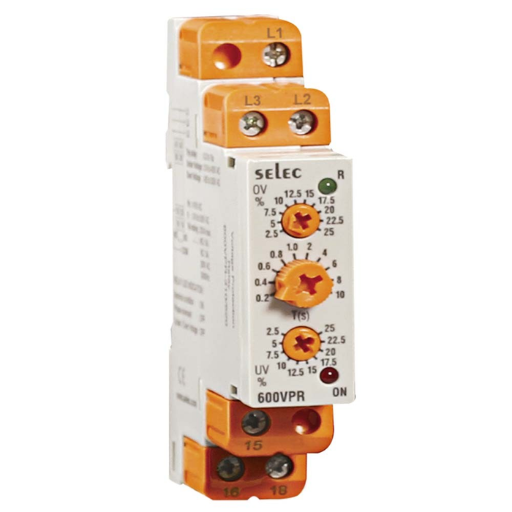
A protective voltage relay is designed to monitor and control voltage levels within preset boundaries. Provisions include the detection of over and under voltage as well as voltage sagging and surging that can adversely affect performance or jeopardize the safety strategies of the system. It will also give alarm indications or isolate the offending part of the circuit when voltages are outside preset limits to prevent damage to equipment and ensure system stability. Such equipment is important in avoiding the malfunction of components while ensuring reliable operation in both industrial and domestic power systems.
What role does a monitor play in voltage protection?
As a diagnostics tool, a voltage monitor tracks electric parameters and irregularities during operation on a continuous basis to safeguard against faults. It has accurate voltage sensors and intelligent software capable of detecting overvoltage, undervoltage, and transients. Within a protection system, a voltage monitor supplements automated shutdown of circuits, backup systems, or activation of alarms. Modern voltage monitors incorporate data-logging features and energy meter communication ports which enhances their utilization within more comprehensive energy management systems. These devices mitigate failures by providing precise and actionable data which improves operational efficiency and minimizes downtimes across industrial and residential setups.
How does a voltage monitoring relay help in fault detection?
A voltage measurement relay monitors an entire system to ensure proper operation within the defined electrical criteria like voltage thresholds, sequence of the phases, and phase failures. It provides critical overprotective functions that in some instances may include overvoltage or undervoltage conditions, phase-loss, and phase imbalance detection. When these faults are detected, the relay takes necessary measures to contain damage by freeing controlled protective zones within the system or activating warning signals for device operators. Today’s relays are more precise in fault detection due to their digital processing capabilities which allow them to identify minute irregularities rapidly. In addition, custom programmable levels and delay periods for some advanced devices provide an additional option to pre-configure them according to the specific requirements of multifunctional electrical systems. This enables most, if not all, the configurable protections to be fault-tolerant without safety-critical system interference, improving overall system reliability and safety by avoiding extended outages.
What Are the Applications of Voltage Protection Relays?

Relays are one of the most important modern protection devices needed for the safety of the electrical systems. As an example, they are widely used in power generation plants for monitoring voltage levels as well as protecting generators and transformers from damages due to overvoltage or undervoltage conditions. They also protect industrial machinery as well as other equipment from operational voltage changes which may lead to their failure and even destruction. Also, these relays are crucial in the functioning of grids where they assist in holding the balance of the grid and also mitigate the risk of voltage related damage to substations. Relays serve such diverse purpose that one cannot get around having them in both centralized and decentralized power systems.
In what scenarios are protective relays used?
Protective relays are utilized in various contexts to safeguard electrical systems and assure their dependability. Their initial application is within the bounds of power transmission and distribution networks, where abnormalities such as overcurrent, underfrequency, or phase mismatches are detected and corrective measures are undertaken to avert cascade failures. They are also heavily utilized in industrial automation to protect important manufacturing processes by supervising machinery and removing faults to diminish downtimes as well as equipment damages. In addition, protective relays are used in renewable energy systems, for example, in wind farms and solar power plants, where they mitigate risks associated with grid integration problems on the interconnection with the grid, such as sudden changes in voltage and frequency. Their use in microgrids and in smart grid systems also allows better coordination and more agile responsiveness in the modern energy framework. Under different operating conditions, these systems assist in achieving high availability, low risk, and optimized efficiency.
How do voltage protection relays enhance system reliability?
By supervising voltage levels, voltage protection relays improve a system’s dependability and automatically respond to any breaches outside established operational parameters. They protect systems from surges, sags, and imbalanced voltages which can cause overheating, malfunction, insulation failure, and other forms of damage. Today’s voltage protection relays are often equipped with sophisticated communication interfaces integrated within digital monitoring systems that offer real-time analysis and orchestrated responses. This enables swift fault detection and system-wide isolation to avert cascading failures and minimize downtime. Moreover, swiftly adjustable voltage and synchronous capabilities with other renewables helps in stabilizing the grid during variable power output situations. Voltage protection relays enhance and strengthen electrical systems by safeguarding them from various risk factors while ensuring operational consistency.
What Is the Importance of Relay Testing?
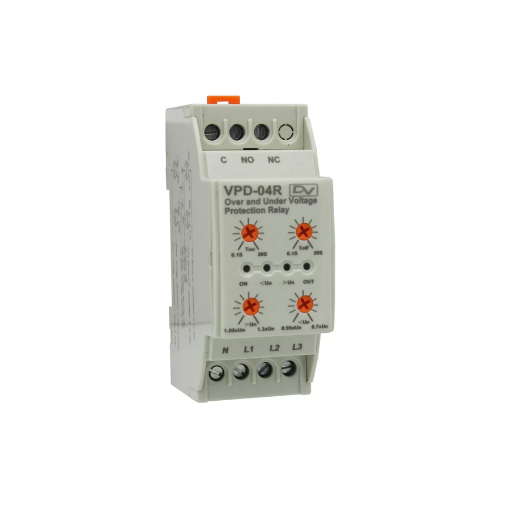
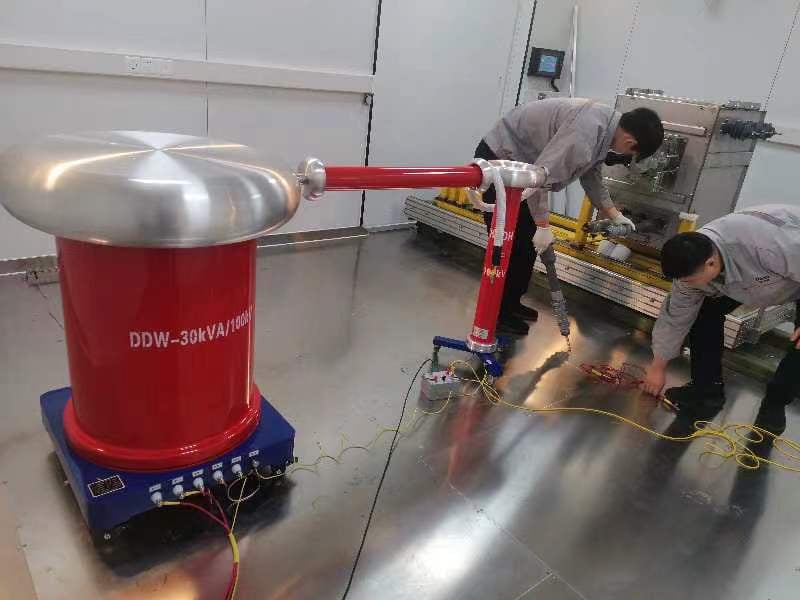
Relay testing, a process defined as verification of relay actions and functionality, is performed on protective relays at different levels in the hierarchy of protection in order to ensure that they function correctly and reliably. Testing is done periodically to eliminate interferences such as miscalibrated settings, faulty components, or incorrect configurations that can lead to costly system downtimes and high industry non-compliance risks. Protectively, relay testing mitigates the risk of systems failing by ensuring critical components of the protection system are off-line which supports the infrastructure’s dependability in a partially degraded mode.
How can you perform effective relay testing?
Relay calibrating is done within a set context provided by a rigorous gap analysis. It includes defining gaps and best sets in the domain and scope of the protective scheme provided as well as the type of the relay. Make use of high-end relay testing instruments that execute simulations of numerous faults in the real world. Top-down approaches dictate that first confirming coordination between settings and documents. Verifications must also be done with fixed plans in place where certain values, such as harmonic current and voltage, must match particular parameters for them to be considered verified for settings.
Additionally, automated testing procedures can be conducted with advanced specialized software to achieve greater accuracy, efficiency, and consistency in testing. The acquisition of accurate test results and complete reporting are integral to issue tracking and compliance with regulatory requirements. Functional testing and performance testing tailored to these functions over a period of time, along with adequate training for personnel conducting the tests, confirms that protective relays can be reliable, minimizes the risks associated with the systems, and protects the integrity of electrical networks. Adopting these practices enables electric utilities and industries to protect their assets while improving reliability in operations.
What are the challenges in relay testing for voltage protection?
Testing voltage protection protective relays is equally critical as it involves unique parameters and processes that require cutting-edge tools because of their high-level risks and operation goals. One of the critical issues focuses on executing precise simulations of the faults and failures scenarios. The voltage protection relays are required to respond during faults or disturbances in real-world scenarios which require the use of specialized equipment to effectively utilize voltage calibration scenarios.
The integration of older relay technologies with new ones poses a serious challenge. Many electrical networks have not evolved, so their legacy equipment creates hurdles for testing modern equipment. In addition, the rigid structures of traditional power systems must now be adapted in order to accommodate renewable energy sources. This protective relay testing is made even more challenging by the bolted-on variability of generation methods and ever-increasing grid unpredictability.
External noise along with environmental conditions may interfere with accuracy, adding an extra layer of complexity to the challenge at hand. Reliability also becomes an issue when considering co-regulation tools situated hundreds or thousands of miles away, as different geographies tend to impose different verification criteria. Essentially, overcoming these challenges requires restructuring protocols and improving equipment that ensure relays operate under a diverse range of conditions.
Reference Sources
-
Study on Microprocessor-Based Relay Protection with Open Architecture: This research developed a microprocessor-based relay protection device using open architecture and Industrial Internet of Things (IIoT) technology.
-
Reliability Analysis of Microprocessor-Based Relay Protection Devices: This paper critically analyzed the reliability of microprocessor-based relays compared to electromechanical and electronic relays.
Frequently Asked Questions (FAQs)
Q: What are the types of voltage that a voltage protection relay can monitor?
A: Voltage protection relays can monitor various types of voltage, including low voltage, high voltage, and fluctuating voltage levels to ensure that the electrical circuits operate within safe limits.
Q: How does a transformer relate to a voltage protection relay?
A: A transformer is often used in conjunction with a voltage protection relay to step down or step up voltage levels as needed, allowing the relay to accurately monitor system voltage and provide protection against electrical faults.
Q: What is the function of a relay system in voltage protection?
A: The relay system functions to detect when the voltage exceeds a preset value and activates protective measures to prevent damage to electrical equipment, ensuring the safety and reliability of the system.
Q: Can you explain how protective relay systems protect electrical circuits?
A: Protective relay systems monitor the electrical circuit for abnormalities such as over-voltage or under-voltage conditions and automatically disconnect the circuit or activate alarms to prevent equipment damage.
Q: What is a wiring diagram in the context of voltage protection relays?
A: A wiring diagram illustrates the connections and configuration of the voltage protection relay within an electrical circuit, showing how it integrates with other protective devices and the overall system setup.
Q: How do protective relays respond to voltage fluctuations?
A: Protective relays are designed to continuously monitor current voltage levels and trigger protective actions if they detect that the voltage exceeds or falls below a specified threshold, safeguarding the system.
Q: What role does a relay play in motor protection?
A: In motor protection, a relay is used to monitor the voltage supplied to the motor and ensures that it operates within safe voltage ranges, providing backup protection against potential electrical faults.
Q: Are voltage monitoring relays available for different applications?
A: Yes, voltage monitoring relays are available in various types to cater to different applications, including industrial settings, motor control systems, and residential electrical systems, each designed to protect electrical equipment effectively.
Q: How do relays serve to protect electrical equipment?
A: Relays serve to protect electrical equipment by detecting abnormal voltage levels and initiating circuit protection measures, thus preventing potential damage caused by electrical faults.
Q: What are the primary functions of protective relays?
A: The primary functions of protective relays include monitoring voltage levels, detecting electrical faults, disconnecting circuits when necessary, and providing alarms to alert operators of issues, ensuring overall system safety and reliability.