With the increasing technological advancements, quality and reliable electrical systems are on demand. In the modern era, making sure your equipment is working efficiently, worlds of energy are not wasted, and devices do not fail involves monitoring the system’s power quality. Qualitative diagnostics of power issues is performed by sophisticated and precise tools and technologies. Power analyzers are one such tool. This article elaborates the role power analyzers play in improving and monitoring power quality. Their broad functions to pivotal measurements will be discussed emphasizing how their insights help meet the power system needs of today. No matter if you’re a power engineer, facility manager, or an energy consultant, understanding power analyzers allows to maintain system efficiency and operational value during its life span.
What is a Power Analyzer and How Does it Work?

A power analyzer is one of the most effective instruments that allow the measurement and control of parameters like voltage, current, energy and power within the electrical system. It acquires, processes and computes important values such as the real power obtained, apparent power, power factor, and energy consumption the same way other measuring tools do using calculations based on the acquired electric signals. Most operations are done in real time and within single-phase or three-phase systems, depending on their use.
The device integrates delicate sensors that detect signals and processors that perform calculations to ensure the comprehensive work. Power analyzers identify the inefficiencies, monitor the equipment’s performance, and check compliance with power quality standards, thereby making them crucial for optimization of electrical systems.
Definition and Functionality of a Power Analyzer
Contemporary multifunctional power analyzers are designed to gather and assess the voltage, current, power, energy, frequency, and even harmonics in both AC and DC systems. Through the application of modern digital systems, including high rate digital sampling and sophisticated algorithms, real-time accuracy becomes achievable.
Power analyzers are capable for tasks such as efficiency measurement in power converters, harmonic distortion analysis in electrical networks, as well as quality verification and compliance with world standards like IEC 61000-3-2 for active reactive power. Power analyzers play an important part in system performance improvement, energy waste reduction, and sustainable energy use promotion by providing detailed insights, enabling accurate analysis of multifaceted energy systems spanning from industrial facilities to renewable energy sites.
Types of Power Analyzers: Precision vs. Standard
Power analyzers may be divided into standard and precision analyzers based on the need of each user. Applications which require very high precision and wide range of measurements make use of precision power analyzers. For example, analyzers used for complicated systems like inverter driven motors, renewable energy systems, and electric vehicles require research and development as well as regulatory compliance testing. These analyzers are equipped with advanced features like multi-channel inputs, higher resolution measuring tools, and measuring low power factor angles.
Standard power analyzers are often used for low demanding applications like monitoring energy and efficiency within homes and small scale industries. These analyzers measure and monitor basic functions such as power consumption, power factor, and efficiency in less challenging environments. Standard models often lack the granularity of precision models; however, they are proficient in delivering cost-efficiency balance for general diagnostics and maintenance tasks.
All precision and standard power analyzers are equipped with features to address needs of the specific use case enabling one to select tools according to the complexity, level of precision needed, and intricacy for the task at hand.
Key Features to Look for in a Power Analyzer
To optimize a power analyzer for a specific task, its essential parameters and capabilities must be clearly understood features. This guide will help analyze and evaluate most critical features.
- Measurement Accuracy
High accuracy is needed in applications like design validation, compliance testing, or energy auditing due to the precision power measurement needs. Devices should be sought which have a total measurement uncertainty (TMU) of ±0.05% or lower.
- Wide Bandwidth Range
To capture low-frequency and high-frequency signals in a span of a few Hz to several MHz, exercises any with Power Analyzers will need bandwidths of more than 1 MHz, especially while analyzing harmonic signals in power electronics.
- Harmonic Analysis Capabilities
Powered advanced power analyzers offer harmonic analysis up to the order of 50 or beyond which aids in monitoring distortion and compliance with international standards like IEC 61000-3-2.
- Signal Sampling Rate
The sampling rate (S/s) is a major factor determining the quality of a power analyzer’s waveform capture. Sample rates above 5 MS/s provide for high precision waveform analysis and reconstruction.
- Phase Angle Measurement
Measuring the phase angle between voltage and current with precision is essential for evaluation of the power factor and the efficiency of the system. Look for phase angle measurement with a small margin of error such as ±0.1°.
Analyzing economic, performance, accuracy, and cost factors empowers engineers and project managers to analyze multiple operational benchmarks in tailoring a power analyzer designed specifically for their unique operational needs.
Why is Power Quality Important for Electrical Systems?
Power quality is critical to electrical system reliability and efficiency. Equipment malfunctions, energy losses, and high maintenance costs can arise from poorly maintained power quality. Stable voltage and current are critical for devices including industrial machines and consumer electronics because of their sensitive nature. These devices have their performance and lifespan directly impacted. High power quality maintains lesser downtime, prevents disruptions, and supports energy efficiency which lowers operating costs and environmental impact.
How to Measure Power Quality Using a Power Quality Analyzer
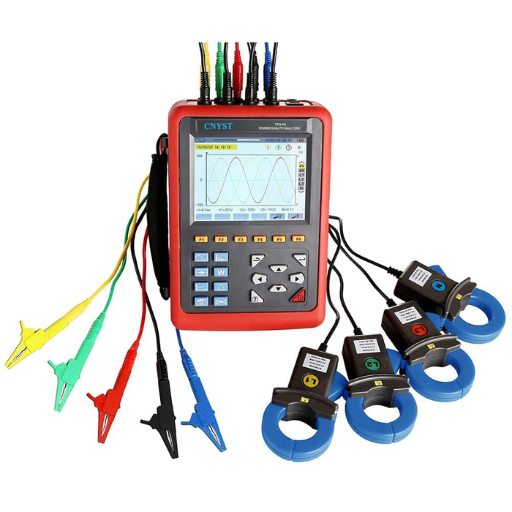
Evaluating power quality is important because it ensures all electrical systems work optimally and work reliably with minimal faults. A power quality analyzer evaluates all necessary parameters in detail. The first step demands that the analyzer be connected to the electrical system, decoupled at a distribution panel or an endpoint of specific equipment. Depending on the model of the analyzer, connections are made using voltage probes and current clamps to capture necessary data, including voltage, current, and frequency.
Empowered with those connections, the device actively samples all critical parameters to continuously assess overall system performance. Key metrics include monitoring for voltage timeliness and stability, harmonic distortion, and power factor alongside transients that include voltage sags, swells, and spikes. Most modern power quality analyzers offer real-time processing and visualization, allowing operators to observe fluctuations and recurring patterns through graphs and other visually appealing interfaces. Moreover, advanced devices come equipped with functions to log and store data for permanent trend analysis and comprehensive analysis over time.
To ensure accuracy, the parameters of the analyzer, including sampling frequency and triggering thresholds for specific anomalies, must be properly set. During the measurement phase, the acquired data can be processed to identify root cause analysis of the troubleshooting inefficiencies, which in turn assists in precise corrective actions. Routine diagnostics of power quality and compliance with other standards for system performance, including IEEE 519 or EN 50160, help contain costly downtimes, energy waste, or redundant expenditure.
Understanding Power Factor and Its Role in Power Quality
Power factor can be described as the ratio between real power in kilowatts (kW), and apparent power measured in kilovolt-amperes (kVA). Assessing power factor is particular in an electrical systems as it determines how efficiently electrical energy is being converted to useful work outputs. A value of power factor which is closer to one indicates better efficiency. On the other hand, lowered power factor signifies energy waste due to reactive energy in the system.
Reactive power which is attributed to inductive or capacitive loads not doing any useful work such as motors, transformers, or fluorescent lighting, still contributes to the overall power consumed. Facilities that operate under low power factors may incur higher costs due to increased energy consumption, overloaded distribution systems, and penalties imposed by utility companies.
Investment in equipment or apparatus for powering split systems, correction equipment or capacitor banks, and synchronous condensers are some of the necessary technical solutions that mitigate poor power factors. These devices improve the overall grade of power by reducing the demand for reactive power, stabilizing voltage levels, and enhancing overall power quality. When properly monitored and adjusted, factors of power enable full compliance with operational requirements necessitated by load control, energy utilization, reduction of transmission losses, and improved lifespan of electrical infrastructure.
How Can a Power Meter Improve Energy Efficiency?
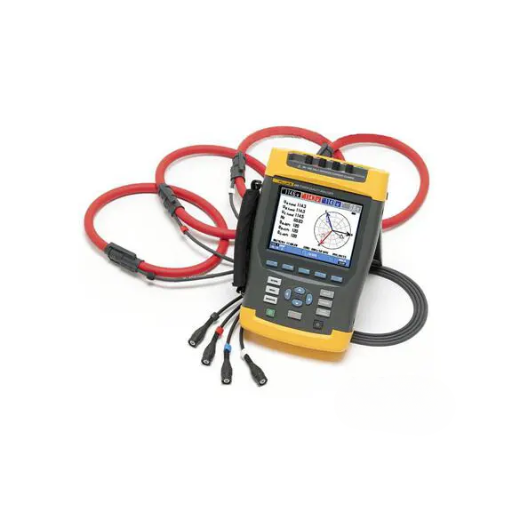
Calibration of devices like power meters enhances energy efficiency by providing real-time data on its consumption. Other electric parameters such as voltage, current, energy and other relevant figures also factor in the determination of energy efficiency. Consequently, facility managers are aided capture the underlying problem concerning inefficient energy utilization and even streamline the operation countering detected waste. Power meters, therefore, bolster system performance and operational cost. Compliance with energy standards is facilitated alongside supporting more informed decisions aimed at implementing relevant energy savings initiatives.
What is the Difference Between a Power Meter and a Power Analyzer?
|
Key Points |
Power Meter |
Power Analyzer |
|---|---|---|
|
Primary Function |
Measures basic electrical parameters |
Analyzes detailed power quality metrics |
|
Common Metrics Measured |
Voltage, current, energy usage |
Harmonics, phase angle, waveform analysis |
|
Frequency Range |
Narrow frequency range |
Broad frequency range |
|
Data Precision |
Basic accuracy for standard tasks |
High precision for in-depth analysis |
|
Application Scope |
General energy monitoring |
Advanced system diagnostics |
|
Typical Users |
Residential and commercial settings |
Industrial and research environments |
|
Real-Time Monitoring |
Supports real-time energy data |
Includes real-time power quality graphs |
|
Data Storage Capability |
Limited or no long-term storage |
Extensive storage for historical analysis |
|
Cost |
More affordable |
Higher cost, specialized equipment |
|
Advanced Features |
Few or none |
Offers advanced diagnostic tools |
Using a Watt Meter for Monitoring Power Consumption
The electric power consumption by different devices and systems can be measured using different instruments, one of which is the watt meter. The use of watt meters is highly versatile, including connecting them to electrical equipment and their respective power sources, providing instantaneous readings of energy consumption displayed in watts(W) or kilowatt-hours (kWh). Advanced watt meters from today do offer supplementary information including voltage, current, power factor, which is essential for thorough energy diagnostics.
Residential users of energy often find it easy through watt meters to track appliances and devices that consume large amounts of energy, helping optimize habits and to lower their electricity bills. Conversely, industrial-grade watt meters have more additional features designed to cater complex environments, such as monitoring power quality and performing load analysis. Advanced grade tools have additional features such as monitoring energy over longer periods, enabling the planning of maintenance in a predictive manner.
The rising focus on sustainability places watt meters at the center of energy auditing in both small and large scale setups. Their utilization not only helps with cost saving projects, but also aids in the global initiative to cut down on carbon footprints through effective energy management. Provided they are used properly, watt meters give out precious information that can be used in decision making and system level optimizations.
Benefits of Real-Time Power Measurements
Conducting real-time power measurements comes with a number of advantages, such as precision tracking and efficient decision-making. The following section outlines these major advantages supported by data:
- Enhanced Energy Efficiency
Constant real-time monitoring helps pinpoint energy over-consumption, poorly functioning systems, or irregular consumption. According to research, consistent real-time monitoring improves savings and lowers energy waste by as much as 15%.
- Cost Reduction
Gaining real-time insights enables individuals and businesses to better manage their energy consumption and thus cut utility costs. For instance, companies that spend significant amounts of money on energy have witnessed reduced spending of up to 30% courtesy real-time power measurements.
- Improved Predictive Maintenance
The ability to track data in real-time enables the identification of malfunctions in electrical devices by monitoring deviations in their power consumption, thus avoiding more expensive repairs in the future. A study has shown that predictive maintenance through real-time measurements helps reduce equipment downtime by 25%.
- Peak Load Management
Utilization of real-time tracking helps in managing energy workloads during peak periods, thereby reducing demand charges. Utilities, on their part, may offer some form of financial penalties for exceeding certain thresholds.
- Grid Optimization and Reliability
Preventative measures by real-time monitoring of power can actively prevent blackouts, thus saving the grid from becoming hitched. Effective balance of power supply vs demand energizes better allocation of the grid, reinforcing its reliability.
Real-time tracking not only enhances a company’s operational efficiency but also accelerates the shift towards a smarter energy framework by enabling the operational goals and climate commitments of the company.
How do you troubleshoot power quality issues with a logger?
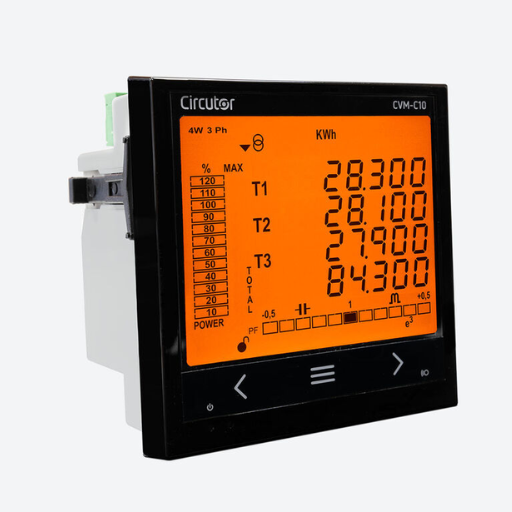
When using a logger to troubleshoot electrical issues, these steps should be followed:
- Select the Appropriate Logger
Confirm that the logger can capture all requisite parameters like overvoltage, current, harmonic distortion, and frequency. Also ensure the logger will be able to measure all voltage and current harmonics.
- Define the Monitoring Objective
Investigation is, whether it be voltage sags or swells, transients, or harmonics, will assist in the logger configuration.
- Install the Logger Correctly
Connect the logger to the power system at the site of the problem, ensuring the logger is mounted securely to prevent displacement. Protects the logger from outside interferences, use proper safeguards to protect the device.
- Set Logging Parameters
Set the logger to record data for an extended period. This complements your objectives. Set time windows and thresholds based on your objectives.
- Analyze Collected Data
Collect monitored data, evaluate for discrepancies against expected norms, focusing on parameters such as ranges, timelines, interrelationships, and outside system influences.
- Implement Corrective Measures
Be prepared to make changes based on data analysis conducted, potentially correcting the power quality issues that stem from maintenance of existing system components, filters, or components upgrading their active peers in the system.
Carrying out these steps ensures cross referencing power quality with archived fault codes helps create highly reliable and efficient electrical systems.
Using Data Loggers for Power Quality Analysis
When it comes to monitoring electrical power systems over time, data loggers provide the highest order of accuracy and efficiency. Such devices automatically capture electrical values like voltage, current, frequency, and even harmonics within particular time frames, thereby creating a comprehensive dataset. Modern data loggers capture transients, waveforms, and other disturbances that “fly” during monitoring and may not be visible instantly. These capabilities ensure the capture of all sporadic and short-lived power anomalies.
Moreover, these devices are sophisticated enough to offer remote and cloud access to real-time visualizations of data dashboards, empowering engineers to evaluate power quality remotely. This feature alone diminishes downtime, while improving the capacity to link strides with time, external temperature, or load fluctuations. This approach enables the detection of harmonic distortion, voltage sags, or other interruptions, empowering educated changes and corrective measures where required the most.
The proper installation of data loggers greatly aids in penetrating deep into electrical networks to optimize system stability, enhance operational efficiency, and ensure long-term reliability.
Steps to Identify and Resolve Power Quality Problems
- Define the Scope of the Investigation
To start, power quality problems need to be scoped to specific areas and equipment. This includes understanding reports of symptoms like equipment failures and unexplained downtimes. Properly demarcating the bounds reduces unnecessary assessments and diagnostics while providing an efficient evaluation.
- Gather Baseline Power Data
Collect baseline electrical data by measuring voltage, current, frequency, and harmonic distortion with advanced power quality monitoring systems. During routine checks, high-resolution loggers capture fluctuations that show volatility with granularity but not at a level enough to be noticed immediately.
- Analyze Data with Diagnostic Tools
Assess the data using diagnostic software evaluating them versus power quality metrics by governing bodies like IEEE 519. This step aids in the identification of excessive total harmonic distortion amongst other factors including Total Harmonic Distortion (THD), transient spikes, and unbalanced loads.
- Investigate External Sources
Explore outside variables like irregularities in utility supply, environmental conditions, or operational schedules that might influence power quality problem externally. This assists to alienate issues generated internally from the ones originating by the power supplier.
- Implement Targeted Solutions
Based on the diagnostics analyzed, implementing solutions such as harmonic filters or voltage stabilizers, or even overhauling to more advanced wiring systems aids in rectifying problems precisely identified. Effectiveness is maximized while minimizing wasteful spending when solutions are applied with precision.
- Verify and Monitor Improvements
Verify improvements by using the same monitoring equipment and comparing the new data to the initial baseline. In addition, establish a continuous monitoring system to detect any future anomalies.
With these steps in place, power quality can be maintained, resulting in increased longevity of the equipment, reliable operations, and minimized energy waste in electrical networks.
Importance of Voltage and Current Measurements in Troubleshooting
Performing proper voltage and current readings is crucial in any electrical system for detecting and rectifying challenges. These parameters reveal the most critical information regarding a network’s condition which aids in determining the presence of faults such as imbalance, overload, and harmonic distortions. Voltage measurement on its own can identify problems by indicating discrepancies from nominal values, suggesting poor regulation or excessive drop. Current measurement has an equal importance in exposing system faults like overcurrent, unbalanced load, or the damaging presence of unwanted harmonics.
Network analyzers or digital multimeters can be used to gather accurate, real-time, high-resolution measurements of the system under analysis. In addition, these measurements can also help in isolating waveform analysis of the system which include transient events such as voltage sags and spikes. When ignored, these events have the potential to malfunction the equipment. The greater strategies accomplish as these help in isolating problems more rapidly, increasing the efficiency and reliability of the system while reducing the down-time.
What are Harmonics and Why are They Relevant in Power Analysis?
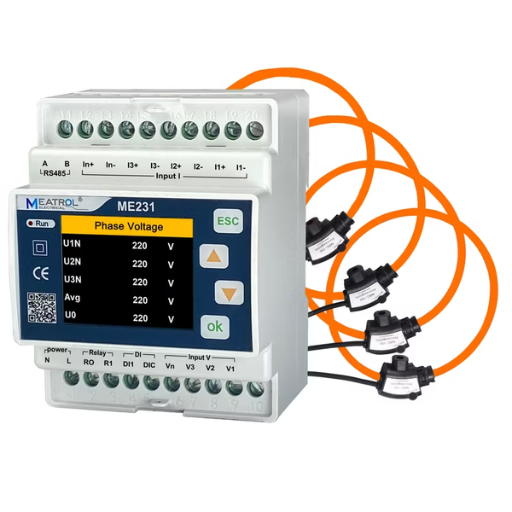
Harmonics in an electrical system are voltages or currents that are generated at multiples of the system’s fundamental frequency. They are caused chiefly by non-linear loads, which include variable frequency drives, LED lighting, and other electronic appliances. Such loads pull power in a non-sinusoidal form. Harmonics are important in power analysis since they lead to power quality issues such as excessive losses, equipment overheating, voltage supply distortion, and even equipment malfunction. Monitoring harmonics enables their sources to be pinpointed and filter devices to be utilized to mitigate their impact, thus ensuring optimal performance of electrical systems.
Understanding Harmonics in AC Power Systems
Defining AC power system harmonics reveals sources of distortion emanating from non-linear loads that induce abrupt current draw as opposed to a slow sinusoidal flow. These include variable frequency drives (VFDs), rectifiers, inverters, and switching power supplies. Other contributors include industrial arc furnaces, fluorescent lamps, and certain industrial machines. Moreover, the growing use of renewable energy systems introduces harmonics by photovoltaic inverters due to the non-linear characteristics of power conversion processes these technologies exhibit.
To assess performance in these cases, Total Harmonic Distortion (THD) is the most accepted metric. As with any industry, there are acceptable levels of THD which are governed by standards like IEEE 519 which offers limits for harmonics within electrical systems. High values of THD can lower the performance of the system which may require complicated solutions such as passive or active harmonic filters, phase-shifting transformers, or supersession devices that inject and suppress specific harmonics. Evaluation and control of monitored parameters are very important from the perspective of modern power systems’ reliability and efficiency.
Impact of Harmonics on Electrical Equipment and Performance
Harmonics have the risk of upsetting the operation of electrical equipment and accelerating the wear and tear on its components. With variable frequency drives (VFDs), transformers, and uninterruptible power supplies (UPSs), voltage distortion caused by harmonics is damaging for these systems. Excessive amounts of harmonic currents cause overloads in equipment windings and cores, which causes overheating, wearing down the insulation, and significantly shortening the lifespan. In systems with elevated harmonic distortion, motors may suffer from decreased torque efficiency, constant unproductive noise, vibration, and diminished overall productivity. Moreover, increased power losses coupled with needless protective device tripping or disruption of control system signals can result in communication errors, thus further deepening harm to the electrical network’s efficiency. It is vital focus is placed on preserving the functionality of modern power grids by actively studying each system’s unique harmonic profile and tailoring mitigation strategies accordingly.
What is Three-Phase Power Quality and Its Measurement?
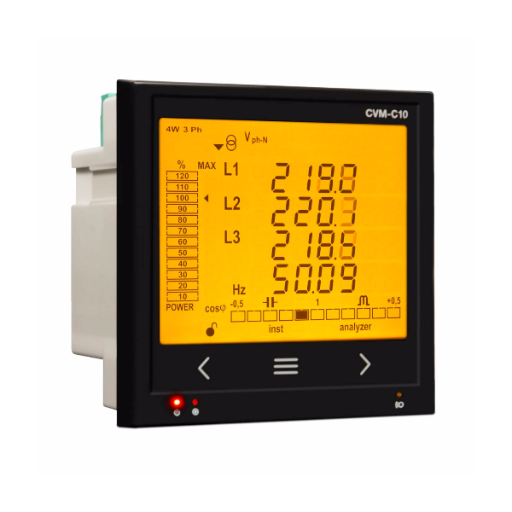
The quality of three-phase power is defined as reliability, stability, and effectiveness in the use of electric energy in a three-phase power system. It makes sure that voltage, current and frequency are within acceptable limits and levels so optimum performance of the system is sustained. Downgrading power grade can incur damages to machines, waste of energy, and pricy downtimes.
The quality of three-phase power is monitored based on the following class A analytical parameters: voltage, current balancing, harmonics, power factor, total harmonic distortion (THD). Cutting-edge technology or state of the art meters can be used as power quality analyzers to gather in the moment data. Prevention of operational risks is made possible through detection, and corrections, of insatisfactory measures.
Basics of Three-Phase Power Systems
The use of three-phase power systems for generation, transmission, and distribution of electric energy in industries and businesses is commonplace due to their high reliability and effectiveness. These systems have three conductors, each of which carries alternating current (AC) 120 degrees out of phase with the others. This phase separation prevents the pulsation which occurs in single phase systems, ensuring constant transfer of power.
Three-phase systems are mostly preferred because they are capable of driving greater loads while consuming less conductor material than their single-phase counterparts. This is a must in high energy environments like factories, data centers, large infrastructure projects. Three-phase systems have the added advantage of greatly simplifying the control of AC motors, crucial in industrial applications as they offer steadier and smoother torque.
Wye (Y) and delta (∆) are the two most common ones used for configuring voltages, each providing particular advantages based upon the needs of the application. For example, wye configurations have a neutral wire which enables leveraging several voltage levels simultaneously while delta configurations are preferred for high voltage transmission due to their strong design.
Grasping the fundamentals of three-phase systems, along with their harmonics, voltage regulation, and load balancing is essential for achieving efficiency, loss minimization, and ensuring stability in intricate electrical grids. These principles help preserve the operational effectiveness and sustain the agility of cutting-edge technology evolution.
Benefits of Monitoring Three-Phase Power Quality
The efficiency, reliability, and safety of electrical systems greatly depend on effective voltage/current frequency harmonic distortion metrics capture within the three-phase power system boundaries. The optimization potential for operational effectiveness and cost savings for many organizations can be harnessed from operational gains due to coverage of all three-phase power parameters. Below are detailed insights of benefits achieved in three-phase power parameters capture, often referred to as power quality:
- Improved Equipment Performance and Longevity
Excessive energy consumption and power quality parameter-driven equipment damage can be avoided through accurate power quality monitoring. For example, embedded protection during active and reactive power flow as two fused quantities ensures equipment safety. It has been noted that if the voltage imbalance stands as low as 2%, then motor losses shoot up to 10%, which drastically reduces the lifespan of the equipment and accrues long-term additional counter-maintenance costs.
- Reduced Downtime and Costs Associated with Outages
Identifying, control, and automation of operational factors like transient spikes diagnostics control must function within defined limits at ideal operational points to avoid control loop operational stiction. Studies conducted by IEEE show the financial impact of post-outage restoration due to unplanned outages driven by power quality disruptions at about $150 billion for US businesses alone, which showcases a huge business opportunity with effective control automation.
- Enhanced Energy Efficiency
Unused energy consumption is often driven by harmonics, poor power factor, unbalanced loads which sets an ACM electric energy/efficiency trap driven by un-endowed ratio of utilized electric energy and delivered electric energy. A change in power factor presents an economic angle as the cost of electricity utilization can drop by 10 -15% directly proportionally constraining utility expenses in an economical timeline.
- Optimized Load Balancing
Power monitoring balances load allocation fosters efficiency in multi-phase systems performance with minimized power losses. Equal power consumption during activity enhances the efficiency of energy transmission apparatus while reducing the risk of excessive blight heating as well as inefficiencies.
- Compliance with Regulatory Standards
Many businesses are bound to IEEE 519, concerning harmonic distortion, and IEC 61000 which concerns electromagnetic compatibility. Fencing systems help in adhering to these boundaries, thereby avoiding fines or operational halts necessitated by non-compliance.
Achieving systematic reliability improves business performance. Therefore, minimizing risk requires quality monitoring of three-phase power systems.
Reference Sources
-
Power Analyzer: The Swiss Army Knife of Electronics Testing: This article discusses the versatility of power analyzers in measuring electrical power quality for both DC and AC systems.
-
Power Analyzers and Power Meters: It provides insights into the accuracy and frequency capabilities of power analyzers and meters for devices that generate, transform, or consume electricity.
-
Fluke Power Quality Analyzers: This resource focuses on advanced three-phase power loggers for energy studies and power quality logging.
-
Electrical Power Analysis: Dewesoft’s analyzers are highlighted for their ability to measure high-voltage and current signals, along with a wide range of parameters.
-
Multi-Channel Power Analyzers: This page discusses Vitrek’s precision power analyzers, known for high accuracy, fast sampling, and advanced harmonic analysis.
Frequently Asked Questions (FAQs)
Q: What is a precision power analyzer and why is it important?
A: A precision power analyzer is a measurement instrument that accurately measures various electrical parameters, including phase power, rms voltage, and current. It is essential for ensuring that power quality and energy usage are effectively quantified, particularly in applications involving three-phase power systems.
Q: How does a harmonic analyzer assist in power quality measurements?
A: A harmonic analyzer helps in identifying and analyzing harmonic distortion in electrical systems. By using this tool, engineers can evaluate the quality of three-phase power and its impact on equipment performance, ensuring that harmonics are minimized for optimal operation.
Q: What are the benefits of using a three-phase power quality logger?
A: A three-phase power quality logger allows for continuous monitoring and data logging of power quality parameters across all three phases. This provides detailed power analysis over time, helping to identify issues and trends in power consumption and quality.
Q: Can a digital power analyzer measure both AC and DC power?
A: Yes, a digital power analyzer can measure both AC power and DC power, making it versatile for various applications including testing switch-mode power supplies and other electrical devices.
Q: What role does Ethernet connectivity play in power analyzers?
A: Ethernet connectivity in power analyzers facilitates data transfer and communication with analysis software, allowing for remote monitoring and control. This feature enhances the ability to analyze power measurements and manage multiple instruments efficiently.
Q: How can I use a three-phase energy logger for energy management?
A: A three-phase energy logger can be deployed to monitor and record energy consumption across three-phase power systems. The data collected can be analyzed to optimize energy usage, identify inefficiencies, and support energy-saving initiatives.
Q: What is the significance of rms values in power measurements?
A: RMS (Root Mean Square) values are crucial in power measurements as they provide an accurate representation of the effective voltage or current in AC systems. This is important for calculating power and energy accurately, especially in three-phase power systems.
Q: How do Keysight power analyzers compare to Fluke power quality analyzers?
A: Keysight power analyzers are known for their high precision and advanced features for detailed power analysis, while Fluke power quality analyzers are recognized for their user-friendly interfaces and robust design. The choice between them typically depends on specific measurement needs and preferences.
Q: What types of applications require the use of portable power analyzers?
A: Portable power analyzers are ideal for applications that require on-site testing, such as troubleshooting electrical systems, monitoring power quality in industrial settings, or conducting energy audits. Their flexibility allows for easy transport and setup at various locations.
Q: How does a power conversion process impact power quality measurements?
A: The power conversion process can introduce distortions and affect the overall power quality. Using precision instruments, such as three-phase power quality analyzers, can help assess the impact of conversion on power quality and ensure optimal performance of electrical systems.