Just like modern industries rely on high-voltage circuit breakers, other critical elements of electrical systems need due consideration as well. Protection and control of modern electrical power systems are impractical without the inclusion of high-voltage circuit breakers. They are a vital component in a power grid system and enhance the protection of the power grids connected with different equipment by interrupting currents caused by faults due to short-circuits. Not all HV circuit breakers are alike, however. Each type is customized to address specific operational demands, environmental factors, and performance benchmarks. This article digs into the various high-voltage types and focuses on their mechanisms and applications. This guide shall provide industry professionals, technicians, and anyone keen to learn about the small bits and pieces that make up HV circuit breakers with the requisite information needed to determine the best solution for differing situations. Get ready to learn practical knowledge of these components that literally drive systems across the world and the efficiency of power systems globally.
What is a high-voltage circuit breaker?

An HV circuit breaker is an example of a protective device. It interrupts the flow of energy to electrical power systems in the case of a fault or overload. The HVAC circuit breakers isolate faulty sections of the circuit so cost incurring equipment damage can be avoided whilst keeping the electricity flow safe and using mechanical and electrical systems to open and close the circuits. Electrical systems which apply voltages above 1000 volts may need maintenance offline to reduce downtime.Thus these circuits help in ensuring continuous uptime of distribution and transmission systems.
Definition and Function of a high-voltage circuit breaker
Based on operating mechanisms and arc-quenching mediums, HV circuit breakers are classified into several types. These types include oil and air circuit breakers, SF6 gas circuit breakers, and vacuum circuit breakers. Oil circuit breakers put out the current with mineral oil, while air circuit breakers use compressed air to stop the current. SF6 gas circuit breakers are popular because of there highly reliable insulation and quenching capabilities. While vacuum circuit breakers are small in size, they also have a long life span and require little maintenance. They use a vacuum to quench arcs.
An HV circuit breaker’s performance is evaluated against criteria like its interrupting capacity, dielectric strength, and mechanical endurance. The interrupting capacity is defined as the maximum fault current the breaker is capable of disconnecting safely without triggering damage to its internal components. Dielectric strength measures how much electrical stress a breaker can take without failing, and mechanical endurance assesses the total operations a breaker can undertake effectively over its lifetime. These HV circuit breaker metrics are important for measurement of performance risk in operational control of power systems.
Importance of circuit breakers in electrical systems
In other words, these protect electrical systems from overload, short circuit, and other faults by functioning as automated electrical switches. In case of faults, they are crucial for improving efficiency and safety of the electrical system. Recurrent payment failures are a major risk which can be avoided through the use of modern mechanism of circuit shielding. This helps in preventing fires, equipment failures, and ensures safety of environment. With modern technologies, such as digital monitoring and monitoring systems of flares, precision and measures of response time have improved significantly. Studies indicate a rise in demand in renewable and decentralized energy systems. Other innovations in design such as small compact structures with increased scaling parameters show increasing flexibility and resilience of robust modern power grids suited for new renewable energies.
How high-voltage circuit breakers work
High-voltage circuit breakers function by both opening and breaking the flow of current within a power system during normal operations and faults. They do this using an arc-quenching medium, whether it is SF₆ gas, a vacuum, or air, which interrupts the electric arc that develops during contact separation. This process starts when protection relays detect abnormal conditions like overcurrent or short circuits, and the breaker is triggered to open. Contact separation leads to arc generation, but with high current flowing through the circuit conductor and medium, enabling arc extinguishing with no damage to the system itself.
Investments in high-voltage circuit breakers have enhanced their operational reliability and efficiency. For example, modern SF₆ circuit breakers make use of gas insulation techniques, providing high dielectric strength, while compact design, thus saving space. Furthermore, vacuum circuit breakers are more common for medium and high voltage circuits because they are serviceable for a long time and require less maintenance. These breakers employ digital control systems with integrated sensors that provide real time diagnostics thus enhancing the stability of the grid during load fluctuations. High-voltage circuit breakers continue to prove effective for protecting electrical grids and networks.
What are the types of high-voltage circuit breakers?

Based on the differing mediums which are used to extinguish the arc, high voltage circuit breakers are further subdivided. The two types include:
- Air Circuit Breakers (ACB): These utilize air to extinguish the arcs and are mostly used where the voltages are at the upper end of the high-voltage range.
- Oil Circuit Breakers (OCB): Depends on the oil’s insulating properties to quench the arc and serves as a dielectric medium. OCBs are not preferred in contemporary systems due to their environmental concerns and the need for more frequent maintenance.
- Sulfur Hexafluoride (SF₆) Circuit Breakers: These breakers use SF6 gas which is very efficient in extinguishing both arc and gas. They are commonly used in high voltage areas because of their reliability and efficiency.
- Vacuum Circuit Breakers (VCB): These breakers use a vacuum as an interrupting medium which disconnects the arc within the circuit efficiently. These breakers are good for medium and high voltage systems because they are durable and require little service work.
- Hybrid Circuit Breakers: Use combination of different technologies, such as SF₆ and vacuum, with the hope, however, that their use does not worsen the environmental impact.
All types of breakers are created to answer distinct needs within a given system due to certain conditions and parameters such as the environment, type of operation, and requirements.
Overview of types of high-voltage circuit breakers
High-voltage circuit breakers are vital to modern power systems as they allow for safe disconnection of fault currents while ensuring system stability. In addition to the breaker’s operational mechanism, rated voltage, fault current capacity, and environmental considerations, the breaker type is also influenced by the selection factors. While analyzing high voltage circuit breakers, one must keep the following factors with the modern advancement technology in mind:
- Voltage Rating and Interrupting Capacity: The turn ratio on high voltage circuit breakers ranges between 72.5 kV to 800 kV or surpassing that. The value of interrupting capacity in kiloamperes (kA) also gauges the circuit breakers performance in separating fault current.
- Arcing and Quenching Technologies: Modern day circuit breakers utilize advanced mechanisms such as SF₆ gas breakers which boast of tremendous dielectric strength coupled with quick arc extinction. Now, vacuum circuit breakers are becoming more common because of their small size and less environmental impact.
- Switching Frequency and Reliability: The operations also have an impact on the mechanical and electrical lifespan of the breaker. Vacuum and hybrid circuit breakers, because of the low number of moving parts, are best in settings which improve durability and require frequent arcing.
- Environmental Sustainability: Technologies that capture emissions are being adopted due to legal requirements and standards set by industries. For example, some electric manufacturers are ceasing use of SF₆ gas and are switching to alternative dielectric media to mitigate greenhouse gas emissions.
- Maintenance Requirements and Lifecycle Costs: The intensity of the maintenance required directly affects the total ownership cost. Breakers equipped with sealed systems or low service interval mechanisims are fiscally advantageous without maintenance expenses in remote or deleterious environments.
- Integration with Smart Grid Systems: The use of advanced sensors and communication techniques aids in proactive maintenance and fault management. Such systems enhance network availability and the overall performance of power networks, averting delays.
As has been noted, while selecting a high voltage circuit breaker the considerations are not only the system requirements, the modern trends of technology advances and international standards of the industry are equally important, especially in terms of reliability, safety and sustainability in power transmission and distribution.
Differences between oil circuit breaker and vacuum circuit breaker
|
Key Point |
Oil Circuit Breaker |
Vacuum Circuit Breaker |
|---|---|---|
|
Arc Extinguishing Medium |
Insulating oil |
Vacuum |
|
Dielectric Strength |
Lower |
Higher |
|
Maintenance Requirement |
Regular oil replacement |
Minimal |
|
Environmental Impact |
Oil spills can harm environment |
Environmentally friendly |
|
Size and Weight |
Bulkier and heavier |
Compact and lightweight |
|
Cost |
Typically lower upfront cost |
Higher upfront cost |
|
Switching Speed |
Slower |
Faster |
|
Usage in High Voltage Systems |
Suitable |
Preferred for modern systems |
|
Longevity |
Shorter lifespan due to oil degradation |
Longer lifespan |
|
Risk of Fire |
High due to combustible oil |
Negligible |
|
Application Suitability |
Outdoor installations |
Indoor installations |
|
Arc Recovery |
Slower arc recovery time |
Faster arc recovery time |
How does SF6 gas enhance circuit breaker performance?

Circuit breakers using SF6 gas perform better because of SF6 gas’s insulating properties and arc quenching capabilities. SF6’s effectiveness as an insulator is especially critical when enduring high voltage conditions. SF6 gas can also cool and dissociate arc plasma quickly, ensuring effective arc switching and recovery. This leads to more dependable and efficient triggering and reconnection of circuits. Moreover, chemical stability and non-flammability enhances safe operations and functions minimizing required maintenance. With these traits, SF6 is ideal for modern high-voltage circuit breakers.
Properties of SF6 gas in electrical applications
- Dielectric Strength and Insulation Properties
One exceptional feature of SF6 gas is its high dielectric strength, which is noticeably exceptional at around 2.5 times that of airs under the same atmospheric conditions. As a result, SF6 gas serves as an insulating medium in voltage strain equipment which is capable of suffering electrical breakdowns even under extreme circumstances. SF6 can withstand hundreds of kilovolts which also aids in component isolation within power systems that enhances safety and reduces the potential of disruptive discharges.
- Thermal and Arc Quenching Characteristics
Besides that, SF6’s thermal conductivity allows it to SF6 to dissipate heat generated during any kind of operation, normal or excessive. SF6’s electric arc interrupting capabilities also aid in its rapid recombining abilities under chemically inert conditions. Alike previously described properties, SF6 gas is capable of high-speed extinguishing and equipment abrasion reduction. Finally, SF6 gas is special in a way that post electric arc interruption, it doesn’t need complex steps for state reversion which makes it simple unlike other gasses.
- Non-Toxicity and Environmental Considerations
Even though SF6 gas does not pose chemical toxicity risks of any sort while being used in the electrical systems, health hazards are prohibited; its global warming potential is the focus. Improvements in the industry emission-control techniques are focused on containment, handling, disposal, and emission control. There are other gases that researchers are still investigating that would perform equally if not better while being more environmentally friendly.
- Longevity and Reliability
As a result of chemical stability, SF6 gas keeps its properties even in extreme conditions for a long time, which in turn minimizes the need for refilling or replacement, therefore minimizing maintenance costs while ensuring reliable equipment. This consistency makes SF6 crucial in maintaining and enhancing the efficiency, reliability, and functionality of modern electrical infrastructure.
Comparison of SF6 circuit breaker vs. air blast circuit breaker
|
Key Point |
SF6 Circuit Breaker |
Air Blast Circuit Breaker |
|---|---|---|
|
Interrupting Medium |
Sulfur Hexafluoride (SF6) Gas |
Compressed Air |
|
Arc Quenching Efficiency |
High |
Moderate |
|
Operating Speed |
Moderate |
High |
|
Maintenance Frequency |
Low |
Relatively High |
|
Environmental Impact |
High (due to greenhouse gas) |
Low |
|
Noise Level During Operation |
Low |
High |
|
Initial Cost |
High |
Moderate |
|
Durability |
Long Lifespan |
Moderate Lifespan |
|
Suitability for High Voltage |
Excellent |
Limited |
|
Installation Complexity |
Moderate |
High |
|
Risk of Gas Leakage |
Possible (requires monitoring) |
None |
|
Cooling Requirements |
Minimal |
High |
|
Suitable Applications |
High-voltage, critical areas |
Moderate-voltage, high-speed operation |
Environmental considerations of using SF6 gas
Sulfur hexafluoride (SF6) gas is particularly utilized as an insulator and arc-quenching gas in electrical equipment because of its unique properties. Its environmental effects, though, pose a critical issue of concern. SF6 is regarded as the most serious greenhouse gas with a global warming potential (GWP) of almost 23,500 times that of Carbon Dioxide (CO2) over a hundred-year lifespan. Meaning, even small gas leaks can cause a lot of damage.
In spite of its SF6 chemical stability, it has an atmospheric lifetime of over 3,200 years. This SF6 gas lifetime underscores the importance of emission control during production, operation, and disposal. In addition to its long-lasting nature, SF6 gas requires advanced monitoring and leak detection technologies for controlled emission, ensuring no unnecessary release occurs. In turn, the fluoronitrile-based mixture offers industries a switch option looking for lower GWP alternatives while still ensuring performance.
Policy and legislative institutions, such as the EU F-Gas Regulation, are actively trying to control SF6 leverage by emission reduction and usage stricter SF6 handling policies. Stricter recycling policies regarding used SF6 gas, along with other sustainable practices, must be adopted by electrical companies who seek to maintain competitiveness. Equally important is sponsoring research on sustainable alternatives. Developing and implementing such technologies with focus on electrical systems resiliency helps reduce SF6 environmental impacts.
What are the key components of high-voltage switchgear?

- Circuit Breakers – These are fundamental for stopping fault currents and protecting electrical systems by separating the damaged parts.
- Disconnectors (Isolators) – Used to guarantee visibility of separation between the circuit and its power source for safe maintenance.
- Current and Voltage Transformers – These components measure for monitoring, protection, and control, and provide necessary measurements.
- Protection Relays – Detecting system faults and activating circuit breakers to isolate that part of system protects the system from damage ensures stability.
- Busbars – These components are responsible for controlling the electrical power and distributing it between the switchgear circuits.
- Enclosure – Keeps the components of the system safe from the external environment. Also, no accidental touching of the system can be done because it is enclosed.
The multi-function characteristic of these components helps provide safe and reliable operation in high-voltage power systems.
Understanding the role of insulators in switchgear
Insulators are one of the most crucial devices integrated with the switchgear systems as they allow for the safe operation of the equipment while also preventing any collision of unnecessary electric currents in the device. Insulators are made from porcelain, glass, or newer poly materials and protect the energized parts of the systems from short circuits or arcing. Moreover, insulators subdue extreme high tensions, heavy strain, and environmental stress factors such as moisture, heat, and pollution. Recent developments in material composites have resulted in the insulator with better aging resistance and improved mechanical strength, tensile strength when compared to its predecessors. The type and grade of the insulator selected directly affects the reliability and the operational life of the switchgear systems, especially within harsh industrial and utility environments.
Gas-insulated switchgear (GIS) explained
More than anything, gas-insulated switchgear (GIS) offers a compact solution to high-voltage electrical systems while still being highly effective. Its construction uses sulfur hexafluoride (SF6) gas as an insulator and as an arc quenching medium, which provides a compact construction as well as reliable operations under heavy electrical loads. GIS units have a hermetically sealed construction which protects them from humidity, dust, and other environmental contaminants leading to lower maintenance needs and higher equipment lifetime.
Modern GIS systems have been designed to enable use of medium-to-ultra high voltages across numerous industrial sectors including power generation, distribution, and even integration into renewable energy systems. SF6 is heavily monitored due to its invasive nature but does perform well under numerous strain, enabling industries to focus on developing less invasive alternatives and innovative methods to GIS performance standards while restricting greenhouse emissions.
Dead tank vs. live tank circuit breakers
The dead tank and live tank circuit breakers are crucial for high voltage electrical networks and each has been tailored for use in different atmospheric conditions and operational demands. The primary difference is their structural design and insulation methodology.
A dead tank circuit breaker holds every component, including the interrupter in a grounded metal tank filled with insulating gas such as SF6. This design provides insulation and shielding from factors outside the tank. Dead tank breakers are preferred for high current and high voltage applications due to their excellent short-circuit performance and electromagnetic interference. Maintenance is also easier in dead tank designs because they are located within one unit.
In contrast, a live tank circuit breaker suspends its interrupter assembly and critical components overhead on insulator posts. The insulating materials used are less in this design because of the lighter weight which makes the application easier to mount in locations where weight is critical. Additionally, live tank circuit breakers perform better in seismically active areas due to the greater flexibility and resilience of their structures.
Each fulfills different requirements of power systems. Therefore, it is important to consider operational parameters, environmental factors, and safety standards when making the selection.
How do high-voltage circuit breakers protect electrical systems?

High voltage circuit breakers are designed to protect electrical systems by ceasing abnormal current flow to avert damage to equipment. During a fault condition, for instance a short circuit or an overload, the breaker identifies excessive current due to an overload or other fault condition and opens its contacts to disconnect power very swiftly. This action minimizes the likelihood of overheating, fire, and damage to essential parts. Through isolating faulted distances, circuit breakers simultaneously ensure stability and reliability of the electrical network, most importantly of the system’s electrical network. Their response speed and accuracy is crucial to reducing power/cost downtime and protecting the system and operators.
Role in interrupting short circuits and overloads
Short circuits and overloads are critical issues in modern electric systems, and the use of circuit breakers increases safety and efficiency. When an excessive surge of current flows through a device, a low-resistance circuit is generated due to an unintended shortcut. This scenario is termed as a short circuit, which could inflict a lot of damage to devices because of the large amount of heat produced. As the flow of electricity passes through various devices, it is vital to overheard the work being done. Circuit breakers, as the name implies, break the flow of electricity when fault conditions are observed. Electric current, which needs to be monitored continuously, has its own thresholds. This is exactly what triggers the circuit breaker to react. In the case of electricity demand outpacing supply, an overload occurs. In protective circuits, the heater leads to interruption of the electric current to be able to avert overheating which may erode insulation materials, damage the conductor, or cause total failure in the system. Circuit breakers of today use thermal and magnetic trip techniques, smart self-diagnosis systems, and modern differential protection to improve accuracy and speed while enhancing precision for both long-term equipment protection and uninterrupted operation.
Integration with power transmission systems
To reduce the risk of system failures and power outages, it is important that circuit breakers are incorporated into power transmission systems. Like all modern high voltage circuit breakers, they are integrated with SCADA systems that allow real time monitoring and automated response to faults within the system. Thus, modern high-voltage circuit breakers can operate within milliseconds, isolating any faulty sections of the network to avert network cascading failures.
Reliability and efficiency are integral parts of high voltage applications. Therefore the use of sulfur hexafluoride (SF6) as an insulating medium has proven to be beneficial in achieving the goals. Furthermore, there has a been a trend towards medium voltage vacuum circuit breakers due to their environmentally friendly approach and low need for maintenance. Within modern power grids, these breakers greatly lessen the dangers brought about by transient overvoltages and ensure stringent stability requirements. This is made possible through synchronized operation with relays and other protective devices.
What are the latest advancements in breaker technology?
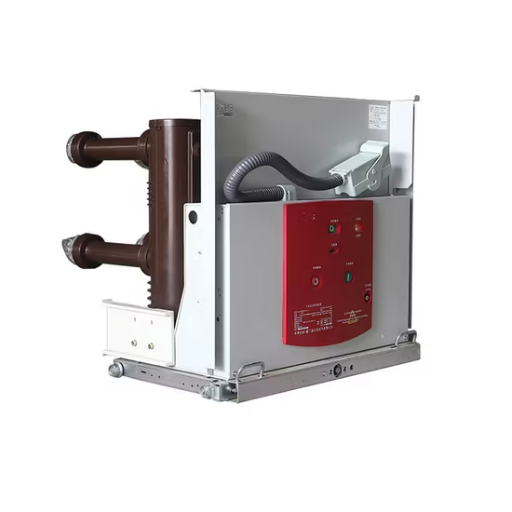
The most recent developments in the breaker systems focus on increasing their efficiency, sustainable practices, and reliability. The most significant developments are listed below:
- Digital Monitoring and Control: Modern breakers have incorporated sensors and Internet of Things (IoT) technologies which make remote monitoring and predictive maintenance possible, thus optimizing grid control.
- Eco-Friendly Alternatives: The solid-state components and other gasses used in the construction of SF6-free breakers incorporates ecological futuristic solutions which help in curbing the greenhouse emission gasses and also adheres to the strict regulations enforced on them.
- Improved Arc Extinguishing Techniques: Breakers now have modernized vacuum and hybrid systems that are able to better and quicker stop the flow of current which minimizes the wear and breakage to these devices.
- Compact and Modular Designs: These new constructions still focus on ensuring that the power performance of the breakers does not change while also reducing the physical area (“footprint”) that the devices take up.
These goals align with the public interest in adopting new state-of-the-art electric technologies and enhancing energy efficiency, concurrently improving grid management operations at the national and regional levels.
Energy storage solutions and their impact on circuit breakers
In the contemporary electric power systems, the integration of energy storage systems (ESS) creates a circuit breakers design and operation paradox. ESS are able to provide load leveling, supports integration of renewables into the grid, and helps stabilize the grid. Examples of ESS include, but are not limited to, Lithium-ion batteries and emerging technologies such as flow batteries. Due to the complexity of fragmentation and high fault currents a lot of research is being puts towards multifunctional circuit breakers capable of dealing with such dynamic situations.
Because of the advanced order ESS operate on, there is a high charge and discharge rate which results in rapid current changes. IESS also requires hihger precision and increased execution speed. In addition, the rate at which ESS operates is on the increase due to the fact that the older generation circuit breakers are not responsive enough, outdated, or incapable of coping with the current standards. For ESS there are a number of companies manufacture solid- state circuit breakers as this specific type is faster to activate with less arcing during operation, making it safer during maintennace.
In addition, modern residential and commercial ESS deployments expand the scope of distributed generation which increases the demand on circuit breakers. Within these networks, the breakers must interface with the energy management systems (EMS) to facilitate optimum load allocation as well as fault segmentation. This has prompted the development of “intelligent” circuit breakers with advanced capabilities for real-time surveillance, diagnostics, and remote operation that increase the reliability and flexibility of these devices.
The integration of energy storage systems/technologies and breaker development directly impacts the safety, reliability, flexibility, and performance of future power systems. This complex and multifaceted challenge reinforces the importance of innovative approaches to circuit breakers in order to support the expected growth of energy storage systems (ESS) while maintaining a flexible and sustainable energy system infrastructure.
Future trends in high-voltage circuit breaker technology
The direction of high voltage circuit breaker (HVCB) technology is now more than ever looking into the application of modern digital technologies and eco-friendly materials to improve the efficiency of the systems and meet international sustainable development goals. A key example of this is remote performance diagnostics and monitoring using IoT, which enables realtime performance management, predictive maintenance, and greater automation. These smart systems help businesses lower operational expenses by performing automated tasks, employing digitally-powered autonomous systems that use sophisticated algorithms to identify risks of system faults and intervene before failures happen, thus minimizing outage and maximizing safety in the distribution of electrical power.
Another emerging trend is the replacement of SF6 gas which is widely used in most modern circuit breakers as it is a very powerful greenhouse gas. These gaps in performance are being addressed by industry innovators who are implementing and innovating the use of alternative insulating gases as well as vacuum technologies in circuit breakers. Models that are SF6 free are characterized as Eco-efficient and their fast-evolving commercial availability boosts their acceptance in power industry which further expands their usability.
Developing new and more efficient breakers is now possible because of the new technology available in material sciences. Scientists are studying the use of high temperature superconducting materials because of their ability to manage heavy power loads and their ability to handle lower energy losses. Moreover, still other modular systems are now emerging aimed at electric compacting, targeting higher efficiency in urban centers or in plants of renewable energy.
Revamping high voltage circuit breakers with advanced technology, focusing on primary energy sources and renewable energy electricity improves energy resilience for years to come. Therefore, it is safe to say that, to meet modern smart grid requirements, advanced and highly innovative materials to digitalize and make them more eco-friendly will get continuously developed.
Reference Sources
-
High Voltage Circuit Breaker Market Size, Industry Share – Discusses the role of HVCBs in managing electricity demands and their market trends.
-
Trends in High Voltage Switchgear Research and Development – Highlights research and technology trends in high voltage switchgear development, focusing on greener and smarter solutions.
-
Global High Voltage Circuit Breaker Market Growth 2025-2031 – A market research report detailing growth trends and projections for HVCBs.
Frequently Asked Questions (FAQs)
Q: What are the different types of circuit breakers used in high-voltage applications?
A: The different types of circuit breakers used in high-voltage applications include airblast circuit breakers, SF6 gas circuit breakers, bulk oil circuit breakers, and minimum oil circuit breakers.
Q: How does an SF6 gas circuit breaker work?
A: An SF6 gas circuit breaker utilizes sulfur hexafluoride gas to insulate the moving and fixed contacts. When the breaker operates, the gas helps interrupt the arc formed during the opening of the contacts, ensuring a reliable circuit interruption.
Q: What is the role of air insulated switchgear in high-voltage substations?
A: Air insulated switchgear (AIS) provides insulation and separation between different electrical components in substations. It supports the safe operation of high-voltage equipment, including HV circuit breakers, and is designed to handle high voltage transmission effectively.
Q: What are the advantages of using an airblast circuit breaker?
A: Airblast circuit breakers are known for their low maintenance requirements and fast operation. They utilize a high-speed air blast to extinguish the arc that forms when the contacts open, making them suitable for high-voltage applications like transformer protection.
Q: What does the term ‘total cost of ownership’ mean for HV circuit breaker solutions?
A: Total cost of ownership refers to the complete cost associated with owning and operating HV circuit breaker solutions over their lifespan, including initial purchase price, maintenance costs, and operational efficiency.
Q: How do HVDC circuit breakers differ from traditional AC circuit breakers?
A: HVDC circuit breakers are designed to interrupt direct current (DC) flows, which differ from traditional AC circuit breakers that handle alternating current. HVDC breakers use specialized mechanisms to manage the unique challenges of DC interruption, such as re-ignition and arc management.
Q: What is the significance of current ratings in high-voltage circuit breakers?
A: Current ratings indicate the maximum electric current a high-voltage circuit breaker can safely handle. Choosing a breaker with the appropriate current rating is crucial to ensure safe operation and prevent damage during fault conditions.
Q: What happens during the interruption of the arc in a high-voltage circuit breaker?
A: During the interruption of the arc, the breaker mechanisms work to separate the moving and fixed contacts, and the arc chute or gas insulation helps extinguish the arc. This process is critical to prevent damage to the equipment and ensure the safety of the electrical system.
Q: Can you explain how a fault is detected in a high-voltage circuit breaker?
A: A fault is detected using protective relays that monitor electrical parameters such as current and voltage. When irregularities are identified, the relay signals the circuit breaker to open and isolate the fault, preventing further damage to the system.