Comprehending transformer impedance is a key factor in safeguarding and improving the functionality of electrical systems. During the short circuit analysis, the complex interplay between a transformer’s impedance and the source impedance becomes the deciding factor in establishing fault current levels and system performance. This blog post goes into the details of transformer impedance and guides you through the gradual procedure of computing short circuit conditions with the source impedance taken into account. If you are an electrical engineer focusing on the development of your technical skills or a student trying to nail down the basics, this article is still rich with insights and practical applications that will contribute to your expertise.
Understanding Transformer Impedance
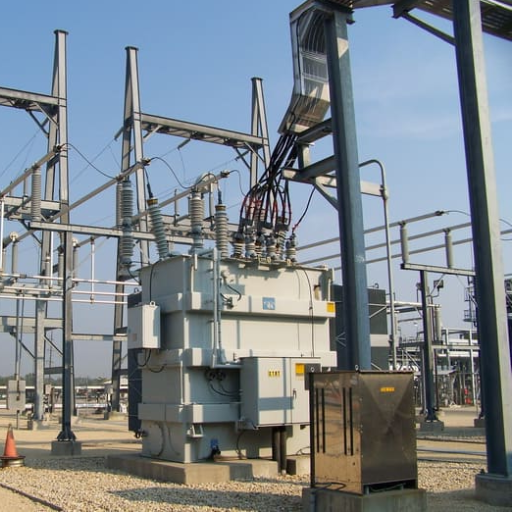
Transformer Impedance Definition
Transformer impedance is defined as the percentage or per unit measure of the alternating current that a transformer presents as an opposition. The resistance and leakage reactance of the transformer make up the impedance, which mainly influences how much current flows through the transformer and the device’s voltage regulation under load conditions. Voltage regulation is a crucial factor for the stability of the power transmission and distribution systems and also for the limiting of the fault currents, thus, impedance becomes a vital parameter in that case.
The impedance value of a transformer is one of the most important factors when evaluating short circuit situations. It determines the fault limit for the current flowing through that transformer thus it is crucial for the correct choice of overcurrent protection devices. High impedance means limitation on fault currents but at the same time it may cause inadequate voltage regulation, while low impedance translates to better voltage stability at the cost of high fault currents.
Transformers and their impedances are at the heart of power systems. Briefly, knowledge of transformer impedances is crucial for system design, equipment selection, and safety analysis. Engineers use this parameter to ensure effective load sharing in parallel transformer operations and to assess the power system’s reliability. Proper impedance matching in electrical networks helps minimize energy losses, maintain voltage stability, and protect equipment from damage caused by excessive currents.
Importance of Transformer Impedance in Power Systems
Transformer impedance is very important in power systems for controlling the electrical energy flow. The impedance of a transformer decides how much the transformer will inhibit the flow of alternating current with respect to its resistance and reactance. This property is very important in controlling voltage levels, reducing power losses, and transferring energy efficiently between the corresponding parts of the electric grid and so on.
The main function of transformer impedance is to limit fault currents in the event of short circuits. The currents are kept under control by the transformers, for the transformer itself is protecting the system’s components against the damage that could be caused by excessive currents and that also by turning the currents down to a certain extent of risk of the equipment failing. Besides, the level of impedances has an effect on transformers’ way of taking part in load sharing when working together in parallel. If the impedances perfectly match, each transformer will take the load according to its capacity thus keeping the system’s stability.
In addition, the transformer impedance is a major factor in determining the voltage regulation. A high impedance condition could result in big voltage drops during the time of the load which may harm the performance of the devices in the grid. Conversely, a low impedance condition would lead to a small voltage drop but short-circuit currents would be high which would mean careful design is needed to overcome this. By being savvy with transformer impedance, the engineers boost up power systems in three aspects: efficiency, reliability, and safety.
Role of Impedance in Short Circuit Scenarios
Impedance is a main factor that affects not only the amount of the short-circuit currents but also the current flow in electrical systems during a short circuit. When an event of short circuit occurs, the impedance impacts the current flow. High impedance causes lower short-circuit currents to which equipment will be damaged less. On the other hand, low impedance allows current to be higher, by which system components can easily become damaged; thus, it requires rigorous protective measures.
If the impedance values are properly controlled and the appropriate ones are used, the engineers can considerably lessen the impact of the short-circuit situations. Proper levels of impedance make sure that the current does not exceed the upper limits defined, and that way, the whole system does not get overloaded with energy. The device, that is responsible for protection such as a circuit breaker, will be in a position to operate smoothly and efficiently and thus the damage to the equipment will be very minimal.
Identifying the right transformer impedance is another important aspect of the process that while guaranteeing operational efficiency, it does limit the short-circuit currents effectively. This is a matter of finding a compromise between system safety and unnecessary energy loss. By making impedance design a part of the proper planning, not only the electrical infrastructure is protected but also system reliability is achieved and downtime due to faults is minimized which means long-term operational stability.
Transformer Impedance Calculation Methods
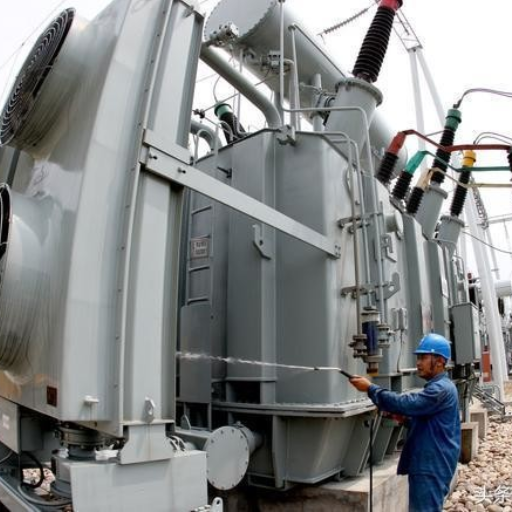
Overview of Calculation Methods
There are quite a few simple techniques to calculate transformer impedance, and each of them is meant to present critical data that will ensure the proper designing and running of the system. Almost all the methods that are used include analytical calculations, empirical measurements, and computational modeling. These techniques differ greatly in difficulty and area of application; however, they are all very important for accurate determination of transformer impedance characteristics.
Analytical calculations come from theoretical principles. Engineers can make rough impedance estimates by applying mathematical equations that are founded on transformer design parameters like winding resistance, core material, and physical dimensions. Although these calculations are speedy and inexpensive, they demand a thorough understanding of the transformer’s design specifications in order to maintain the accuracy.
Empirical measurements consist of assessing a transformer in a laboratory setting in order to find its impedance. The use of short-circuit tests as one of the methods allows for the direct measurement thus making this method very reliable for big and custom-made transformers. While this method requires using special equipment and is time-consuming, it gives data that is closely tied to the everyday operating conditions and is thus considered very practical. Computational modeling employs sophisticated software tools that help in simulating the behavior of the transformer and thus giving very precise results especially in complicated systems, as it integrates both theory and real-world conditions.
Using the Per-Unit System for Impedance Calculation
The per-unit system is a method used in power system calculations to normalize values such as voltage, current, impedance, and power. This system simplifies the comparison and analysis of electrical quantities across different voltage levels and components. It is particularly beneficial because it eliminates the need to repeatedly convert between different units, making calculations more straightforward and less error-prone.
To calculate impedance in the per-unit system, the first step is to establish base values for power and voltage. The base impedance is then determined using the formula:
Z_base = (Base Voltage)² / Base Power
Once the base impedance is calculated, the actual impedance is divided by this base value to determine the per-unit impedance:
Z_pu = Z_actual / Z_base
This normalized impedance is dimensionless and applies universally within the system, irrespective of voltage levels.
The primary advantage of using the per-unit system is that it simplifies complex circuit calculations, especially in multi-voltage-level systems like transformers and transmission networks. By normalizing values, engineers can easily pinpoint discrepancies, troubleshoot issues, and design consistent, efficient systems without needing frequent recalibration for varying voltage levels. This system also ensures that results are directly comparable across different parts of the electrical network.
Short Circuit Analysis
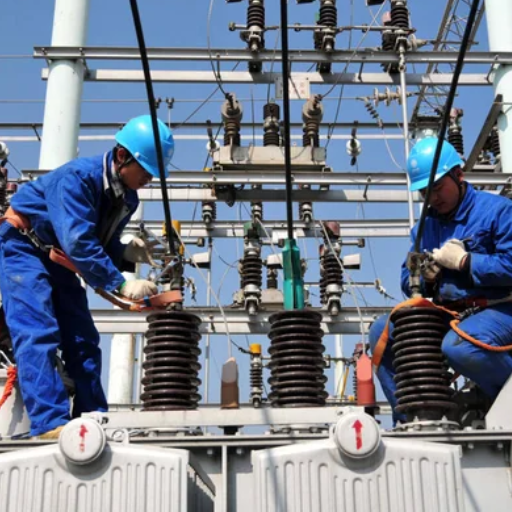
Importance of Short Circuit Calculations
Short circuit calculations are foundational in assisting to guarantee the safety and reliability of electrical power systems. The current flow that can occur during fault conditions, such as short circuits caused by insulation breakdown, equipment failure, or accidental connections, can be determined by means of these calculations. The system which provides the most secure, least disruptive, and safest solution will be specified by the analysis of the data.
One of the main advantages of short circuit analysis is that they lead to the correct selection and sizing of protective devices like circuit breakers and fuses. The ratings of these items should be at least equal to the maximum allowed fault levels (i.e. they have to be able to “withstand” the fault currents without tripping or burning out). Accurate calculations help to avoid both the installation of under-rated devices that might burn out, malfunction, or otherwise not protect the equipment during a fault, and the installation of over-rated devices with delayed response times that may cause even greater damage to the system.
Moreover, short circuit calculations are important for the stability of the system. High fault currents can overheat, stress mechanically, or drop the voltage of the equipment which can lead to the disruption of the system’s operation and maintenance. Engineers will be able to strategically place protective equipment if they know the fault levels and also will be able to isolate faults efficiently, thus reducing the risk of cascading failures and keeping the wider network operational.
Impact of Source Impedance on Short Circuit Performance
One of the main factors the short-circuit performance of an electrical system depends on is the source impedance. It has an immediate influence on the level of fault currents in the system when there are abnormal conditions. If the source impedance is large, the fault current will be small; therefore, the protective devices can function within their ratings. On the other hand, a low source will result in a high fault current, consequently, increasing the risk of damage to the equipment and creating safety hazards.
The source impedance is mainly due to the physical characteristics of the power supply system which includes generation, transmission, and distribution components. For example, the total impedance is made up of transformers, generators, and transmission lines which are the sources of resistance and reactance. To come up with accurate fault analysis and to select appropriate protective devices, the understanding of this impedance is very important.
Engineers can optimize the source impedance to achieve a good compromise between the system performance and safe operation. They will be able to devise protection schemes that will detect faults quickly and at the same time, will be less disruptive to other parts of the network. Taking source impedance into account correctly will lead to efficient fault isolation and will thus contribute to the power system’s reliability and stability.
Common Short Circuit Scenarios and Their Implications
The most severe problem of power systems is represented by short circuits, which at times even lead to the destruction of equipment, the interruption of power supply, or in worst cases accidenst to happen. If the typical short circuits are known, then their implications could be lessened considerably. Generally, these cases embrace line-to-line faults, line-to-ground faults and three-phase faults. Power system has its own specific characteristics and consequences for each type of fault.
Line-to-Line Faults:
Line-to-line faults are created by the contact of two wires, which produces an accidental low-resistance path. The result of such a fault is the arising of abnormally high currents which can destroy electric parts. It likewise causes instability of the voltage level in the system and may lead to cutting off the supply of power, especially in systems that are not protected or poorly designed.
Line-to-Ground Faults:
One of the most frequent types of faults is the line-to-ground, which happens when the conductor becomes connected to the ground or grounded equipment. This type of fault tends to create a current surge that is distributed in an uneven manner through the system. If ground faults are very serious in terms of their effects on the system but not quickly detected by the protection mechanisms, they can result in the destruction of transformers and other sensitive devices.
Three-Phase Faults:
Although three-phase faults are rare, they are the most serious among all the short circuit types. These faults occur when shorting together all three phases of a power network, which leads to forming very high fault currents. Such major faults need a very strong protective system as they have the capacity of causing immense damage to the equipment and creating long outages. The circuit breakers have to quickly interrupt the high fault current to prevent even more severe implications.
It is very important to recognize all the common faults and to adopt appropriate protection systems to keep power system reliability. The usage of protective relays, circuit breakers, and good system design all contribute to the minimization of hazards, thus making the operation both safe and stable. Active monitoring coupled with effective response planning can go a long way in drastically reducing the consequences of short circuits.
Base and Percentage Impedance
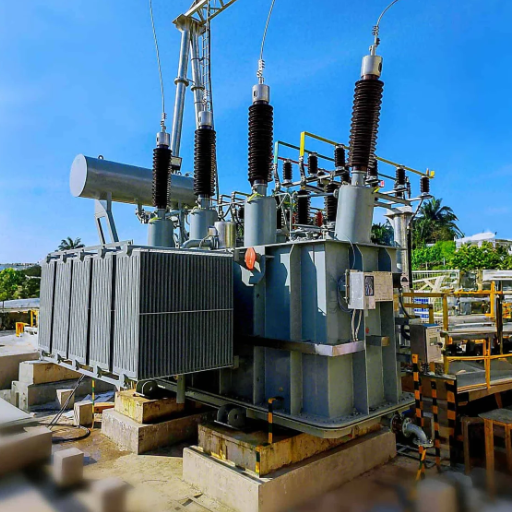
Calculating Percentage Impedance of a Transformer
Percentage impedance of a transformer is computed by the given formula:
Percentage Impedance = (Voltage Drop at Full Load / Rated Voltage) × 100
The full load voltage drop is measured by passing the rated current through the primary winding of the transformer while the secondary winding is short-circuited. The measurement of the voltage that is required to sustain this current flow, which is the short-circuit voltage or impedance voltage, is taken.
The percentage impedance plays an important role because it characterizes the voltage drop during load and the system fault levels. A transformer with a higher percentage impedance will have more voltage drop under load but will be more effective in limiting fault currents. In contrast, a transformer with a lower percentage impedance will have less voltage drop but will have higher fault currents. This balance is very important in transformer manufacturing and system cooperation.
Percentage impedance comprehension also helps in parallel operations, as it guarantees that the connected transformers will share loads in the same ratio. The use of precise calculations and comparisons ensures the compatibility, proper functioning, and efficiency of the electrical systems.
Applications of Base and Percentage Impedance in Design
Base and percentage impedance can be seen as the very foundation of electrical systems design, and their relation to efficiency, safety, and component harmonization is undeniable. In transformer design, these parameters are of primary importance, as they set the level for voltage regulation and fault currents. Setting and calculating the different impedance levels allow engineers to push transformers to their full operational efficiency during normal operations while also speeding up the safety measures during fault conditions.
On top of that, base and percentage impedance are also utilized in the coordination and protection of electrical networks. The whole impedance concept is also very much needed in designing protective relays and circuit breakers which will be able to handle fault currents appropriately. This coordination, therefore, is the one which makes the protective devices act at the right moment so that power outages, damage to the equipment, and so on caused by the protective devices are not at all unnecessary.
Impedance is again very important in the case of load-sharing and parallel operation of transformers. Percentage impedance values that are matched properly are going to ensure that the transformers operating in parallel will share the load evenly, thus preventing overloading and maintaining the reliability of the system. Engineers, through careful impedance considerations, contribute to overall system performance and the likelihood of operational failures being reduced.
Engineering Challenges in Transformer Impedance Calculation
Dealing with Non-Standard Tap Positions
Non-standard tap positions in transformers are difficult to deal with as their influence on voltage regulation and system balance is sometimes more than expected. Change of a tap position of a transformer from the standard specifications causes a corresponding change in the impedance of the transformer. This may also affect the load sharing among transformers connected in parallel, leading to a situation where one of the transformers is heated up, and at the same time, the other is left cold, or even worse, the electrical network may face instability caused by unequal power distribution.
Before putting any non-standard tap position on the transformer, the engineers should first do a detailed analysis of the impedance values which are going to be altered due to the new tap positions. The calculations will include the relationship between the new tap setting and the impedance variation. This will help in accurate adjustments to the system parameters and will enable transformers to work together in a harmonious way even if their taps are mismatched. The use of simulation tools and very accurate measurements are also helpful for predicting the behaviour of the transformers under non-standard conditions.
On top of this, periodic tests and monitoring are essential under non-standard tap positions. Engineers must keep a record of every operational change, and they also have to tell the team proper communication of any deviation that occurred during the process. Setting up clear protocols regarding tapping and system balance maintenance will help avoid possible risks related to uneven loading. The adoption of these measures will ensure that the challenges posed by non-standard tap positions can be effectively managed and that transformer performance and system reliability are kept at the desired level.
Challenges in Load Sharing During Parallel Operations
Mismatch in transformer impedance is one of the main challenges that have to be dealt with in the context of parallel operations where load sharing is involved. In case the impedance values of the transformers are not the same, it can lead to uneven distribution of the load causing one transformer to be overloaded while the rest are underutilized. The imbalance can cause overheating, decreased efficiency, and maybe even total destruction of the equipment if not treated.
The miscalibrated tap-position settings are another decisive reason. When the transformers in parallel are not adequately aligned in terms of their tap settings, it can create voltage differences. The voltage variations eventually lead to circulating currents that not only harm the total operational efficiency but also create conditions conducive to system instability and unnecessary energy losses.
The challenges mentioned above can be effectively managed by first matching the impedances and then aligning the tap positions before energizing the transformers. Moreover, the use of real-time monitoring systems can be a great help in the early detection of deviations, allowing for immediate corrective action to be taken and consequently ensuring balanced load sharing. In addition, regular maintenance and training of personnel can further increase the reliability of the system and reduce the risk coming from transformer operations in parallel.
Common Errors in Impedance Calculations
Impedance calculations are paramount to the normal operation of electrical systems, yet some mistakes can still be made due to a few common reasons. One of the most frequent problems is using the wrong formulas or having wrong ideas about circuit behavior. For instance, if the frequency’s effect on impedance is not taken into account, the result will be incorrect. Also, not considering parasitic components’ (inductance and capacitance in cables, for instance) effects will likely cause discrepancies, mostly in the application of high frequencies.
An error that is very frequent and another source of error is the procedure of measuring and interpreting the parameters of the system. Calibration of the measurement devices can be done wrong and this is one of the reasons for getting wrong data, for example using too old or not properly calibrated devices. Errors can also occur if the environmental factors are not taken into account, for instance, if temperature changes are not considered which may change the materials’ resistance and reactance.
Human errors like writing down the wrong number or misinterpreting the data can be a major contributor to the impedance calculation problems. The situation where there is no proper documentation or that the calculations are not double-checked often makes these problems worse. Engineers should, therefore, adhere to standard procedures, input data accurately and confirm results by performing routine cross-checks or simulations whenever possible, to mitigate such errors. The continuity of these practices secures the precision and dependability of impedance-related computations.
Frequently Asked Questions (FAQ)
Q: What is a transformer impedance calculation and why is it necessary?
A: The transformer impedance calculation checks out the transformer impedance (z) or percent impedance from the nameplate and is used for ascertaining the fault current available and the transformer current during short-cuts. These calculations are mainly done to install protection devices, approximate the current at the tertiary, and very importantly, the power getting collected from the primary voltage to the secondary side is done via efficient distribution methods.
A: To conduct a transformer impedance calculation, percent impedance is the key to determine short-circuit current and primary-rated current. Divide the total PE feeding method into primary and secondary so that Z at terminals equals to Z= (V²/S) where V is transformer voltage from the secondary and S is the corresponding rating in kVA or MVA.
Q: How is the impedance in ohm of a transformer determined?
A: Use rated primary voltage (or equivalent) base to convert percent impedance to ohm: Z(ohm) = (percent impedance/100) × (Vbase² / Sbase), where Vbase is primary voltage (or secondary) in volts and Sbase is kva or MVA in VA. Conversion of this magnitude enables an impedance calculator, or per-unit system comparison, and helps calculating fault and primary current values.
Q: What is the available fault current at the transformer secondary calculated?
A: For transformer impedance calculation of fault current available on the secondary side, transformer’s rated kva and percent impedance should be used: Fault current = (kVA × 1000) / (√3 × Vsecondary) for three-phase and then divide the calculated value per unit by percent impedance/100. Alternatively, use Z in ohm to calculate the current at the terminals for the bolted fault case.
Q: What is the per unit system concept in transformer impedance calculation?
A: The per unit system method facilitates transformer impedance calculations by standardizing z values to a common base (kva and kv). By using per unit it becomes easy to compare high impedance transformers with low, add impedances and determine primary and secondary current without constant unit changes, which is particularly useful when working with several transformers or different rated primary voltages.
Q: Influence of primary and secondary voltage on currents?
A: Impedance calculation assumed primary voltage and rated primary voltagedecided the Iprimary as Iprimary = (kVA × 1000) / (√3 × Vprimary) for three-phase units. The current at the secondary side depends on the secondary voltage. Changing kv levels (mva & kv) or nominal voltages alters the equivalent impedance size and thus the current downstream.
A: Z in ohm is often mentioned in the nameplate along with percent impedance, kva rating and rated primary voltage. These numbers are generally used as inputs in an impedance calculator or manual transformer impedance calculation to get secondary fault current, current through the transformer, and to determine protection at the panel or downstream equipment size.
Q: Two transformers have the same kva. Still, why could they have different fault currents?
A: The transformers can have, indirectly pairing with the same kva, higher impedance or lower impedance due to their construction, coil and percent impedance. High impedance diminishes the characters of the fault current while low impedance sees its augmentation. These discrepancies also modify the current reaching the secondary terminals and the current at the transformer during faults which impacts coordination and effective power delivery.
References
-
“Per Unit Calculations”
Link to source
A supplement from Colorado State University discussing per-unit calculations for transformer impedances.“4 AC Circuits Phasors, Impedance and Transformers”
Link to source
A lab document from the University of Tennessee covering impedance calculations in AC circuits and transformers.“Transformer Equation Notes”
Link to sourceTop Oil-immersed Transformer Manufacturers and Suppliers in China