Pick up any electrical standard published before 2021, and you will find three or four incompatible figures for the upper limit of “low voltage.” Interrogate a US industrial electrician about upper thresholds, and you will hear 600 V. Ask an EU-trained engineer, and the answer is 1,000 V. Consult the National Electrical Code Class 2 rules, and you will hear 49 V. All three answers are simultaneously correct – in different places, under different standards, for different objectives. This guide elucidates the mess. References IEC 61140:2016, IEC 60038:2009+AMD1:2021, the EU Low Voltage Directive, NFPA 70, and ANSI C84.1 as the primary sources, it charts the entire LV voltage range, explains where each threshold originated, and reveals which standard applies to your project.
Quick Reference: LV Voltage Range by Standard
Quick Specs — LV Voltage Range
- IEC 61140:2016 (shock-protection standard): LV= AC 1,000 V RMS / DC 1,500 V
- EU low voltage Directive 2014/35/EU: Scope AC 50-1,000 V / DC 75-1,500 V
- NFPA 70 / NEC (US): NEC 110.26 scoped to “1,000 Volts or Less” (AC)
- US NEC Class 2 circuits (Article 725): 49 V AC / 60 V DC (LDSV)
- Canada CEC: 31-750 V AC Scope of the term low voltage
- IEC 61010-1 (Instrument safety): CAT III, rated up to 1,000 V (LV threshold)
Below is a comparison of five of the most frequently quoted standards, illustrating the LV voltage range each named:
| Standard | AC Upper Limit | DC Upper Limit | Purpose |
|---|---|---|---|
| IEC 61140:2016 | 1,000 V RMS | 1,500 V | Shock-protection voltage bands |
| IEC 60038:2009+AMD1:2021 | 1,000 V (nominal supply) | 1,500 V (formally added 2021) | Standard nominal supply voltages |
| EU LVD 2014/35/EU | 50–1,000 V | 75–1,500 V | CE marking scope for electrical equipment |
| NFPA 70 / NEC (US) | 1,000 V (Section 110.26 scope) | 1,500 V | Electrical installation rules |
| Canada CEC | 750 V | — | Canadian building and industrial wiring |
What Is Low Voltage (LV)? The IEC 61140 Definition and Its Safety Basis
IEC 61140:2016, “Protection against electric shock — Common aspects for installation and equipment,” is the engineering benchmark for the LV threshold. Section 4.2 of that standard divides the voltage spectrum into three bands based on the shock-protection level each requires:
- ELV: AC 50 V RMS, DC 120 V the primary danger is contact burns or internal combustion fires, not ventricular fibrillation.
- LV= AC > 50 V up to 1,000 V RMS, DC > 120 V up to 1,500 V – the primary danger is electric shock (ventricular fibrillation from sustained current through the chest).
- HV= AC > 1,000 V, DC > 1,500 V – shock, arc flash, and flashover all become primary problems.
That 1,000 V AC threshold is not arbitrary. Above roughly 600–800 V, the air-gap breakdown distances needed to prevent arc flash start to increase sharply — which is why LV switchgear designs change fundamentally past that point. OSHA reinforces this in 29 CFR 1910.137, requiring mandatory guarding of live parts at 50 V or more, recognising that sustained contact current above this level can reach cardiac fibrillation thresholds.
Engineering Note — Two IEC Standards, Two Different Purposes:
IEC 61140 equates shock-protection voltage to bands. IEC 60038 defines standard nominal supply voltage (e.g., 230 V, 400 V, 11 k V). There are two pieces of paper – separate documents. Falsely citing IEC 60038 as the answer’s origin – as many online tutorials do – is officially a mistake. IEC 60038 did not include an LV range in Amendment 1 (issued December 2021); IEC 61140 has been the shock-protection institution all along.
It is also worth noting what “low voltage” does not mean colloquially. As one licensed electrician summarised on the Mike Holt Forum, a leading US electrical code resource: “Low voltage can mean 24 V or 240 V depending on who you ask – the NEC does not define ‘low voltage’ the way engineers think it does.” That vagueness is precisely what the IEC framework provides.
For practical installation safety, a related source is our guide to voltage withstand testing and the principles behind insulation resistance testing – both of which are tuned to the LV/HV boundary.
LV in Context: The Complete Voltage Classification Spectrum
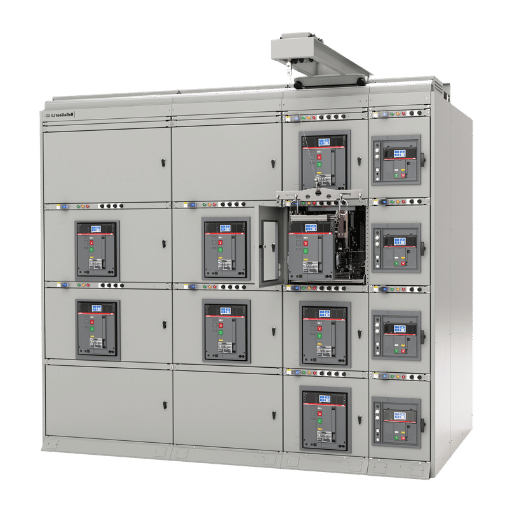
low voltage exists in the middle of a five-tier spectrum that engineers use to classify electrical systems from control signals to long-distance transmission lines. Knowing where LV stands – and where the boundaries with ELV, MV, HV, EHV, and UHV are – is critical for equipment specification, layout design, and cross-border compliance.
| Tier | AC Range | DC Range | Dominant Hazard | Typical Application |
|---|---|---|---|---|
| ELV | ≤ 50 V | ≤ 120 V | Fire / burns | 24 V DC control circuits, door entry, LED drivers |
| LV | 50 V – 1,000 V | 120 V – 1,500 V | Electric shock | Residential wiring, industrial motors, EV chargers |
| MV | 1 kV – 35 kV | 1.5 kV – 35 kV | Arc flash / flashover | Distribution feeders, substations, industrial campus rings |
| HV | 35 kV – 230 kV | 35 kV – 230 kV | Arc flash / insulation failure | Regional transmission, grid interconnects |
| EHV / UHV | > 230 kV | > 230 kV | Clearance failure / corona | Long-distance bulk transmission, HVDC corridors |
Key Takeaway: The DC threshold in every tier is always higher than the related AC threshold – never lower. This takes many engineers by surprise who assume voltage classification is voltage-boggling. The reason: DC has no zero-crossings, so the time-to-zero is longer for an identical RMS value. The IEC position was to set DC band limits approximately 20-50% higher than AC equivalents rather than equalising them.
Extra Low Voltage (ELV): The Critical Safety Tier Below LV

ELV is not merely “anything below 50 V AC.” IEC 61140:2016 breaks ELV into three separate sub-classifications, each with different safety and protection needs. Getting this wrong – particularly in medical, marine, or industrial control contexts – can mean insufficient shock protection masked as code compliance.
| Class | Full Name | Earth Connection? | Isolation Req. | Typical Use |
|---|---|---|---|---|
| SELV | Safety Extra-Low Voltage | No (galvanically isolated) | ≥ 500 V dielectric withstand from mains | Medical equipment, intrinsically safe environments, bathroom shaver sockets |
| PELV | Protective Extra-Low Voltage | Yes (earthed output or circuit) | Galvanic isolation from mains; earth connection on output acceptable | 24 V DC PLC control circuits, door entry systems, LED drivers with earthed rails |
| FELV | Functional Extra-Low Voltage | May be earthed or unearthed | No full isolation; must apply LV-level protection | Circuits that use ELV only for functional/operational reasons (e.g., relay coils supplied from LV transformer without safety isolation) |
Common Rectification: Creating a 24 V DC system and assuming it qualifies as SELV by default. If the power supply does not offer sufficient galvanic isolation from the mains ( 500 V dielectric withstand according to IEC 61140), the circuit is FELV, not SELV – and shock protection mitigation measures apply to all conductive exposed parts. Nameplate voltage alone doesn’t cut it; the effectiveness of isolation dictates the classification.
SELV/PELV differentiation is especially important for engineers specifying power supplies in automation or building management: a PELV supply with an earthed output is perfectly acceptable for most 24 V control applications, but a SELV supply is mandatory in zones with elevated shock risk — bathrooms, swimming pools, and medical procedure areas.
Why LV Thresholds Differ by Country — And the US NEC Paradox
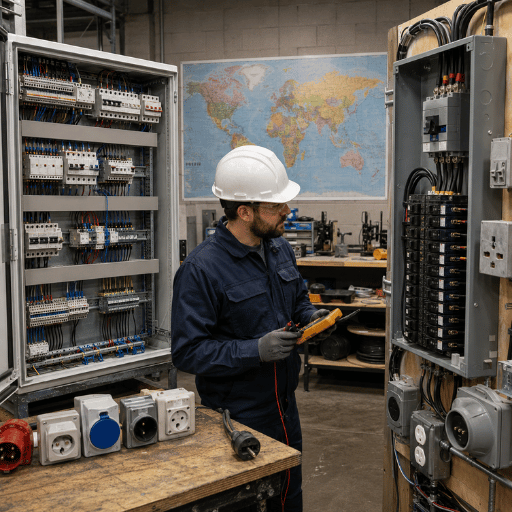
No single global LV definition exists — and that is not an oversight. It reflects genuine differences in legacy infrastructure, utility supply systems, and regulatory philosophy across jurisdictions. Understanding these differences matters for equipment manufacturers exporting across borders and for engineers working on multinational projects.
| Jurisdiction / Standard | LV AC Upper Limit | LV DC Upper Limit | Governing Document |
|---|---|---|---|
| EU / Most of world | 1,000 V | 1,500 V | IEC 61140 / EU LVD 2014/35/EU |
| UK (post-Brexit) | 1,000 V | 1,500 V | BS 7671:2018+A2:2022 |
| US industrial / NETA | 600 V (traditional) / 1,000 V (modern) | 1,500 V | NFPA 79 / NETA standards |
| US NEC Class 2 circuits | 49 V (LDSV) | 60 V | NEC Article 725 |
| Canada | 750 V | — | Canadian Electrical Code (CEC) |
| Australia / New Zealand | 1,000 V | 1,500 V | AS/NZS 3000:2018 (IEC-aligned) |
The US NEC Paradox: Three Definitions in One Jurisdiction
Nowhere is definitional inconsistency more pronounced than in the United States — and understanding it matters for anyone selling or installing equipment across the US market. A single jurisdiction governed by a single code body (NFPA) simultaneously operates with three distinct “low voltage” thresholds:
- Article 725 (Class 2 circuits): “Low-voltage” means 49 volts AC / 60 volts DC. These Limited Danger Supply voltage (LDSV) circuits-thermostats, doorbells, security panels-are exempt from many standard wiring methods. This is the definition that a low-voltage contractor’s license would cover.
- NFPA 79 / US industrial practice: 600 V AC has long been the boundary used by industrial electricians. Equipment rated for “LV motors” in North America almost always means 600 V, not 1,000 V. As the discussion on the Mike Holt electrical Forum confirms, most US field electricians are still using 600 V as their mental model of the LV ceiling.
- Modern NEC + NETA (IEC-aligned): NEC 110.26 and NETA standards now use 1,000 V AC / 1,500 V DC- matching IEC 61140. This reflects international alignment as US equipment is more and more using IEC-rated components.
Compliance Pitfall: A European switchgear manufacturer labelling a 690 V panel as “LV” (correct under IEC 61140) may find US installers treating it as MV or applying wrong procedures-because 690 V exceeds the informal US industrial ceiling of 600 V. Specify both the relevant standard and the voltage value on all documentation to avoid confusion on site.
Which standard applies to your project?
- Equipment entering the EU market IEC 61140 / EU LVD 2014/35/EU (50-1,000 V AC)
- US industrial machinery NFPA 79 (longstanding 600 V; modernising to 1,000 V)
- US Class 2 control circuits NEC Article 725 ( 49 V)
- Multi-region equipment Use IEC 61140 as the baseline; indicate regional deviations
- Instrument safety IEC 61010-1 (CAT system, not voltage band system)
Where Low Voltage Powers the World: Applications by Industry Sector
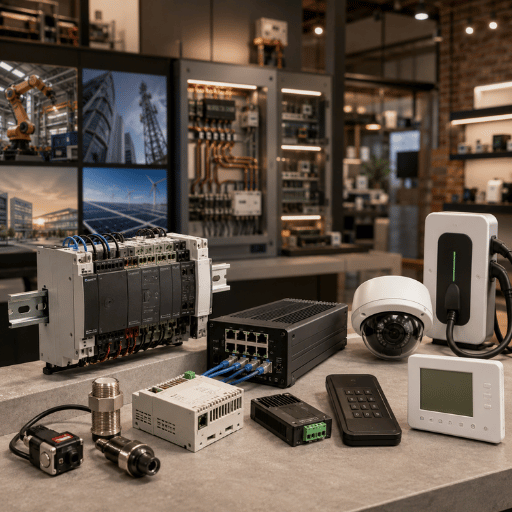
Few people appreciate how broad the LV band really is. LV systems energise the vast majority of human activity — from 120 V household outlets to 1,000 V industrial drive lines. Four primary sectors and their typical operating voltages are mapped below:
| Sector | Typical Voltages | Common Equipment |
|---|---|---|
| Residential (US) | 120 V / 240 V AC | Lighting, appliances, EV Level 2 chargers |
| Residential (EU) | 230 V / 400 V AC (three-phase) | Lighting, heat pumps, EV chargers up to 22 kW |
| Commercial / Light Industrial | 208–480 V AC three-phase | Low voltage switchgear, HVAC drives, compressors |
| Heavy Industrial (US) | 480–600 V AC | Large motors, variable speed drives, switchgear test equipment |
| Heavy Industrial (IEC countries) | 400–1,000 V AC (three-phase) | Process drives, large motor starters, DC bus systems |
Scenario Injection #1 — Real-World Application
A packaging factory manager in Bavaria, Germany manages a 400/690 V three phase production line. Under IEC 61140, the entire line is classified as LV- the voltage level bases never exceed the 1,000 V AC ceiling. However, the factory needs certified personnel, and full arc-flash PPE that complies with IEC 61482-2 for any work while the panel doors are live. The “low voltage” classification describes the shock-protection regime-not the absence of hazard. arc flash energy at 690 V with high available fault current has the potential to reach incident energy levels that are hazardous to unprotected workers. Voltage class and hazard class are two different things.
Selecting Test Equipment for LV Systems: CAT Ratings, Instruments, and the 1,000 V Threshold
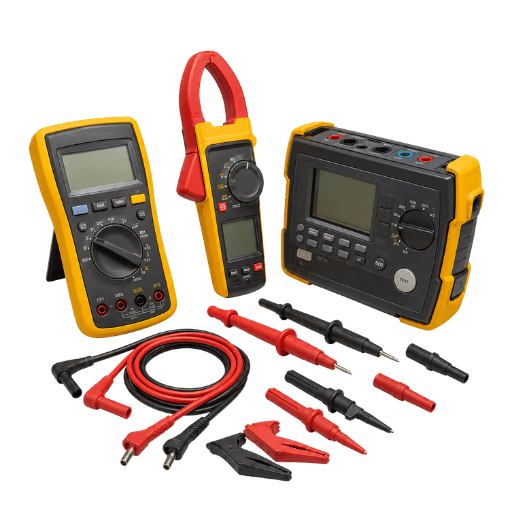
The 1,000 V AC / 1,500 V DC boundary isn’t just a classification line- it’s also the design threshold around which test instrument safety ratings are constructed. IEC 61010-1 is related to measurement instrument safety and utilizes a Category (CAT) system that relates to the installation location, not just operating voltage:
| CAT Rating | Working Context | Max Working Voltage | Transient Withstand (at 1,000 V rated) |
|---|---|---|---|
| CAT I | Protected circuits, signal-level loads | Up to 600 V | 2,500 V (at 300 V rated) |
| CAT II | Single-phase receptacle-connected loads | Up to 600 V | 4,000 V (at 600 V rated) |
| CAT III | Three-phase distribution; fixed building panels | Up to 1,000 V | 8,000 V (at 1,000 V rated) |
| CAT IV | Origin of installation — utility entry, overhead lines | Up to 1,000 V | 12,000 V (at 1,000 V rated) |
Engineering Note — CAT Rating ≠ Maximum Voltage:
A CAT III 1,000 V instrument is able to withstand transient overvoltages up to 8,000 V that will be present on distribution circuits. a CAT II 600 V instrument is not rated for the same transient energy. Both might “work” at 480 V steady – state—with everything operating normally— but only the CAT III instrument can survive the switching transients inherent in LV panel environments.
Scenario Injection #2 — CAT Rating Mismatch
An engineer on a 480 V industrial panel reaches for a CAT II-rated multimeter—the type ever-present in electronics service kits and rated for reading measurements at ordinary household outlets. CAT II can withstand 4,000 V transients at 600 V; however, on a distribution panel feeding large motors, switching transients can soar as high as 6,000-8,000 V. The result: instrument insulation failure, potentially explosive fuse-element failure, and arc flash triggering. CAT III 600 V minimum—preferably CAT III 1,000 V –is the right choice for any fixed-installation LV panel.
In LV insulation testing , the standard test voltages scale with the circuit’s operating voltage:
- ELV circuits (24-48 V): 250 V DC test voltage employing an insulation resistance tester
- LV circuits (230-400 V): 500-1,000 V DC test voltage (IEC 60364-6 guidance)
- LV cables and switchgear: Dielectric withstand testing — see our dielectric testing guide
- HV equipment above 1,000 V: 2,500-5,000 V DC; digital megohmmeters with HV output required
Demiks Power’s family of high voltage test equipment caters for both sides of the LV-HV boundary. Our dielectric constant testers and insulation resistance testers are calibrated for HV and LV usage from 250 V to 5,000 V test range.
LV Standards in Motion: EV Charging, DC Systems, and IEC 60038 AMD1:2021
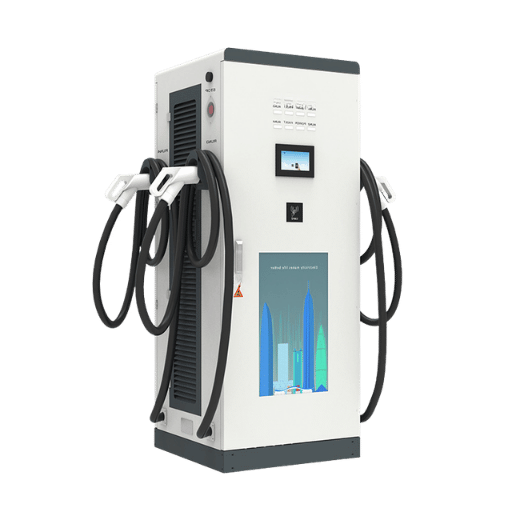
LV voltage boundaries are not static. Two forces are actively pressing against them: the electrification of transport — which pushes DC system voltages toward the 1,500 V DC LV ceiling — and the formal maturation of the IEC standard family that defines those limits.
IEC 60038 Amendment 1 (December 2021): The First Formal LV Definition
Until December 2021, IEC 60038—the standard for nominal supply voltages—did not contain a formal definition of “low voltage” as a term. Amendment 1 to IEC 60038:2009 introduced this term, adding Definitions 3.10-3.13 and formally establishing:
- low voltage: AC 1,000 V RMS / DC 1,500 V (Definition 3.12)
- high voltage: AC > 1,000 V / DC > 1,500 V (Definition 3.13)
This amendment also upgraded IEC 60038 to horizontal standard status under IEC Guide 108—thus now serving as an overarching reference for both equipment design and supply system planning, not only as a guidance to equipment designers and manufacturers and ANSI developers for preferred supply voltages. Definitions were standardisized (a.c. AC, d.c. DC, r.m.s. RMS) for cross- standard coherence.
EV Charging and the LV Boundary
EV charging infrastructure introduces the most immediate practical consideration of the LV ceiling in 2025 and beyond:
- Level 1 (120 V AC, US): Certainly LV, without an boundary issue.
- Level 2 (208-240 V AC, US / 230-400 V AC, EU): Certainly LV; governed by standard LV installation rules and EU LVD.
- DC Fast Charging (CCS/CHAdeMO, up to 1,000 VDC): Exactly at the IEC LV DC maximum of 1,500 V – or just below it for 800 V architectures.
- Utility-scale Solar PV inverters (up to 1,500 V DC). At the precise LV/HV split (per IEC); several makers consider it HV, some consider it LV. Choice depends on wiring method.
Scenario Injection #3 — EV Charger EU Export Compliance
A manufacturer of Chinese chargers for electric vehicles is exporting 800 V DC fast chargers to the EU. This battery-side connection operates significantlyabove the EU LVD DC floor of 75 V, but farbelow the ceiling of 1,500 V.. Clearly the classification is an “electric appliance” within the meaning of the 2014/35/EU directive, and a CE conformity assessment and EU Declaration of Conformity is in order– unless it isclassed as”HV,” which adds costly and unnecessary certification.
Obtaining a firm hold on this boundary (1500 V DC) has obvious business advantages.
Frequently Asked Questions: LV Voltage Range
What is the voltage range for LV?
Under IEC 61140:2016 — the most widely adopted international standard — the LV range is AC > 50 V up to 1,000 V RMS and DC > 120 V up to 1,500 V. Systems at or below those lower limits (≤ 50 V AC / ≤ 120 V DC) fall into the Extra Low Voltage (ELV) band. Systems above the upper limits enter the High Voltage category. Note that the EU LVD 2014/35/EU defines its scope as 50–1,000 V AC / 75–1,500 V DC, so equipment below 50 V AC falls entirely outside the LVD’s remit.
Is 33 kV LV or HV?
33 kV is unambiguously High Voltage under every major standard worldwide — more than 30 times the IEC LV ceiling of 1,000 V AC. In the IEC framework, 33 kV falls within Medium Voltage (1 kV–35 kV). No standard classifies it as LV.
Is line voltage 24 V?
No. “Line voltage” in the US is 120 V AC (residential single-phase) or 208–480 V AC (commercial/industrial three-phase). 24 V is a control voltage — ELV classification (≤ 120 V DC per IEC 61140), not line voltage.
Is line voltage 110 V or 120 V?
US and Canada outlets supply 120 V AC (the IEC 60038 preferred 60 Hz nominal). 110 V is a legacy colloquial figure — current standards specify 120 V. European and most Asian single-phase supply is 230 V AC.
What is the difference between LV and ELV?
Both LV and ELV are voltage bands defined by IEC 61140:2016 for shock-protection purposes. ELV(extra low voltage) is 50 V AC /120 V DC- at these voltage levels the primary threat of electrocution is fire /mild burns rather than ventricular fibrillation. LV (low voltage) covers AC 50–1,000 V / DC 120–1,500 V — where sustained current through the body can cause fatal cardiac arrest. LV systems require full shock-protection measures (insulation, enclosures, RCDs), while ELV systems may use simplified protection depending on the sub-class (SELV, PELV, or FELV).
Which standard defines the LV voltage range: IEC 60038 or IEC 61140?
IEC 61140:2016 is the main standard listing LV voltage band name. It defines ELV, LV and HV voltage bands for shock-protection purposes. IEC 60038 is a separate standard listing preferred nominal supply voltages (such as 230 V, 400 V, 6.6 kV) for distribution and grid planning. IEC 60038 only formally added a “low voltage” definition (≤ 1,000 V AC / ≤ 1,500 V DC) in Amendment 1, published December 2021 — confirming alignment with IEC 61140 while serving a different regulatory purpose. For compliance questions: IEC 61140 is the shock-protection authority; IEC 60038 addresses standard nominal supply voltages.
How does the LV voltage range affect test equipment selection?
The upper limit for LV (1,000 V AC/1,500 V DC) is the measure against which the IEC 61010-1 CAT rating calculations are calibrated. For LV panel work, a minimum CAT III instrument rated to 1,000 V (capable of withstanding 8,000 V transients) is required; CAT IV is required at service entry points. Using an undersized instrument — such as a CAT II meter on a 480 V distribution panel — creates genuine arc flash risk from switching transients that the instrument is not rated to survive. For insulation resistance testing, IEC 60364-6 recommends 500–1,000 V DC test voltage for LV circuits and 2,500–5,000 V for HV systems.
Related Articles
- The Ultimate Guide to High Voltage Testers
- What Is a Hipot Test? Methods and Safety Standards
- Dielectric Testing: Methods and Standards Explained
- How Electrical Insulation Testing Prevents Failures
- High Voltage Test Procedures Explained
- Withstanding Voltage Tester: A Complete Guide
Need Test Equipment for LV or HV Systems?
From 250 V insulation testers to 100 kV hipot systems — Demiks Power covers the full voltage spectrum.