From smartphones to electric vehicles, batteries are relied upon for modern technologies. Technologies must be reliable, efficient, and safe. Thus, rigorous testing is required as an integral component of the maintenance of batteries. This article discusses the testing batteries are put through to determine performance indicators like capacity, durability and safety while also mentioning the different techniques used. Regardless of whether you are an engineer in the field of energy storage or simply wish to know how batteries are assessed, this detailed guide will explain the processes which keep constantly optimizing this crucial piece of technology.
What Are the Different Types of Battery Test Methods?

Battery testing methods can be grouped into three primary categories: performance evaluation, environmental conditions, and safety protocols.
- Performance Testing: This focuses on testing the standards of capacity, charging efficiency, and the battery life. Common tests taken include the charge-discharge cycles and the rate capability evaluation which assesses energy output.
- Environmental Testing: These pertain to extreme simulative scenarios including low and high temperatures, humidity, and vibrations. The goal is to maintain peak level accuracy understanding how the battery performs against real world stressors.
- Safety Testing: Safety tests are critical for identifying hazards related to a battery’s malfunction. These include the short-circuit and discharge tests, charge/discharge cycles, and thermal runaway analysis, which guarantees that a battery does not fail catastrophically.
In the case of batteries, each technique used adds value and analyzes specific traits that are critical for a battery’s performance, long-term reliability, and compliance with applicable standards.
Overview of Battery Testing Techniques
A battery’s performance characteristics like its efficient and effective use of cycles, energy per weight (energy density) coupled with advanced, high-resolution measurements on voltage, current, and capacity over its lifetime need precision instruments to track energy and gauge metrics accurately so that this data can be used to improve algorithms for enhanced tests methodologies and precise actual conditions evaluations.
In addition to this, the reliability study highlights changes focused on crucial deterioration patterns because of the elements like warmth, moist, and their strain. For example, cyclic aging assessments and speeded thermal aging tests can be used to estimate and project a battery’s operational performance under continuous conditions. These are incorporated so that acceptable levels of industry benchmarks and required rigor are achieved alongside optimal integrity to safety, reliability, durability, and efficiency.
Importance of Battery Test Equipment
In the processes of research, development, and quality assurance of energy storage technologies, batter test equipment is essential. This equipment evaluates important parameters such as capacity, internal resistance, cycle life, and safety limits by simulating real-world operating conditions. Today’s battery test systems come equipped with modern features such as multi-channel testing, high-precision voltage measurement, and even thermal control, which helps in evaluating performance for diverse scenarios.
To assess overall battery health further, internal resistance and possible degradation processes can be measured through electrochemical impedance spectroscopy (EIS). Safety and reliability benchmarks such as IEC and UL-compliant standards make sure that batteries are unquestionable in terms of safety and dependability. With the most advanced test equipment available, there is increasing ability to optimize battery design, improve energy density, thermally stable operating limits, and solve complex problems such as thermal runaway, accelerating the pace of clean energy and electric mobility technologies.
Common Battery Test Procedures
|
Test Procedure |
Key Points/Parameters |
Description |
|---|---|---|
|
Capacity Test |
Measure charge/discharge cycles |
Evaluates battery storage capacity |
|
Internal Resistance Test |
Analyze impedance, resistance |
Checks efficiency and power delivery |
|
Cycle Life Test |
Perform repetitive charge cycles |
Determines battery lifespan |
|
Self-Discharge Test |
Measure loss without use |
Assesses energy retention over time |
|
Thermal Test |
Observe temperature effects |
Evaluates performance under temperature stress |
|
Overcharge Test |
Increase voltage beyond limit |
Assesses battery safety under overcharge |
|
Discharge Rate Test |
Test current flow at discharge |
Measures battery discharge capability |
|
Vibration Test |
Simulate mechanical shocks |
Checks structural integrity |
|
Short Circuit Test |
Intentionally create short circuit |
Ensures safety mechanisms are functional |
How to Test a Battery Effectively?

- Visual Inspection
Check for any physical cracks, corrosion, or signs of leakage. An intact battery does not show signs of wear or chemical remnants.
- Voltage Test
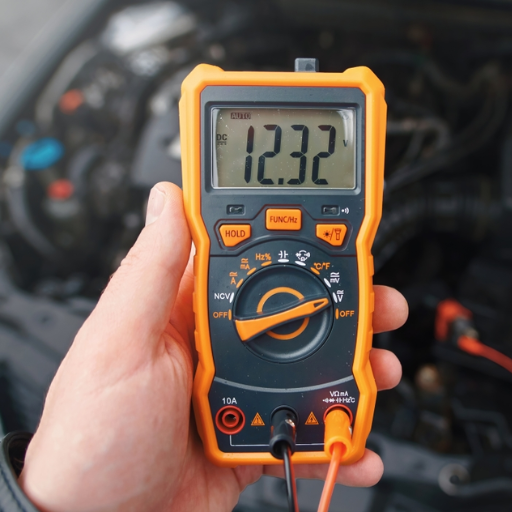
Assess the voltage with a multimeter to electronically gauge the voltage. Reference the voltage reading against the manufacturer’s details to confirm charge status.
- Capacity Test
Conduct load testing to validate battery capacity against operational benchmarks for sustained performance.
- Temperature Assessment
Test the battery for its operational temperature range and endurance to ensure dependability and sturdiness in rigorous conditions.
- Safety Tests
Conduct safety over-tests like overpower, snap, and shake tests to assure that secondary systems and outsides remain unchanged.
Following these guidelines allows you to assess a battery’s performance metrics and benchmarks against reliability standards. For specific procedures, always refer to the manufacturer’s instructions.
Using a Battery Tester for Voltage Testing
Set the battery tester scope for a specific battery type. Make sure the terminals are free of any residues, attach the probe, and set the terminal projection to a suitable ranges like 12V for automotive batteries and 1.5V or 9V for the smaller consumer batteries.
Join the positive (red) tester lead to the positive terminal of the battery and the negative (black) lead to the negative terminal. Let the tester equilibrate and show the reading. A fully charged battery will show a voltage slightly higher than the nominal voltage, for example, a 12V battery will show 12.6V. This value, however, will not be nearly as high in case of a discharged or failing battery. For accurate analysis, the readings should be compared with manufacturer-recommended reference values as they are voltage benchmarks.
Understanding Internal Resistance in Testing
Every technician has their own standards for evaluating battery health and performance, and almost every technician agrees that internal resistance is towards the top of the list. Also termed, opposition to current, it is the flow within a battery caused by the ions moving in the electrolyte or the components inside the battery. Increased internal resistance may also result in losing efficiency under load, overheating of the battery system, and all of these should be avoided.
The age of the battery, its state of charge (SOC), temperature, and even its chemistry all contribute to its internal resistance. For example, with aging batteries, the older the battery gets, the more the electrodes and electrolyte undergo changes, increasing internal resistance. Also, low SOCs tend to have higher resistance because depleted active materials cause a drop in ionic conductivity in the electrolyte. Furthermore, temperature is also important. High temperatures can lower resistance for a short time, while greatly increasing chemical degradation. On the other hand, cold temperatures restrict ion movement, causing greater resistance.
What Is the Role of Battery Safety in Testing?
Testing for proper operation and security of energy storage systems requires attention to battery safety. Proper measures for safety help to prevent overheating, short circuits, and thermal runaway, all of which can lead to fires or explosions. Every test has a defined goal, and in this case, the goal is to find weak points in the system both in normal and extreme conditions to verify that all batteries are up to safety standards. This procedure protects all end-users and equipment while ensuring compliance with important regulations that are necessary for the credibility and trust of the battery technology.
Impact of Abuse Testing on Battery Technology
The importance of abuse testing in enhancing battery technology outlines its importance in design optimization and innovation attributes. With the application of abuse testing, researchers can attempt to induce failures through mechanical, thermal, and electrical stress testing. Recently developed abuses within battery technology allow for better predictions of failure and degradation, thus batteries can be safer and longer lasting. The use of machine learning on extensive test results improves the efficiency of the iterations battery systems undergo. Moreover, abuse testing directly supports the establishment of international safety standards which ensure that new technologies intended for deployment in electric vehicles, grid storage, aerospace systems, and other critical applications have robust performance and reliability testing. Such strategies streamline the acceleration of technological advancements while strengthening consumer trust in next-gen energy solutions.
Environmental Testing for Battery Safety
Environmental testing is a critical technique for assessing the safety and functionality of a battery in relation to a particular climate and its environment. While various tests such as temperature extremes, humidity, altitude, or vibration exposure are conducted to check if the batteries are mechanically and electrochemically stressed within their operational scope, enhancement testing puts even more focus onto certain aspects. For example, assessing the capabilities of a battery to operate freely during extremely high or low temperatures is termed thermal testing, whereas assessing its moisture-resilient components to inhibit corrosion is humidity testing.
Moreover, advanced protocols in environmental testing have now begun to incorporate all-in-one combined stress uber scenarios like thermal cycling which is vibrating testing at the same time, or any other complex blend to mimic dynamic environments encountered by batters in real-life applications in aerospace or automobiles. Studies have shown that some factors under lithium-ion batteries’ cyclic stress exposure for extended periods can alter their lifespans and the processes they sadly go through toward failure. Adopting such rigorous standards will further ensure that all regulated batteries would not just meet industry safety requirements but would also perform as expected.
How Do You Assess Battery Condition Over Time?

Evaluating the state of the battery combines performance evaluation and diagnostics. Important parameters are the storage capacity retention (the charge retention capability of the battery), as well as internal resistance, which describes energy dissipation during use. Moreover, monitoring battery voltage and temperature provides baseline evaluation and also reveals problems like battery overheating or aging. Age-related changes are often assessed with tools such as electrochemical impedance spectroscopy or algorithms based on state-of-health metrics. Continuous evaluation and diagnostics ensure dependable operation and estimate the balance of operational lifetime.
Capacity Testing for Lithium-Ion Batteries
The methodology employed for assessing the energy storage and performance of lithium-ion batteries embraces a fundamental practice referred to as capacity testing. These procedures require that a battery be fully charged and then discharged at a specific rate until a predetermined voltage threshold is met. The entire energy output is recorded. The capacity of batteries is expressed in units of ampere-hours (Ah) or watt-hours (Wh) which signifies the sustained power that can be delivered over a duration of time.
Cutting-edge testing equipment and protocols are put in place to measure capacity with absolute accuracy. Factors like the discharge rate, temperature, and even the age of the battery can affect the results, and therefore must be regulated rigorously to maintain uniformity. In comparison to rated capacity, the battery’s efficiency, degradation over cycles, and the overall state-of-health can be assessed. In addition, full-automated systems for capacity testing of batteries offer the opportunity for high-resolution data acquisition and thorough analysis for various applications from consumer electronics to electric vehicles.
Voltage and Current Testing Methods
Evaluation of battery systems performance and safety, as well as their diagnostics, make use of voltage and current testing methods, which are primary for the given tasks. The common practice of voltage testing is limited to a certain method, namely open circuit voltage (OCV) measurement, which is used to measure the electromotive force (emf) of a battery when it is not loaded which helps to evaluate the state of charge (SOC) and balance status. While under load, voltage and current are analyzed for the purpose of determining internal resistive losses and setting important factors such as power delivery and efficiency.
The primary focus of the current tests is to measure the charge and discharge behaviors of the battery through controlled constant current applications over set time intervals. Validation of the charging protocols is conducted using constant current (CC) and constant current-constant voltage (CC-CV) methods. In addition, current monitoring during operation enables the identification of real-time anomalies like overcurrent, as well as erratic and cyclic behaviors, which could signal possible overheating or mechanical failure risks.
The most current research in industrial applications integrates resistance, capacitance, and inductance elements at various frequency ranges using electrochemical impedance spectroscopy (EIS). These sophisticated technologies improve the tracking of degradation processes, compliance with power application requirements in renewable energy integration, electric grid storage, advanced mobility, and other emerging sectors. The use of these advanced techniques provides robust information to cross-validate benchmarks during the performance evaluation, ensuring the systems are compliant with the stringent requirements of the industry.
What Equipment Is Necessary for Battery Testing?

- Battery Testers and Analyzers – These devices assess the overall battery performance by measuring its important metrics like voltage, current, capacity, and state of charge.
- Environmental Chambers – These devices are able to replicate certain heat and moisture conditions, enabling testing in realistic environments.
- Cycling Equipment – Charge-discharge testing for battery lifespan, efficiency, and performance requires the use of specially designed battery cyclers known as cycling equipment.
- Impedance/Resistance Testers – Degradation or any inefficiency within a battery can be diagnosed using these tools that measure internal resistance.
- Data Loggers – These loggers record and save data from performance metrics to ensure all necessary data is gathered for analysis.
- Safety Equipment – During testing, the tools that require the most attention are the thermal protection tools and fire suppression systems as they deal with the most hazardous conditions.
Batteries can be tested for thorough evaluation with respect to quality, reliability, and compliance with these standards and industry benchmarks.
Choosing the Right Battery Test Equipment
When it comes to battery test equipment, the collection of test devices the battery meets will be based on specific objectives to determine precise goals guiding the work on a level of technological detail. It is essential to consider the following factors to develop an efficient testing procedure:
- Purpose of Equipment Use – With particular emphasis on the use of the battery, its purpose guides the selection of the application test. For instance, parameters set for testing batteries for consumer electronics differ from those used in automotive or industrial applications.
- Precision and Domain of Measurement Parameters – Reliability of test data depends on how accurate voltage, current, and temperature measurements are. Equipment precision as well as accuracy class needs to be wide enough to cover different battery chemistries and their configurations.
- Certification Procedure Compliance – Test procedures compliance with standards like IEC, UL, IEEE ensures that they do not violate regulatory and safety requirements. These are essential when certifying the product and getting approval to introduce it to market.
- Increase in Complexity and Flexibility – Other than the prismatic cells, the advanced test systems should be able to work with battery formats such as cylindrical and pouch cells. Furthermore, the capacity and technology to be tested serve operational efficiency in the long run.
- Characteristics of Data Analysis and Reporting – Contemporary systems with integrated applications offer the capability for real-time surveillance and comprehensive analysis. Trend visualization, automated reporting, and database merging are all features that increase accuracy and greatly improve efficiency.
By focusing on these factors, organizations are able to improve business performance, decrease the likelihood of operational issues, and manage risk concerns while ensuring compliance thereby providing dependable and precise assessment of the evaluation of battery systems in different applications.
Testing Equipment for Medical Device Batteries
These days, testing medical device batteries incorporates rigorous precision and regulatory compliance using modern technologies. Advanced cutting edge devices have the ability to measure voltage and current with high precision, thus enabling accurate evaluation of important metrics such as charge-discharge cycles, battery capacity, and energy density. Evaluation of several units is possible using multi-channel testing systems, increasing efficiency and scalability in the testing procedures.
Furthermore, protocols such as Electrochemical Impedance Spectroscopy (EIS), which analyze internal resistance and predict long term health and performance, are commonly embedded in the testing devices to evaluate battery’s internal resistance. Overheating a battery can endanger the reliability the device holds and the safety of the patient, thus advanced thermal management systems are needed to monitor and control temperature changes. These systems can detect detrimental changes in performance and make pinpoint lifecycle predictions when powered by advanced data processing software, thus utilizing AI.
What Are the Best Practices for Battery Development and Testing?

- Comprehensive Design Validation
Maintain reliability through thorough verification in various environmental contexts. Evaluate factors like temperature extremes, humidity, and mechanical strain to replicate real-world conditions.
- Cycle Life Testing
Assess battery performance through multiple charge and discharge cycles to evaluate expected lifespan and stability during routine use.
- Thermal Management
Install proven systems capable of maintaining safe operational temperatures to eliminate battery overheating while improving operational efficiency and multitasking without compromising the safety of the device.
- Safety Testing
Test for possible impacts of over-charging, short circuiting, physical impact, and damage charging to enable the device comply with set industry benchmarks and safeguard end users.
- AI and Data Analytics Integration
Employ test data analytic tools powered by artificial intellegence to assess trends battery deterioration over time to allow for timely device servicing or retrofitting enabling easy optimization.
If developers follows these steps, they will ensure constructing batteries designed for optimal effectiveness, complete reliability, and maximum safety for various purposes.
Battery Design Considerations for Testing
In designing batteries for testing, the cells and packs’ mechanical, thermal, and electrical factors must be integrated into the overall design. From a mechanical perspective, the enclosure should safeguard against damage during test procedures while maintaining uniform spacing to ensure consistent cell thermal behavior. Also, thermal management systems must be designed to mitigate temperature variation during operation since batteries are sensitive to heat, impacting their performance and safety metrics.
Electrically, the design must include standardized testing ports and interfaces for seamless data collection, as called for by the modern high-voltage cyclers and impedance spectroscopy analyzers. Additionally, discrete sensors for monitoring voltage, current, and temperature can enhance testing resolution and allow for more rigorous evaluation under varied load scenarios.
Management Systems in Battery Testing
Battery management systems (BMS) are structured around thorough testing control frameworks that guarantee effectiveness in handling numerous levels of testing, accuracy, dependability, and scalability. Automated and sophisticated algorithms are incorporated into the BMS to govern peripheral functions like SOC, SOH, temperature gradients, and capacity over time. Enhanced platform BMS are now capable of cloud computing which includes storage of data and analysis in real time, thus making remote diagnostics and high-throughput data acquisition possible.
Modern sophisticated BMS platforms utilize advanced algorithms that efficiently perform work while simultaneously ensuring safety, these AI algorithms reinforce predictive analyses that anticipate the trends on the testing processes. These analytics simplify the actions done on the work environment while decreasing the risk that comes during operations. Furthermore, laboratory grade precision testing devices are shifting to modular system designs which would accommodate multi-channel testing, providing more applications for testing, thus expanding the possibilities to new developing battery chemistries such as solid state or lithium-sulphur batteries.
Reference Sources
-
“Perspective on Commercial Li-ion Battery Testing” (2020): This study emphasizes the importance of standardized testing protocols for lithium-ion batteries. It introduces a step-by-step methodology for single apparatus testing, focusing on cell-to-cell variations and state-of-health (SOH) tracking.
-
“Testing Protocols for Battery Characterization” (2014): This research discusses the development of an Automated Measurement Station (AMS) for battery testing, which simplifies the customization of tests for specific applications.
-
“Vibration Test Methods for Lead-Acid Batteries” (2014): The study explores the impact of vibration on lead-acid battery performance, focusing on degradation and chargeability.
Frequently Asked Questions (FAQs)
Q: What are the most common battery testing methods for a lithium battery?
A: The most common battery testing methods for a lithium battery include impedance testing, cycle testing, and battery state-of-health assessments. These methods help evaluate the performance and longevity of the battery pack.
Q: How does impedance testing work for a battery using a battery cell?
A: Impedance testing involves measuring the resistance within the battery when a small AC signal is applied. This testing assesses the battery’s ability to conduct current and can indicate the health of the battery cell.
Q: Why is regular testing important for a car battery?
A: Regular testing is crucial for a car battery to prevent unexpected battery failures. It helps identify weak battery conditions before they lead to a complete failure, ensuring reliable vehicle operation.
Q: What does cycle testing involve in the context of battery maintenance?
A: Cycle testing involves charging and discharging the battery multiple times to simulate its usage over time. This testing assesses the battery’s ability to endure multiple charge cycles and determines when the battery is approaching the end of battery life.
Q: How can rapid-test methods help in identifying a weak battery?
A: Rapid-test methods provide a quick evaluation of the battery’s health without the need for extensive testing procedures. These methods can quickly identify a weak battery that may require replacement or maintenance.
Q: What are the signs of battery failure that testing can reveal?
A: Testing can reveal signs of battery failure such as high internal resistance, reduced capacity, and inability to hold a charge. These indicators help in determining the overall health of the battery pack.
Q: What role do battery analyzers play in assessing lithium batteries?
A: Battery analyzers are specialized tools that perform detailed assessments of lithium batteries, including voltage, capacity, and internal resistance measurements. They are essential for diagnosing issues and performing regular maintenance.
Q: How does discharging the battery factor into the testing process?
A: Discharging the battery is a key component of many testing methods, as it allows technicians to evaluate the battery’s discharge characteristics and overall performance under load.
Q: What is the significance of testing during the end of battery life?
A: Testing during the end of battery life is significant because it helps determine when the battery should be replaced. Understanding the battery’s degradation can prevent potential damage to devices and ensure safety.
Q: How can damage to the battery affect testing results?
A: Damage to the battery can severely affect testing results by leading to inaccurate measurements of capacity and resistance. It can also mask the true state-of-health of the battery, potentially resulting in unsafe operating conditions.